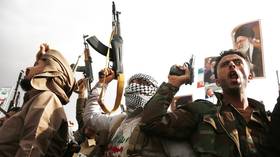
The group announced it will join the ongoing hostilities as the US-Israeli attack on the Islamic Republic enters its second month
The Yemeni-based Houthi movement on Saturday announced its formal entry into the conflict in the Middle East. The group has proclaimed its full support for Iran and other “resistance” factions across the region faced with US-Israeli aggression.
The group condemned the “atrocities” committed by the US, Israel, and their allies in Lebanon, Iran, Iraq, and Gaza, pledging to begin military operations against the aggressors. The Houthis have also warned any third nations against joining the attacks on Iran, as well as against using the Red Sea for taking hostile actions against the country.
RT looks into the group’s long record of armed conflict and its warfighting capabilities.
Who are the Houthis?
The group, known officially as Ansar Allah, emerged as a Zaydi (Fiver Shia) revivalist movement in northern Yemen in the mid-1990s. The country was ruled by Zaydi imams for over 1,000 years before they were ousted in the 1962 republican revolution. Since then, Yemen has been plagued by repeated civil conflicts between the Zaydi-dominated north and Sunni-majority south.
Ansar Allah, founded by Yemeni politician and Zaydi religious leader Hussein al-Houthi, has long been regarded as part of Iran’s ‘Axis of Resistance’, having adopted a strong anti-Israeli and anti-US stance in the early 2000s. At the time, the group coined its notable slogan, the Sarkha, which reads, “God is great, Death to America, Death to Israel, Curse on the Jews, Victory to Islam.” The slogan, stylized as a vertical red and green banner, is commonly displayed at Houthi mass rallies, utilized in propaganda, and used as a war cry.
The group eventually found itself at odds with then-President Ali Abdullah Saleh, a longtime North Yemen leader, who managed to defeat the southern secessionists and reunify the country in the early 1990s. While the Houthis were wary of Saleh, a Zaydi himself, over his close cooperation with Saudi-backed hardline Sunni Islamists, the president regarded them as a threat to his rule and alleged the group sought to establish a new Imamate.
Two decades of continuous conflict
The tensions between Saleh and Ansar Allah devolved into an open conflict in 2004, prompted by the government’s attempts to arrest the movement’s leader, with civil strife and, ultimately, a full-blown civil war plaguing Yemen ever since. During the string of conflicts, Ansar Allah has shown a remarkable resilience and ability to hold out against numerically and technologically superior foes – and win against them.
Disclaimer : This story is auto aggregated by a computer programme and has not been created or edited by DOWNTHENEWS. Publisher: rt.com