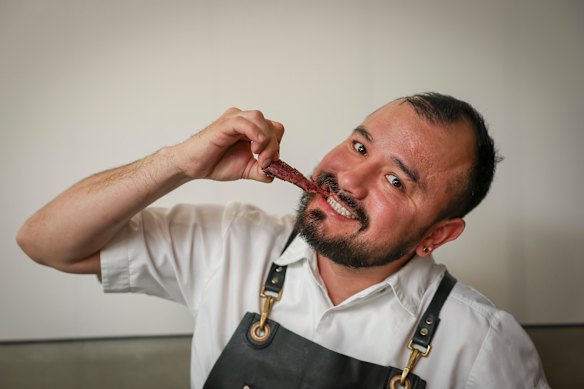
From the most budget-friendly cuts to prized rib-eye, Colombian chef Juan Berbeo shares his expert, easy-to-remember tips for cooking tender, juicy steak.

For the quintessential taste, smell and sense of summer, it’s hard to beat a sizzling steak on the grill – but which cuts should you wrap your tongs around, and what’s the best way to cook them?
Colombian chef Juan Berbeo has been butchering and cooking beef since he could reach the kitchen bench. Back home in Fusagasuga, his family regularly caters for crowds of up to 5500 at community grill fests.
The numbers aren’t quite as staggering at Berbeo Bar and Grill in Melbourne’s Docklands, but Juan Berbeo’s restaurant is always busy with diners looking for well-cooked cuts at keen prices.
Berbeo shares his tips for cooking different steak cuts, his basic formula for foolproof results, and the marinade that makes good meat great.
The best recipes from Australia’s leading chefs straight to your inbox.
The cuts
“The cow is not just a rib-eye and a loin,” says Berbeo. “Looking at different cuts is a way of appreciating the actual animal.”
Here are some of the best cuts for barbecuing, and basic tips for cooking them.
Eye fillet medallions (tenderloin)
A more expensive cut that pays you back in tenderness. Choose fillets that are 2cm-3cm thick. “You can have eye fillet blue (extra rare), so you could cook these for just one-and-a-half minutes each side, then rest in a warm place, then cook again for a minute each side.”
Porterhouse (sirloin or striploin)
A tender prime cut that’s moderately expensive. Cut thinly, this is a minute steak. But portioned 2cm-3cm thick, you can cook for two to three minutes each side for medium-rare, then rest for six to eight minutes. Cook again for a minute each side, then give the steak a mini-rest before slicing and serving.
T-bone
The T-bone has the eye fillet on one side of the bone and the porterhouse on the other. Cook as before, but also stand the steak up on its end for a few minutes to allow heat to penetrate along the bone. After the first rest, you can carve the fillets from the bone and give them a little grill on the exposed side that was close to the bone. Put the steak back into its T-bone shape to serve it.
‘In general, cook less than you think you should, because you can fix an undercooked steak but not an overcooked one.’
Chef Juan Berbeo
Rump
“Rump is so versatile and not too expensive; it’s my favourite cut,” says Berbeo. Use the 1cm = 1 minute formula for medium-rare. “In general, cook less than you think you should, because you can fix an undercooked steak but not an overcooked one.”
Rump cap is another prized cut. “Rump caps have some fat on them, but I recommend leaving that on and cutting the steak into strips to serve it so that each piece has a little fat along with the lean meat. Fat is flavour.”
Hanger or skirt
These steaks are less expensive because they can be a bit chewy, with a stronger and slightly more gamey flavour. Cook them over high heat, lean towards medium doneness, and don’t be afraid of using your teeth. These cuts pay you back in flavour.
Chuck eye roll
This is an inexpensive cut that’s rarely used for grilling, but it can be rewarding. “It includes five muscles, which means there’s variation through the steak,” says Berbeo. “It can be a bit chewy, with sections of fat that crisp as you cook. It is best served medium to medium-well done.
The basic formula for how to cook steak
The basic formula is one minute per centimetre per side. So for a 2cm-thick steak, cook it two minutes each side, then rest it for six to 10 minutes in a warm place, preferably on a rack so it rests evenly. Resting a steak allows the muscle fibres to relax and reabsorb liquid, making for a more tender, juicy eating experience.
Before serving, cook the steak for another minute each side. This second cook is where you can get crisscross grill marks by cooking the steak at a 90-degree angle to the first cook. Briefly rest again, for a minute or two only.
To slice, look for the direction that the meat fibres are running and use your knife to cut across them. This is what “against the grain” means.
A basic seven-word steak recipe to remember
- Baste (with the marinade, below) and season
- Quick grill
- Quick rest
The marinade
In Colombia, the Berbeos dip a spring onion (green onion) in a mixture of oil and beer and use it to brush the meat. Here, Berbeo makes an instant marinade that flavours the steak as well as oiling it.
INGREDIENTS
- 1 bunch spring onions, trimmed and roughly chopped
- 10 garlic cloves, peeled
- 300ml vegetable oil
- 150ml white wine
- 1 tsp cumin powder
- ½ tsp saffron powder
- table salt
- ground black pepper
METHOD
Blitz all ingredients except salt and pepper in a food processor to make a fairly smooth sauce. Brush sauce liberally on both sides of the steak. This sauce will keep for a few days in the fridge.
Tips for cooking a top steak
- Make sure your grill is very hot.
- Let steak come to room temperature before cooking.
- Use a timer.
- Resting really matters!
- If you’re a nervous newbie, start with a minute steak. “Cook it one minute each side, let it rest for three minutes, then cook it again for 30 seconds each side,” says Berbeo. “It will be medium-rare or medium: you won’t muck it up.”
From our partners
Disclaimer : This story is auto aggregated by a computer programme and has not been created or edited by DOWNTHENEWS. Publisher: www.smh.com.au