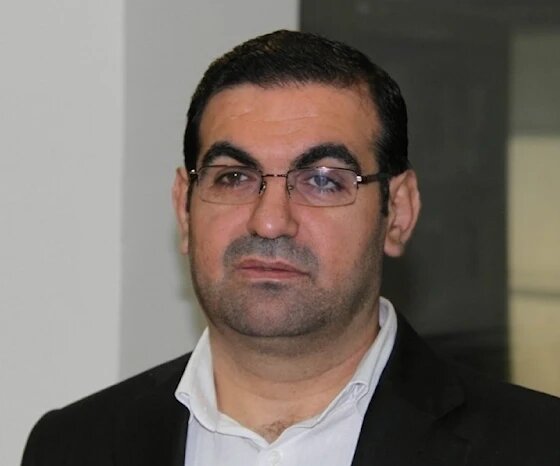
TEHRAN – In an exclusive interview with Tehran Times, Hikmat Amhaz, a Lebanese political analyst and member of the International Association of Political Analysts and Experts, examines the political and media ramifications of the deadly mass shooting at Sydney’s Bondi Beach.
Amhaz analyzes how Israeli Prime Minister Benjamin Netanyahu sought to link the attack to Australia’s pro-Palestinian positions, arguing that the incident was rapidly politicized to advance Israeli diplomatic and security narratives.
He discusses the role of Zionist lobbying networks, Western media framing, and the instrumentalization of “antisemitism” accusations to marginalize critics of Israel’s war on Gaza. The interview also explores how exaggerated external threats are used to justify legal crackdowns on Palestine solidarity movements and to divert attention from Israel’s deepening internal political crises.
The following is the text of the interview:
How do you assess Netanyahu’s strategy of directly blaming Australian Prime Minister Anthony Albanese for the attack due to his pro-Palestinian policies? What long-term diplomatic advantages might Israel gain by amplifying this narrative to isolate critics of its policies in Gaza?
It is necessary to make the following observation: there is a well-known rule that every action produces a reaction. In practical terms, the massacres committed by Netanyahu’s government in Gaza against Palestinians, as well as in Lebanon and elsewhere in the region, inevitably generate reactions. These reactions differ from one group to another and from one individual to another. Some respond militarily, others through media, culture, or politics, and so on.
Therefore, what happened bears, first and foremost, the responsibility of the Israeli entity itself. Had there been no massacres in Gaza, such reactions would not have occurred. We have seen widespread reactions across the world, including mass demonstrations reaching the United States, Europe, and beyond. This is the first point.
The second point is that, in my view, over the past period the image of Israel—once presented to the world as democratic and “clean”—has been severely damaged. After the massacres in Gaza, this image has been deeply distorted. Israel is now in need of rehabilitating and polishing its image. I recently read that enormous sums of money—millions of dollars—are being paid to lobbying groups in the United States and elsewhere to cleanse and polish Israel’s image. This task is also being carried out by religious figures, particularly from Christian denominations in the United States.
By blaming Prime Minister Albanese, Netanyahu seeks to prevent support for Palestine and pressure Australia to retreat from recognizing the Palestinian state.
Within this context, what happened may serve the purpose of portraying Jews worldwide as being under attack, in need of protection, and as victims of terrorism. From this perspective, I believe it is possible that the Israeli entity—and specifically the Mossad—may have played a role in this incident, whether by facilitating it, inciting it, or having a direct or indirect connection to it. In my assessment, this is one of the strong possibilities currently on the table.
Why do I consider this plausible? First, today many people are convinced that U.S. intelligence had prior knowledge of the September 11 attacks in New York and facilitated their occurrence to a certain extent. That attack later became a pretext for the United States to reshape not only the region but the world itself—through the invasion of Afghanistan, the occupation of Iraq, and major global transformations.
Second, I am among those who believe that Israel had prior knowledge of the “Al-Aqsa Flood” operation and deliberately allowed it to happen. Numerous indicators and reports suggest that Israel was aware of it and facilitated it in order to use it as a pretext for sweeping regional changes—similar to what followed the September 11 attacks. After the Al-Aqsa Flood, we witnessed major transformations in the region and renewed talk of a “New Middle East.”
Based on these precedents, this incident may fall within a broader framework of diplomatic and political change pursued by Israel to alter the deeply negative image it has imprinted on global consciousness through genocide and war crimes in Gaza. Therefore, it is possible—and plausible—that the Mossad had a role in this incident.
As for why Australia was chosen, and in evaluating Netanyahu’s strategy of blaming the Australian prime minister: Australia is, to some extent, a relatively weak state politically. In recent months, it was among the countries that recognized the State of Palestine, a position that Israel strongly criticized. Moreover, Australia remains under the British Crown, meaning the UK retains symbolic and political influence.
Additionally, Israel has deeply penetrated Australian political structures and exerts significant influence over policymaking. Evidence of this is that whenever an incident occurs involving Jews in Australia, Australian officials immediately accuse the Islamic Republic of Iran—without evidence. Even in the recent Sydney incident, political accusations against Iran were made, despite the fact that it was quickly established that ISIS was responsible.
Israel is therefore activating its political and diplomatic leverage in Australia to suppress pro-Palestinian movements and to strengthen domestic legislation under the banner of “combating antisemitism.” Today, antisemitism is no longer limited to hostility toward Jews; rather, any criticism of Israel or Zionism—even criticism of Israeli massacres in Gaza—is automatically labeled as antisemitism. This accusation has become a ready-made weapon against anyone who criticizes Israel anywhere in the world.
By blaming Prime Minister Albanese—who is unfortunately a weak political figure—Netanyahu seeks to achieve these goals: preventing support for Palestine and pressuring Australia to retreat from recognizing the Palestinian state.
On a longer-term diplomatic level, this pressure aims to subjugate Australian foreign policy to Israeli interests and influence legislation within the Australian parliament. Netanyahu also seeks to reframe the incident—from a localized, individual security event into a broader political issue—accusing Australia of tolerating antisemitism and transforming the matter into an international political narrative.
To market its narrative in Australia and elsewhere, while justifying this strategy links any criticism of Israel to alleged security threats, whether in Australia or elsewhere, thereby expanding Israeli influence. It also serves as a deterrent message to Western elites: criticizing Israel may result in political backlash, accusations, and diplomatic pressure. Consequently, many Western leaders moderate or silence their criticism to avoid confrontation.
In the long term, Israel’s gains may include reshaping political discourse inside Australia so that Gaza no longer dominates public debate. Instead, a “balanced” narrative is promoted—one that equates genocide with Israeli claims of victimhood. This also enables Israel increased security measures for Jewish communities in Western countries.
In what ways can Zionist lobbying groups exploit the Sydney incident—portrayed as an attack on a Hanukkah event—to push for stricter Western laws against pro-Palestinian activism, similar to the measures adopted in Europe and the United States after October 7?
The core narrative Israel is trying to promote is that it is under threat—religiously and ideologically. This claim is entirely false. Islam and Muslims, in general, have no problem with Judaism as a religion. The real issue is with Israelis as occupiers—those who violate rights, commit aggression, and carry out abuses. Therefore, there is no inherent conflict with Judaism itself.
However, framing the incident as an attack on Hanukkah, a Jewish religious holiday, will naturally be exploited by Israel and Israeli intelligence to the maximum extent. As previously noted, this serves to polish Israel’s image and to portray Judaism itself as the target, rather than Israeli policies or actions. From this perspective, I believe Israel will exert pressure not only to change laws and legislation within Australia or other Western countries, but also to redefine criticism of Israel—or solidarity with Palestine—as a form of extremism. In this framework, criticizing Israel becomes synonymous with antisemitism.
As a result, new legislation and restrictions will likely be imposed on demonstrations, academic campaigns, and all forms of activism that expose or oppose the massacres committed by Israel in Gaza. Activities supporting the Palestinian cause will be restricted under broad and misleading labels such as counterterrorism, combating hatred, and fighting antisemitism.
The most dangerous aspect, in my view, is that these laws will eventually reach universities. Universities are a primary source of intellectual energy, free thought, freedom of expression, and political activism. The Israeli occupation regime will use the Sydney incident as a pretext to impose restrictions on universities, academic curricula, student activities, and protest movements—any space that can contribute to awareness or resistance in this context.
From this standpoint, I believe the next phase—following the Hanukkah-related incident—may witness further incidents, possibly involving the Mossad. We are likely to see major shifts in the level of restrictions and in the punishment of anyone who supports the Palestinian cause or criticizes the Israeli government. As I mentioned earlier, just as the United States reshaped the world after September 11, and the region was transformed after October 7, we are now entering a phase of political and media changes that will not be limited to the Middle East but will affect the entire world through incidents such as the Hanukkah event and others like it.
Global media coverage of Sydney has been grossly disproportionate compared with the ongoing mass killings in Gaza, revealing the priorities and biases of Western media.
How do you compare the intensity and language of media coverage of this incident with the ongoing coverage of civilian killings in Gaza?
Unfortunately, the media coverage granted to this incident, while the incident itself is of course condemnable, is grossly disproportionate. This event does not amount to even 0.001 percent of the massacres committed by the Israeli occupation (regime) in Gaza or elsewhere. Yet almost the entire global media apparatus mobilized to focus on Sydney—covering the incident extensively, analyzing it in detail, and expressing sympathy for the victims.
While expressing sympathy for victims is, in principle, legitimate, what is not legitimate is the failure of global media to provide proportional, consistent, and balanced coverage of what is happening in Gaza—where mass killings and grave crimes are ongoing to this day. Regrettably, even Arab and Islamic media followed this same pattern, amplifying an incident of relatively limited scale while largely ignoring the massacres being committed in Palestine, without undertaking a serious media confrontation to halt these atrocities or expose Israeli brutality.
As is well known, global media is largely dominated by the United States and its allies. Therefore, it is hardly surprising that this entire media machinery—and all its resources—is deployed to support the Israeli entity and portray it as a victim, even as an innocent and peaceful actor. At the same time, Israel is not presented as a criminal entity committing war crimes, despite the existence of international arrest warrants issued by the International Criminal Court and positions taken by the International Court of Justice.
As I have indicated, Israel—together with its allies—is injecting massive amounts of money to polish its image. I believe this media operation, in which the Mossad plays a direct role, aims to rehabilitate the image of Israeli intelligence and present Israel as a victim rather than as a perpetrator and executioner responsible for mass atrocities.
The exaggeration of external threats serves as a strategic tool for Israel to divert attention from internal crises, including political instability, popular protests, and judicial troubles.
Can the exaggeration of external threats evolve into a strategic distraction tool used to divert attention away from Israel’s internal crises, including political instability and growing public anger and protest?
In media practice, we know that events are often exaggerated and distorted—turning something small into something far larger, as the Arabic saying goes, “making a mountain out of a molehill.” The exaggeration of this incident and the inflation of external threats are primarily aimed at diverting public attention away from Israel’s internal crises.
Israel is facing multiple internal problems that need no extensive explanation: political instability, deep governmental crises, Netanyahu’s judicial troubles, widespread popular protests demanding his resignation, and the failure of Israel’s security leadership in relation to the Al-Aqsa Flood Operation. Amplifying external threats serves to shift focus away from all of these issues.
At the same time, this strategy reinforces far-right rhetoric within Israel by portraying the state as besieged and facing an existential threat. This narrative is used to justify extremist policies, mobilize domestic support, and re-unify Netanyahu’s political base while boosting the popularity of his far-right coalition. It also seeks to delegitimize Netanyahu’s opponents by portraying them as irresponsible—whether in times of peace or war—and as indirectly aligned with calls for the establishment of a Palestinian state, which Netanyahu and his far-right allies frame as an existential danger to Israel.
Moreover, this discourse exaggerates the idea that Israel is fighting on multiple fronts—Palestine, the West Bank, Lebanon, Yemen, Iran, Syria, and elsewhere—in order to amplify the sense of siege and existential threat. This serves another strategic purpose: pushing the international community to adopt heightened security measures to protect Israeli diplomatic missions and interests abroad. In doing so, Israel effectively shifts the financial and security burden of protecting its global interests onto other countries, relieving its own strained resources.
This exaggeration also functions as a deterrent message to governments worldwide: if they fail to meet Israel’s expectations regarding the protection of Israeli interests or Jewish communities, they may face the same public blame and political pressure that Australia experienced. In such cases, the United States is expected to stand firmly behind Israel, creating political and diplomatic consequences for those states.
Additionally, this narrative encourages countries to participate in what is described as an “international coalition against terrorism.” However, under U.S. and Israeli definitions, terrorism does not refer solely to ISIS or extremist groups, but also includes resistance movements and factions in Palestine, Lebanon, and elsewhere.
Tragically, the concept of terrorism that should apply to Israel itself—given its documented acts of genocide and war crimes acknowledged by international organizations and institutions—is excluded from American and international standards. Instead, Israel is portrayed as democratic and peaceful, and is supported with all available political, military, and media resources to continue this brutal and destructive course.
Disclaimer : This story is auto aggregated by a computer programme and has not been created or edited by DOWNTHENEWS. Publisher: tehrantimes.com