After 10 days of crazed moviegoing at the Cannes Film Festival, Times film critic Amy Nicholson and Times film editor Joshua Rothkopf are all but spent. They leave with 10 recommendations (listed below in alphabetical order), including several titles you’ll be hearing about during awards season, but also, admittedly, more reservations than usual.
Amy Nicholson: There are worse ways to spend your life than watching four movies a day in the south of France. For a week and half, we ran in and out of the dark theaters, blinking at the shock of the sun and bickering about what we just saw with the highest concentration of film lovers anywhere — most of us jacked up on espresso or rosé. Yet, we’re flying home miffed that the movies themselves were mediocre. Cannes is meant to launch ambitious, prickly works by grandmasters and next-generation talents. This year, the programming looked like a party with an impressive invite list — Nicolas Winding Refn, Asghar Farhadi, Hirokazu Kore-eda — but upon arrival, all the guests felt like old acquaintances tapped out of anything interesting to say.
I’m being harsh. Cannes had good movies, too. But I needed this year’s Cannes to be great. Audiences trickling back into theaters deserve to see something fantastic. Instead, too many filmmakers took the crowd’s attention span for granted; even the strongest films in competition could delete a half-hour of dead air. Fittingly, the majority of my favorites came from Cannes’ kookier programming sections, Directors’ Fortnight and Un Certain Regard — and I suspect many of yours did, too, oui?
Joshua Rothkopf: I did find a handful of films from the main competition that impressed me, but point taken: Nobody is served if we can’t admit that this year’s edition was weaker than others. We could blame screenwriting or pacing (though paradoxically I was impressed by both the longest and the shortest movies in competition). Maybe it’s an overall lack of boldness. When a restored version of Ken Russell’s salacious 55-year-old “The Devils” eclipses virtually everything else shown at the festival, a certain timidity is hard to deny. There were too many “nice” films: perfectly respectable but not what I want Cannes to be.
Fortunately, we saw enough to sharpen up a list of favorites. Here’s what stirred us.
‘All of a Sudden’
(Festival de Cannes)
I’m not convinced that the utopian vision of end-of-life care presented in Ryusuke Hamaguchi’s drama has a fighting chance in America, but we deserve the opportunity to grapple with its compassionate turns and have that discussion. The director of “Drive My Car” continues his process-centric exploration of workplace relationships in this quietly revelatory movie, one with a centerpiece conversation that merits comparison to the long walks of Richard Linklater’s “Before” movies. Virginie Efira and Tao Okamoto let a day’s stroll linger into profundity, the twilight dimming and human connection brewing in all its possibilities. Is it too late for them? It doesn’t need to be. — Joshua Rothkopf
‘The Beloved’
(Festival de Cannes)
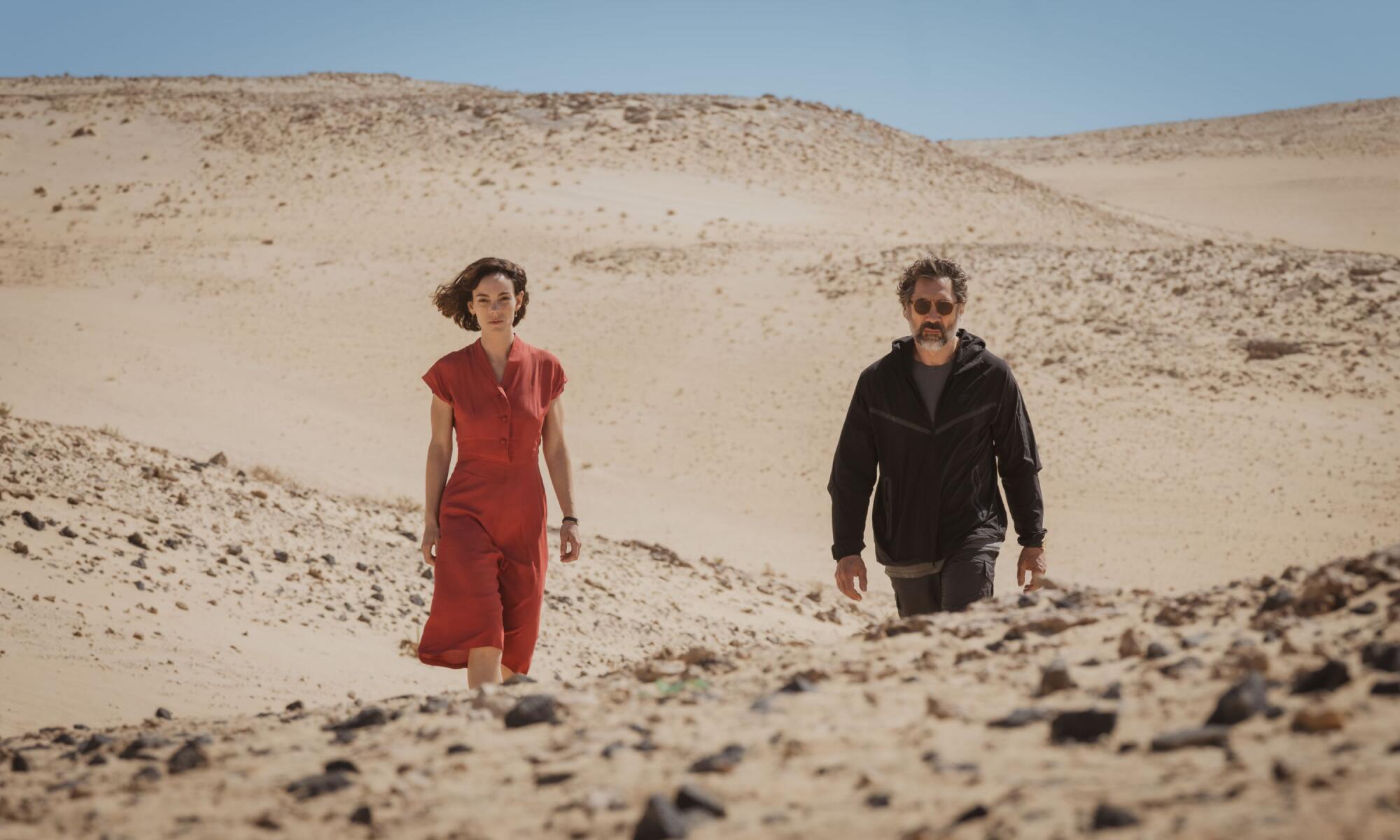
Esteban (Javier Bardem), a renowned bad boy Spanish filmmaker, returns to his homeland from New York to shoot a period picture in the desert. Off-screen, he’s gifted one of the four leading roles to his estranged daughter (Victoria Luengo), an aspiring actor who hasn’t seen her father in 13 years. Esteban failed as Emilia’s dad. Can he succeed as her director, especially when her big break packs this much pressure? Not likely, especially as Emilia has inherited his disastrous boozing habits. “The Beloved’s” actual director, Rodrigo Sorogoyen, unleashes his leads to become a tag team of destruction, each blaming the other for what’s going wrong on set. They’re both mired in clashing narratives of their relationship. Sorogoyen shows us the truth, as well as the visible frustrations of the film-within-a-film’s cast and crew that risk shutting down this too-passionate passion project. — Amy Nicholson
‘Bitter Christmas’

(Iglesias Mas / Sony Pictures Classics)
Pedro Almodóvar’s self-flagellating film about his artistic process has a Charlie Kaufman-lite structure that I’d rather let audiences discover on their own. In brief: Almodovar’s avatar, a filmmaker named Raúl (Leonardo Sbaraglia), gets dragged over the artistic coals by the dramatic female characters he’s been writing for decades, one of whom dares him to simply coast on his legacy. Too many veteran filmmakers in his year’s Cannes competition seem to have accepted that bargain, so when Raúl got to the end of a new script and decided it wasn’t up to his standards, I nearly shouted “Bravo!” Navel-gazing cinema about the creative process isn’t usually my bag, but Almodóvar doesn’t take his own misery that seriously, even inserting a manic pixie dream hunk, a male stripper-slash-firefighter played by Patrick Criado, for a little bump and grind. — Amy Nicholson
‘Clarissa’

It’s been 101 years since Virginia Woolf first published “Mrs Dalloway,” a novel about persnickety party hostess Clarissa Dalloway colliding with her former lovers, one male and one female. The plot seems simple, but every glare and sigh tells a whole story about modernization, capitulation, cynicism and violence. Twin brothers Arie and Chuko Esiri have transplanted the tale to present-day Nigeria and stacked the cast with Sophie Okonedo, Ayo Edebiri, Nikki Amuka-Bird, David Oyelowo and the staggeringly talented India Amarteifio as the diva in her captivating youth before she married a tedious oilman and started bullying the help. “Clarissa” makes several smart adjustments, swapping in a traumatized Boko Haram soldier for a shell-shocked veteran of the Great War, and cocking an eyebrow at the shiny new yoga studios and coffee shops littering Lagos’ once-lush waterfront. Better still, it’s sexy as heck — the flashbacks are one swimsuit party after another. — Amy Nicholson
‘Club Kid’

(Festival de Cannes)
The one-sentence pitch of Jordan Firstman’s debut dramedy — a gay nightclub promoter sobers up when he discovers he has a 10-year-old boy — sounded as fun as snorting a line of aspartame. I stand corrected. “Club Kid” is a blast: a spicy, surprising and irreverent comedy that rarely peddles the audience anything artificially sweet. Firstman stars as Peter, a debauched millennial aging out of a New York scene that never cared about him as a person in the first place. His business partner Sophie (Cara Delevingne) is a horror; his selfish squatter-roommate Nicky (Eldar Isgandarov) is even worse and so hilarious I’d watch a spin-off sequel just about him. Peter’s shock son Arlo (Reggie Absolom) has a casual charm that pickpockets your heart, but it’s the script’s sour quips that will have you urging people to get past the treacly set-up and go see “Club Kid” themselves. — Amy Nicholson
‘The Diary of a Chambermaid’

(Festival de Cannes)
Art punk Radu Jude’s latest satire is about a Romanian immigrant with a burlesque double life. By day, Gianina (Ana Dumitrașcu, fantastic) is the live-in housemaid of a daft Parisian family; by night, she’s an actress in a turn-of-the-20th century slapstick farce about a housemaid whose master suckles her patent leather boots. In neither world can she openly say what she thinks (although in her native tongue, she curses her employers and their young son plenty). Fast, crisp and snide, “The Diary of a Chambermaid” gives equal weight to the monotony and the absurdity of Gianina’s grind. And Jude isn’t above including a mocking slow-motion shot of a spoiled French boy totally whiffing a soccer kick. — Amy Nicholson
‘Fatherland’
(Festival de Cannes)
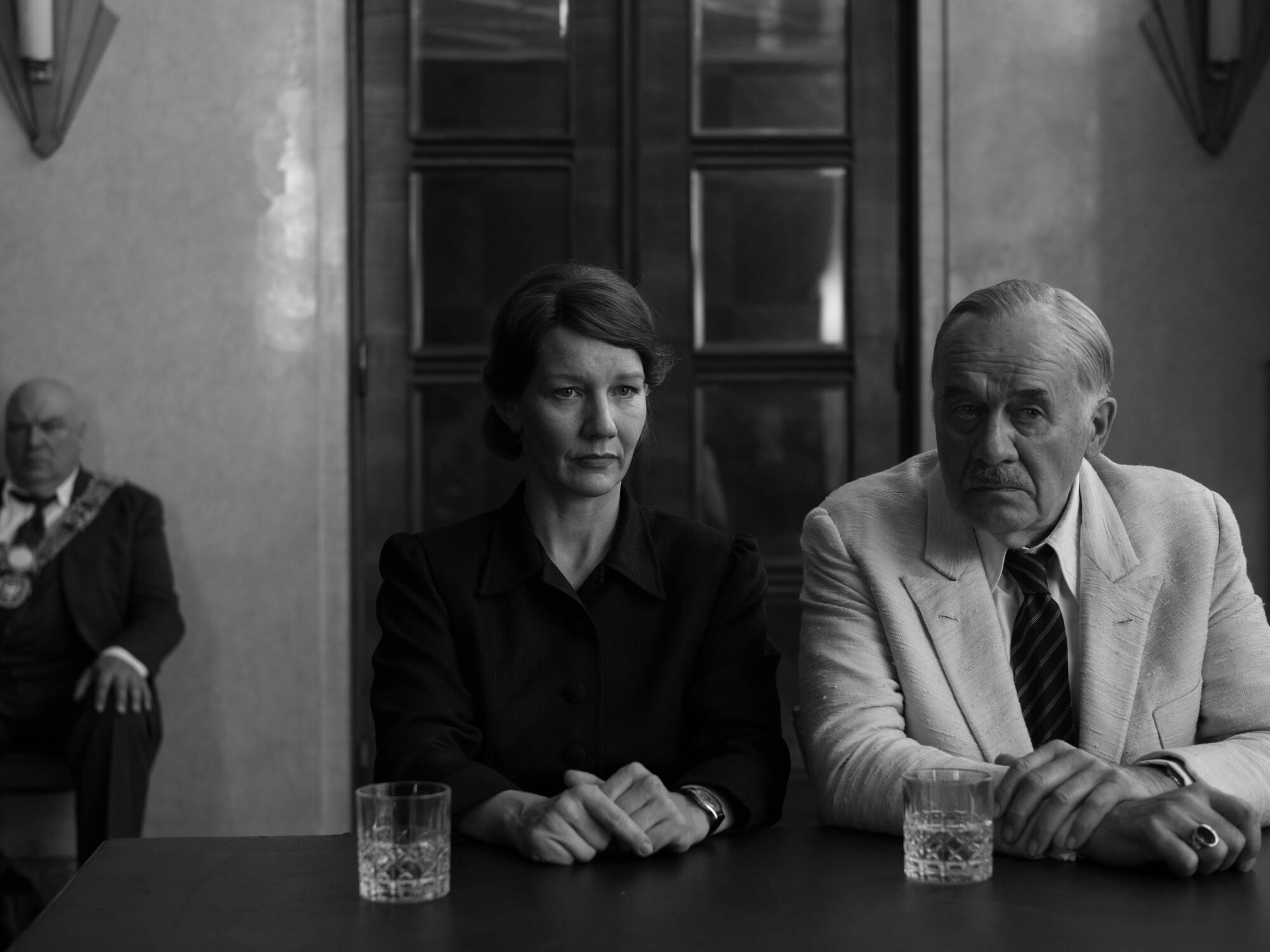
The tension at the heart of Paweł Pawlikowski’s period piece, set in a ravaged, fallen Germany after the end of World War II, is one that goes unresolved. All that’s left are defensive denials, evasions of Nazi collaboration and the faint hope that something higher has survived. I could watch this kind of guilt-ridden post-apocalyptic movie for hours; instead, this lasts a scant 82 minutes. The conclusion, a wordless moment between father and daughter set to the strains of Bach played on a broken pipe organ, was the most devastating passage of the entire festival. “Fatherland” shows off Pawlikowski’s exquisite way with black-and-white evocations of European tragedy, but he’s never summed them up as poetically. — Joshua Rothkopf
‘Fjord’

(Tudor Panduru / Neon)
People at the festival called this one complex; I found myself disagreeing. It’s actually a fairly straightforward story about a religious but mostly level-headed family flung into conflict with an overly sensitive branch of child protection services — and maybe with the whole of agnostic Norwegian progressivism. As reactionary as that sounds, I was totally rapt. Partly that’s due to a beautifully plotted courtroom scenario and the immersive performances of Sebastian Stan and Renate Reinsve, reuniting after “A Different Man,” as parents increasingly out of their depths. But mainly, I credit Romanian director Cristian Mungiu, who knows a good story when he sees one, crystallizing its potency with every camera choice. — Joshua Rothkopf
‘Minotaur’

(Festival de Cannes)
The ice-chilled return of Russian filmmaker Andrey Zvyagintsev (after a multiyear battle with long COVID) is worth the wait: a condensation of everything he does well into something so purely distilled, it should come with a proof warning. The movie kicks off as a casual portrait of the vacant nouveau riche lifestyles of the mini-oligarchs: fancy dinners, divorces, bathroom gossip. Then it becomes an erotic thriller (it’s based on Claude Chabrol’s 1969 “The Unfaithful Wife,” as was Diane Lane’s “Unfaithful”). But the best comes last, as the situation gets fixed in broad daylight with breathtaking brutality. The war in Ukraine? Someone else’s problem. “Minotaur” takes on the whole of Putin’s dissociative society and puts its winners above the blackened clouds, looking down at the rest of us. — Joshua Rothkopf
‘Teenage Sex and Death at Camp Miasma’

I am growing to love Jane Schoenbrun’s exfoliation of ’80s horror obsessions, especially for the movie’s nonjudgmental embrace: Let these movies be free in all their “problematic” badness and let them work on you. The fact that “Teenage Sex” sometimes plays like a bottle episode of “Hacks” doesn’t hurt. Hannah Einbinder brings vulnerability to a project that needs her brand of self-excoriating fearlessness. Points, too, for not turning this into yet another celebration of some forgotten male director reclaimed as a genius. Rather, the opposite: It’s about an abused scream queen (Gillian Anderson, gamely campy), a liminal, wintry campground and the exhilaration of running in the woods in your pajamas. — Joshua Rothkopf
More to Read
Disclaimer : This story is auto aggregated by a computer programme and has not been created or edited by DOWNTHENEWS. Publisher: latimes.com