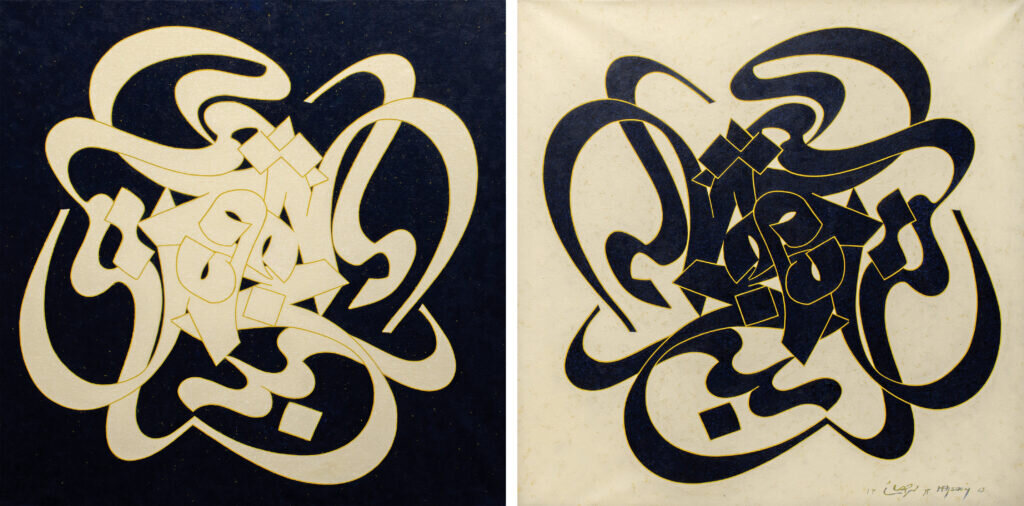
TEHRAN – The 25th Tehran Auction is set to take place on Friday, July 17, at the Parsian Azadi Hotel in Tehran, featuring 100 artworks with an estimated total value between 354 and 423 billion Tomans ($2 to $2.35 million).
The auction is commencing at a time when the Iranian visual arts market has experienced one of its most sluggish periods since the previous edition in October 2025, having remained almost entirely inactive for many months, ISNA reported.
Despite the market’s recent stagnation, the estimated value for the works in this 25th edition is significantly higher than the actual final sale of the previous round, which totaled over 147 billion Tomans (less than $1 million). It should be noted, however, that the figures released for the new round are pre-auction estimates and may differ from the final sale prices.
This edition features about 80 artists, presenting a mix of modern, classic, and traditional Iranian art. Despite the diversity of artists, the concentration of works around a few prominent names is evident. Mohammad Ehsaei leads with three works, followed by Parviz Kalantari, Parvaneh Etemadi, Mansour Ghandriz, Mahmoud Farshchian, Keikhosro Khoroush, Sadegh Tabrizi, and Behjat Sadr, each represented by two works.
In the price rankings, a close competition is seen between two well-known figures: Mohammad Ehsaei’s “Mohabbat” (Affection) and Sohrab Sepehri’s “High Horizon” are the most expensive works, each estimated between 28 and 30 billion Tomans ($155,000 to $167,000).
The list of high-priced works remains dominated by established figures in the market. Following the 30-billion-Toman works by Ehsaei and Sepehri, Aydin Aghdashloo’s “Summer, Winter” is estimated at 22 to 24 billion Tomans ($122,000 to $133,000), and a work by Abolghasem Saeedi is estimated at 20 to 22 billion Tomans ($111,000 to $122,000). Parviz Tanavoli’s sculpture “Van Gogh’s Ear” and Mahmoud Farshchian’s “Gol-o-Morgh” (Flower and Bird) follow with estimates of 14 to 16 billion Tomans ($78,000 to $89,000).
From a gender perspective, the statistics continue to show a significant gap between the presence of men and women. Only six female artists are included with eight works, accounting for about 8% of the artists and less than 8% of the total works. Among them are names such as Parvaneh Etemadi, Bahjat Sadr, Farideh Lashai, Lili Matin-Daftari, Elaheh Khatami, and Leila Barzegar Yarmohammadi.
While the quality of their work is notable, there remains a significant statistical distance from the male-dominated share of the formal Iranian art market—a trend observed in previous editions and representing one of the lowest statistics to date.
A notable feature of this edition is the inclusion of several exquisite carpets and works by master calligraphers and artists from the Qajar and early Pahlavi eras. Some of these pieces are over a century old, and their sale at auction is only possible with an official permit from the Ministry of Cultural Heritage, Tourism and Handicrafts of Iran.
“The Farahan Pictorial Rug, Shapur I,” “The Mixed Torang Carpet, Kerman (Ravar),” and “The Pictorial Rug of Stories, Northwest of Iran (Caucasus)” are among the items exceeding 100 years in age.
Under Iran’s cultural heritage regulations, registered historical artifacts or items deemed to have national cultural value cannot be freely bought, sold, or taken out of the country; any transfer is subject to cultural heritage protection laws. Consequently, works presented at the Tehran Auction must meet legal requirements regarding ownership and tradability, and their inclusion implies they are either not listed as national heritage or possess the necessary permits for transaction.
Previously, several artworks over 100 years old offered at the Tehran Auction faced intense criticism from experts and officials at the Ministry of Cultural Heritage.
During the 22nd edition, Leila Khosravi, Director-General of Museums at the Ministry of Cultural Heritage, Tourism, and Handicrafts, declared the sale of such historical items “illegal” and urged relevant authorities to take immediate action to prevent their sale and export. She recalled that based on the 1930 National and Cultural Heritage Protection Law and its bylaws, the sale or export of any historical or cultural object over 100 years old without a permit from the Deputy of Cultural Heritage is prohibited and illegal.
The first of its kind in Iran, the Tehran Auction was launched in 2012 as an independent and private initiative to introduce the best in Iranian art, ranging from established and emerging Iranian artists to art collectors and the global audience.
It aims to address the increasing interest in modern and contemporary Iranian art and facilitate the acquisition of quality works in reliable ways.
——– Photo: Mohammad Ehsaei’s “Mohabbat” (Affection) is one of the highest-estimated works at the auction.
SS/SAB
Disclaimer : This story is auto aggregated by a computer programme and has not been created or edited by DOWNTHENEWS. Publisher: tehrantimes.com