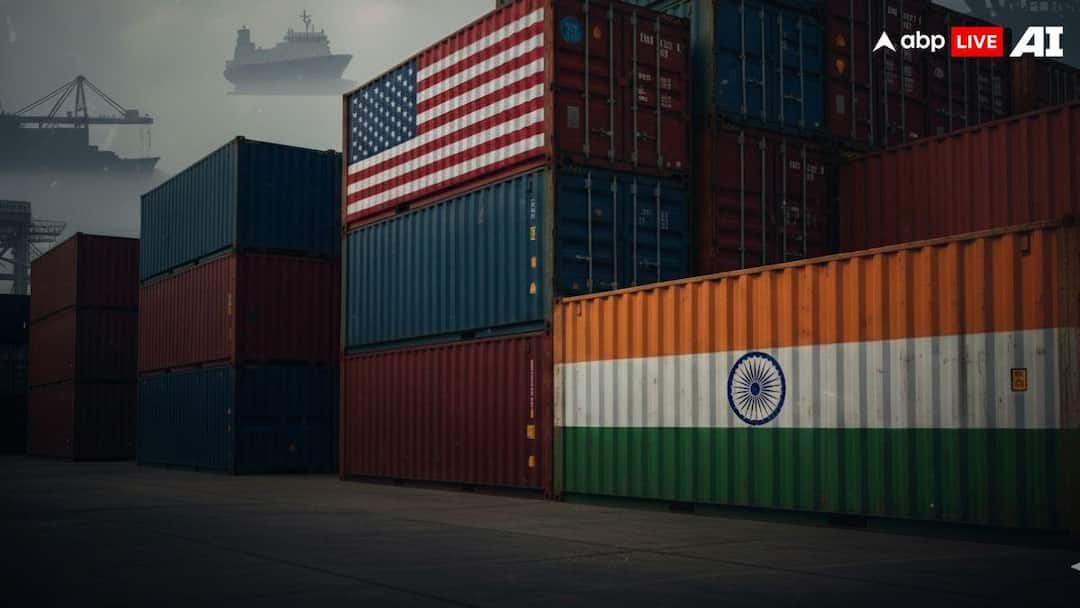
- US Senate bill targets countries purchasing Russian oil/gas.
- Potential 100% tariffs threaten Indian exports to the US.
- Legislation not final; US President holds tariff discretion.
India’s exporters could be heading for another uncertain phase in the US market, with a new American legislation potentially giving President Donald Trump the power to impose tariffs of up to 100 per cent on goods from countries that continue to buy Russian oil and gas.
The US Senate has passed the bipartisan Lindsey O. Graham Sanctioning Russia and Iran Act of 2026 by an 86-11 vote, bringing the threat of additional tariffs on Indian exports into sharper focus, reported The Financial Express. However, the legislation does not impose a 100 per cent tariff immediately. It still needs to clear the US House of Representatives and receive the President’s signature before becoming law.
For Indian exporters, though, the prospect of another tariff layer comes at a sensitive time. The US is one of India’s most important export markets, and any sharp increase in duties could make Indian products less competitive for American buyers.
Why Indian Exporters Are Worried
The most immediate concern is the potential impact on India’s merchandise exports to the US.
Citing Sachin Gupta, Chief Rating Officer at CareEdge Ratings, media organisation Business Today reported that India exports around $80 billion worth of merchandise goods to the American market, including gems and jewellery, textiles and other products. If a 100 per cent tariff were imposed, Gupta said, several of these products could become commercially unviable in the US market.
The legislation, however, does not specify that every Indian product would automatically face the maximum tariff. The proposed tariff authority would give the US President discretion over whether to impose additional duties, which countries to target and the rate applicable to them.
Gupta also pointed out that products such as pharmaceuticals and electronics could potentially be treated differently because of their importance to the US market, although there is currently no clarity on how different product categories would be handled.
“If it is indeed 100 per cent, it would be extremely difficult for Indian exporters to find viable business in the US market,” he said.
Engineering Exporters Already Watching The Developments
The proposed measure has also raised concerns within India’s engineering export industry.
The US is the largest market for India’s engineering goods, making the sector particularly exposed to any additional tariff burden.
Pankaj Chadha, chairman of the Engineering Export Promotion Council (EEPC), told FE that the legislation could have a significant impact on Indian goods exports if it becomes law. However, he cautioned that it would be premature to assess the precise consequences while the measure is still progressing through the US legislative process.
India’s engineering goods exports to the US remained positive in FY2025-26 despite the tariff measures imposed during the period, Chadha said. An additional levy, however, could affect the competitiveness of Indian shipments.
The concern is therefore not simply about the headline tariff rate. For exporters, the bigger question is whether Indian goods can continue to compete with products from other countries if the cost of entering the US market rises sharply.
Also Read : Maharashtra Bike-Taxi Rules Could Change Swiggy, Zomato Deliveries: 2% Welfare Levy, Insurance And EVs
Bill Gives Trump Tariff Power, But It Is Not Yet Law
The latest development needs to be viewed in context.
The Senate-approved legislation does not itself impose tariffs on Indian goods. Instead, Section 113 would give the US President discretionary authority to impose tariffs of up to 100 per cent on imports from countries purchasing Russian oil or natural gas.
The legislation would also require the US Trade Representative (USTR) to identify and review the five largest buyers of Russian energy every 180 days.
The five countries identified as the largest buyers include China, India, Slovakia, Hungary and Azerbaijan, according to Ajay Srivastava, founder of Global Trade Research Initiative (GTRI).
There are also provisions for exemptions under certain circumstances. Countries importing less than 15 per cent of their total energy from Russia and demonstrably reducing their dependence on Russian energy could qualify for an exemption.
The tariff authority would remain in force for five years, unless renewed by Congress.
India’s Russian Oil Dependence Adds Another Layer Of Risk
The tariff threat is directly linked to India’s continued purchases of Russian crude.
According to Srivastava, Russia supplied 30.3 per cent of India’s crude imports in 2025-26, worth $40.8 billion out of total crude imports of $134.7 billion.
That dependence has made Russian oil an important component of India’s energy strategy. Discounted Russian crude has helped lower India’s import bill, support energy security and contain inflation, Srivastava said.
This creates a difficult policy equation for India: reducing Russian oil purchases could help address the tariff threat, but replacing a significant share of those supplies could increase the country’s energy costs.
“India shouldn’t allow tariff threats to determine its energy policy,” Srivastava said.
A Crude Shock Could Make The Equation More Complicated
The potential consequences extend beyond exports.
CareEdge’s Gupta warned that if India and China were to stop importing Russian crude because of the proposed US tariffs, the resulting disruption to global oil supplies could push crude prices sharply higher.
Global crude consumption is around 100 million barrels per day, while Russia accounts for roughly 9 million barrels per day, according to Gupta. India and China together account for roughly 75 per cent of Russia’s crude exports.
If a substantial portion of that supply were removed from the global market, crude prices could move well beyond their recent levels of around $70-$85 per barrel.
Gupta said prices could potentially cross $100 and reach $110-$120 per barrel if the scenario materialises.
For India, such a rise would put pressure on its external finances. Gupta said the country’s current account deficit could potentially more than double from last year’s levels purely because of crude.
Also Read : Rs 146 Crore Pension Transfer: Here’s Who Got The July Instalment In Uttarakhand
Tariff Pressure Could Extend Beyond Exporters
The potential oil shock could create another challenge for the domestic economy.
At crude prices of around $110-$120 per barrel, Gupta said the government would have to pass on higher costs at fuel pumps. That could subsequently create a secondary inflationary impact across the wider economy.
The result would be a two-sided challenge for India: exporters could face weaker competitiveness in a key overseas market, while more expensive crude could increase the country’s import burden and put pressure on domestic prices.
For now, however, the proposed 100 per cent tariff remains a possibility rather than an immediate levy. The legislation must still pass the US House of Representatives and receive presidential approval.
Disclaimer : This story is auto aggregated by a computer programme and has not been created or edited by DOWNTHENEWS. Publisher: abplive.com