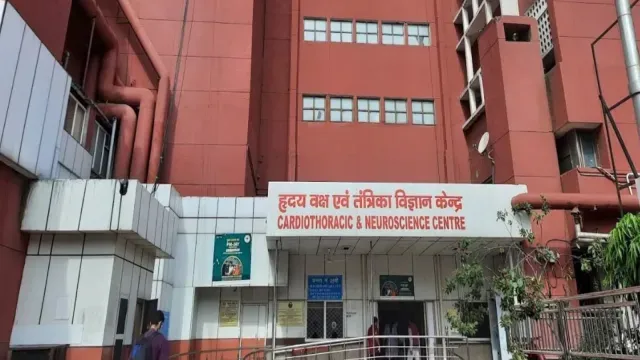
On 12 November, a pregnant woman lay on an operating table at the All India Institute of Medical Sciences (AIIMS) in New Delhi while surgeons performed something no Indian hospital had done before.
Over six hours, they repaired a gap in her unborn baby’s spine at 25 weeks of pregnancy, then closed the womb so that the pregnancy could continue.
The institute announced on 14 November that this was India’s first open foetal repair of a lumbosacral myelomeningocele, the most severe form of spina bifida.
Professor Deepak Gupta, who led the neurosurgical component and is president of the Indian Society for Pediatric Neurosurgery, says, “It establishes an important new capability for foetal care and paediatric neurosurgery in India.”
Why doctors operate before birth
In myelomeningocele, part of the spinal cord and its protective coverings pushes out through an opening in the spine. Doctors usually close it after the baby is born, but the institute said that exposure to amniotic fluid during pregnancy can cause progressive neurological injury.
“Affected children can develop paralysis or hydrocephalus, a build-up of fluid in the brain,” the team says.
In open foetal surgery, the surgeons open the mother’s uterus to reach the defect, then carefully repair and cover the exposed spinal tissue in layers using microsurgical techniques before closing the uterus and abdomen, which lets the pregnancy continue under close supervision.
Five weeks of rehearsal for one operation
The operation followed more than five weeks of preparation that included detailed foetal imaging, counselling of the parents, anaesthetic planning and surgical simulations.
“More than 30 doctors, specialists and nurses then took part, drawn from obstetrics, maternal-foetal medicine, neurosurgery, anaesthesia, plastic surgery, radiodiagnosis and neonatology, working with high-end microscopy and continuous ultrasound guidance at the Neurosciences Centre,” the team says.

AIIMS Director Professor Nikhil Tandon says the operation’s complexity made teamwork decisive. “It is a matter of both pleasure and huge pride that such a complicated surgery could be done in this institution,” he says. “It is a testimony to multiple very highly skilled people. Individually skilled and skilled as a team who could come together, sit, plan, collaborate, coordinate, and implement.”
He adds that the surgery is difficult even on a small child, and here the baby was operated on inside the womb. “Imagine the size. It is such delicate surgery,” he says. “At least 36-37 doctors” were in the operating theatre, he says, including obstetricians, anaesthetists, radiologists, geneticists, neurosurgeons and plastic surgeons, along with the nursing staff and other OT staff. “It is very hard work, and it needed a lot of coordination. I think that teamwork was extremely important for us.”
Professor Neena Malhotra and Professor K Aparna Sharma headed the maternal-foetal medicine and obstetric teams. Sharma says the decision to intervene came from a careful assessment of the benefits and risks to both mother and baby, adding that safety depends on “detailed counselling, high-quality anaesthesia, and coordinated surveillance” before and after surgery.
Professors Vimi Rewari and Mihir Pandia, with Drs Rashmi Ramachandran and Gyanendra Pal Singh, handled anaesthesia; Dr Shashank Chauhan led plastic surgery, and Drs Ramesh Agarwal and Deepika Kainth supported neonatology. Dr Anubhuti Rana, Dr Deepali Garg and Dr Saloni Kamboj helped screen and counsel the patient.
From an idea in 2012 to an operating table
Prenatal repair of myelomeningocele in humans was first performed in 1997, and more than 200 foetuses had undergone it before the trial began in 2003, so AIIMS joins a technique refined over nearly three decades.
The evidence comes from the Management of Myelomeningocele Study, a randomised trial of 183 women published in 2011. By 12 months, 40% of children who had prenatal surgery needed a shunt to drain brain fluid, against 82% after postnatal repair, though the trial also recorded more preterm deliveries and uterine scar complications.
Gupta recalled where it began. “Fourteen years ago, we spoke of the possibility of foetal spinal surgery at AIIMS,” he said, and the institute now says it has the integrated expertise to assess and offer the repair to appropriately selected families.
What the surgery cannot promise
The doctors were careful not to oversell the spina bifida repair. Gupta described prenatal repair as a way to limit ongoing injury to exposed nerve tissue and to reduce the later need for a shunt, yet he stressed that it is not a cure and that long-term care from several specialities remains essential.
The risks include premature delivery and complications from the uterine scar, which can affect later pregnancies, so the institute recommends it only for carefully selected pregnancies at specialised centres. The mother and baby remain under close observation until birth and through the newborn period, so the outcome of the repair is not yet known.
The institute’s statement does not name the family, but it confirms that the procedure was provided free of cost under the Janani Shishu Suraksha Karyakram, the government scheme offering free care to pregnant women and sick newborns who use public health facilities.
Tandon says this was central. “We are immensely grateful that in this hospital, which is a publicly funded hospital, this entire work was done supported through a government scheme, at no cost to the patient,” he says. “That, I think, is another very important point which needs to be communicated.”
Prevention matters as much, the team added. The neural tube closes about 28 days after conception, often before a woman knows she is pregnant, so doctors urged folic acid counselling before conception, food fortification with folates and stronger national surveillance of neural tube defects.
The team’s next goal, in its own words, is to make the surgery “safe and accessible” to the Indian families who may benefit from it.
Sources:
‘AIIMS Delhi Performs First Foetal Spinal Surgery In India’: by Archana Jyoti for Outlook India, Published on 14 November, 2026
‘AIIMS-Delhi Performs India’s First Open Foetal Surgery To Repair Severe Spinal Defect’: by PTI for ETV Bharat, Published on 14 November, 2026
‘AIIMS Delhi completes India’s first open fetal repair for spina bifida’: for The News Mill, Published in November, 2026
‘A Randomized Trial of Prenatal versus Postnatal Repair of Myelomeningocele’: by N. Scott Adzick and colleagues for The New England Journal of Medicine, Published on 17 March, 2011
‘Management of Myelomeningocele Study Clinical Trial (2003-2010)’: for the Embryo Project Encyclopedia, Arizona State University
Disclaimer : This story is auto aggregated by a computer programme and has not been created or edited by DOWNTHENEWS. Publisher: thebetterindia.com