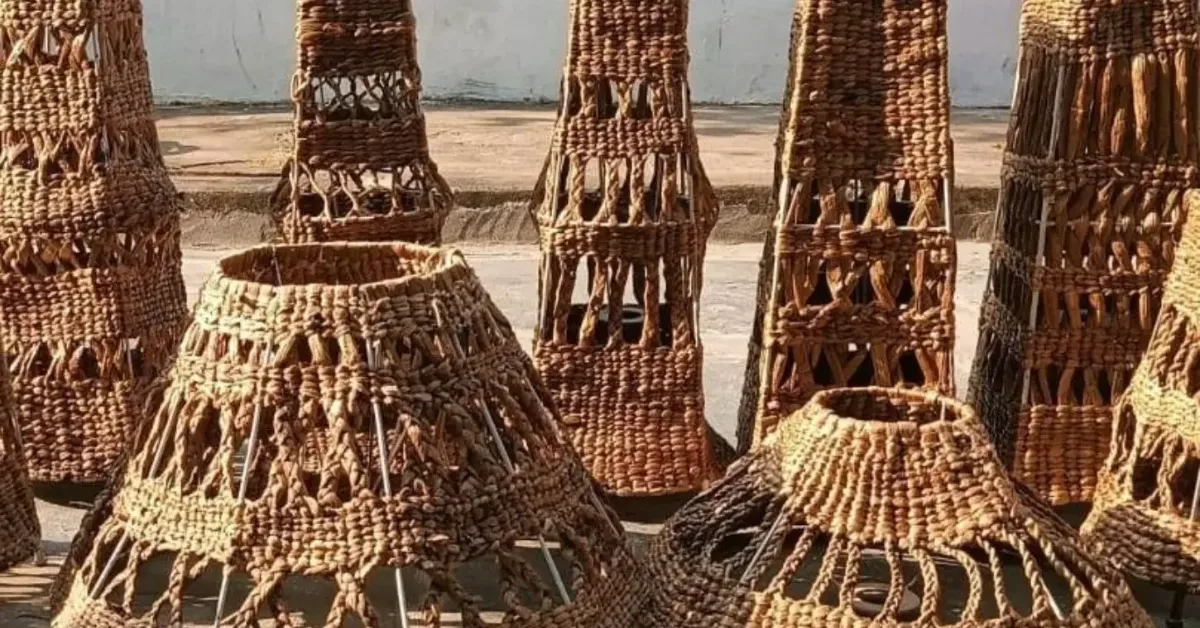
For Kalpana, a woman artisan in Andhra Pradesh’s Chinnapuram village, something that once clogged local waterways has become a source of income.
She works with water hyacinth, an invasive plant that spreads rapidly across canals and ponds. Once removed, it was usually thrown away. Today, women like Kalpana are turning it into handbags, baskets, lampshades and other products people can use at home.
“This work needs skill and dedication. Every product we make carries our effort and creativity,” Kalpana told The New Indian Express.
She reported earning around Rs 500 to Rs 700 a day from the craft.
And she is part of a growing effort that has trained around 150 women across Andhra Pradesh’s Krishna district to earn from a plant long considered a nuisance.
How did a troublesome weed become a livelihood?
For years, water hyacinth has troubled Krishna district’s canals and water bodies.
The fast-growing plant forms thick mats across the water, blocking movement and making it difficult to keep canals clear. Irrigation workers would remove it, only for the weed to grow back.
But what if the material being discarded could be put to use?
In October 2024, the Krishna district administration launched a training programme in Chinnapuram village, Machilipatnam mandal, to help women from self-help groups learn the craft of making products from water hyacinth.
The initiative began with 50 women and involved experienced artisans from Assam, including national award-winning craftsperson Rita Das and her team.
The women learnt how to collect, dry, weave and finish the plant into products suitable for sale.
The process requires patience. Once collected, the water hyacinth is dried in the sun for nearly 15 days. Its dried stalks are then woven by hand into different shapes, followed by gumming and polishing to give the finished products strength and a smooth appearance.
During training, participants received an allowance of Rs 300 a day.
Today, the Chinnapuram artisans produce around 50 to 60 varieties of handicrafts, including storage containers, mats, trays, handbags and decorative items.
The women have also formed a society called Hyaloom to manage orders, production and income sharing.
According to a February 2026 report by The New Indian Express, artisans in the group were earning an average of Rs 10,000 to Rs 15,000 a month, with earnings varying according to demand.
From one village to 150 trained women
What began in Chinnapuram has since expanded to other villages across Krishna district, including Chevendra, Leelagudem and Tamirisa.
By September 2026, around 150 women had received training under the initiative.
And the results extend beyond the products they make.
During the initial training phase, approximately 100 to 120 tonnes of water hyacinth were being removed every month. With growing orders, the programme now has the capacity to handle around 150 tonnes monthly in the areas covered.
According to The Times of India, the initiative has generated approximately Rs 20 lakh in combined sales and earnings, with an estimated margin of 20% after expenses, including labour charges.
The products are reaching buyers through Lepakshi, which has been supporting their marketing. The district administration is also exploring opportunities with major temples, including those at Srikalahasti, Srisailam and Kanaka Durga.
Women in Andhra Pradesh are converting water hyacinth into eco-friendly products, creating steady incomes while restoring local water bodies. A powerful blend of sustainability, innovation and women-led growth. 🌿✨ #AndhraPradesh #SustainableLivelihoods #EcoInnovation #WomenEmpowerment
— Andhra Community (@AndhraCommunity) February 1, 2026
Even the organic manure produced through the process is finding buyers among local farmers.
The next challenge is ensuring that women continue receiving orders.
“The next priority is to provide regular orders and sustainable market opportunities to the trained women,” Y Hari Hara Nath, project director of the District Rural Development Agency, told The Times of India.
The administration hopes to expand the programme to the district’s remaining 20 mandals.
For women like Kalpana, the change is already meaningful. A weed that once had to be cleared and discarded is now something they can shape with their own hands and sell.
And with each new order, the skills they have learnt offer another opportunity to earn.
Sources:
‘Women in Krishna district turn water hyacinth into source of livelihood’: By Vidya Dusi, Published on 26 September 2026
‘Women turn water hyacinth into livelihood’: By Y Brahmaji, Published on 1 February 2026
Disclaimer : This story is auto aggregated by a computer programme and has not been created or edited by DOWNTHENEWS. Publisher: thebetterindia.com