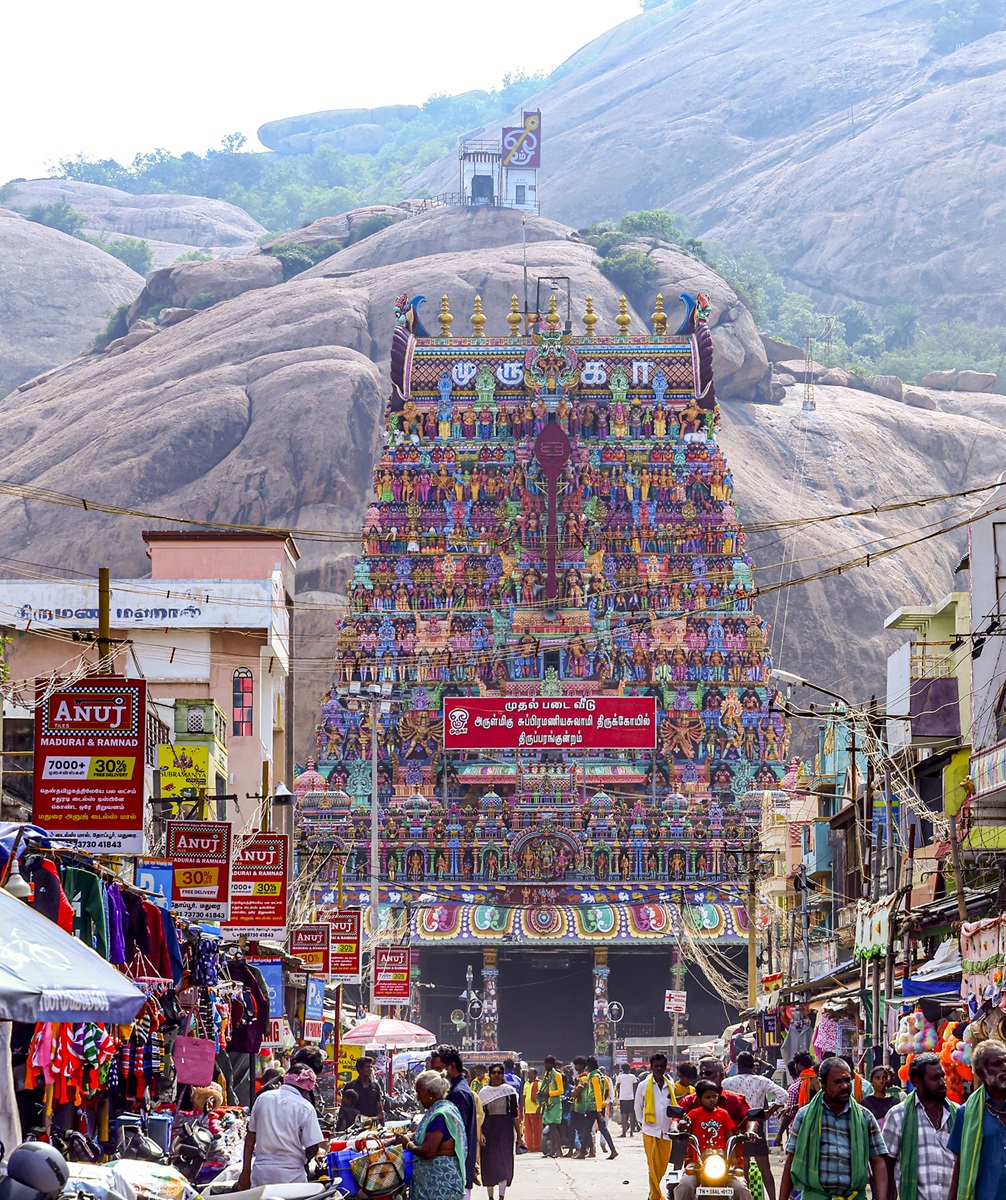
CHENNAI: Thiruparankundram temple, near the ancient town of Madurai, has hogged the national limelight after the deepam row. The temple has the rare distinction of being described by literary texts as old as 1,500 years and the hills find a place in the classical Tamil literature more than 2,000 years old.
Post-Sangam literature ‘Paripadal’ shows people visiting the temple on elephants, chariots, horses and on foot and the devotees playing veena, called brahma veena, besides yaaz, flute and drums using various musical notes called Ili, Kural and Samam.
There were sculptures inside the temple since the poem shows people looking at various scenes carved on the walls and there was an ‘Ezhuthu nilai mandapam’ which was full of paintings.
The practice of having elephants at the temple is also shown and there was a practice of women eating the remains of rice eaten by the elephants for a happy married life.
Most of the ancient Tamil texts describe the worship of Muruga by sacrificing a young goat as in ‘Natrinai’ song 47 which says ‘Mari aruthu annai ayarum Murugu’.
Another classical text, ‘Kurunthogai’, in song 263, speaks of goat sacrifice in the line ‘Marikkural aruthu’.
Another ancient text, ‘Agananooru’, describes the ritual called Velan Veriyattam in which the priest wears garlands, sacrifices goats, mixes the blood with red millet and scatters them on the floor in front of the erected spear.
The classical text ‘Agananooru’ associates Thiruparankundram with Muruga in poem 59 which says ‘Sinamigu Murugan Thanparan Kundram’, and poem 149 describes the town as ‘Odiya Vizhavin Nediyone Kundram’ which means hills of Murugan with unceasing celebrations. Classical text Madurai Kanchi, too, speaks about the hills without mentioning the presence of a temple.
Sangam classical texts do not show the presence of temples for worship and Tamil epic ‘Silappadikaram’ is the first ancient composition to speak of temples in Tamil land. ‘Thirumurugatru Padai’ of the second century is the first composition to say Muruga resides on top of the Thiruparankundram hills.
‘Paripadal’ is considered a post-Sangam literature and scholars like V. Rasamanickanar date it back to the sixth century. This is the first composition to describe a temple on top of the Thiruparakundram hills. Poem 17 of ‘Paripadal’, written by Nallazhiyar, commences with the lines ‘Thempadu Malarkuzhai Poonthugil Vadimani’, which means people offered fresh flowers, tender leaves, finely woven clothes and spears to the God.
The floor of the temple was coated with sandalwood paste, he says, adding, ‘Vidaiyarai Asaitha Velan Kadimaram’, which means a young goat was tied to a tree for sacrifice, showing that the custom was prevalent at the Thiruparankundram temple during the days of ‘Paripadal’.
The poem also portrays the ritual of ‘Velan Veriyattam’ in a graphic manner at the temple which was surrounded by the fragrance of flowers, flaming torches (theepandham), sounds of various musical instruments and the aroma of various fragrant materials.
The poet also says the waterfalls give a sound like drums while the beetles hum like flutes on the hills. He also shows men wearing flowers on their hair, visiting the temple to offer worship and says the hills saw frequent festivals.
The poet ends the song saying ‘Maninira Mangnai Ongiya Putkodi Pinimugam Oorndha Velpor Iraiva’ which means a peacock sits near Muruga who lies on Pinimugam (the elephant) with the flag of a rooster.
‘Paripadal’ also sings about the presence of a group of women who live and serve in Thiruparankundram temple. Poem 14, composed by Kesavanar, says, ‘Adiyurai Magalir Aadum Thole Neduvarai Adukathu Veiponranavey’ which means the shoulders of dancing women residing at the deity’s feet appear like the bamboo branches of the high mountains.
The cries of peacocks on the hills, the vengai flowers scattered on the rocks, red-coloured thondri flowers are described by the poet who says even during summer, the hills are cool and beautiful as if in the rainy season.
Poem 5, composed by Nallandhuvanar, compares the hills with the Himalayas in its greatness. He describes waterfalls from the hills and the lotus blooming in the ponds. He compares the trumpeting sound of the elephant ‘Pinimugam’ to thunder and the rooster of Muruga raising its sound as if to answer the elephant.
In an elaborate description of the hills, the poem says the beetles humming around the flowers resemble the musical notes of a yaaz, a stringed instrument. It also speaks about the bunches of ‘kondrai’ flowers and ‘kaandhal’ flowers shedding honey and spreading fragrance.
The prayers offered by women to the deity is also portrayed in the composition which says girls asked blessings to join with their beloved boys in life, while some married men seek blessings for a child. Some women offered prayers before Muruga to help their husbands, who have gone to distant places to earn money, to achieve their aims. Some of the women want their warrior God to support their husbands who have gone to wage a war in distant places. Some of the women were singing in praise of Muruga and some of them were dancing to accompanying music.
Disclaimer : This story is auto aggregated by a computer programme and has not been created or edited by DOWNTHENEWS. Publisher: deccanchronicle.com