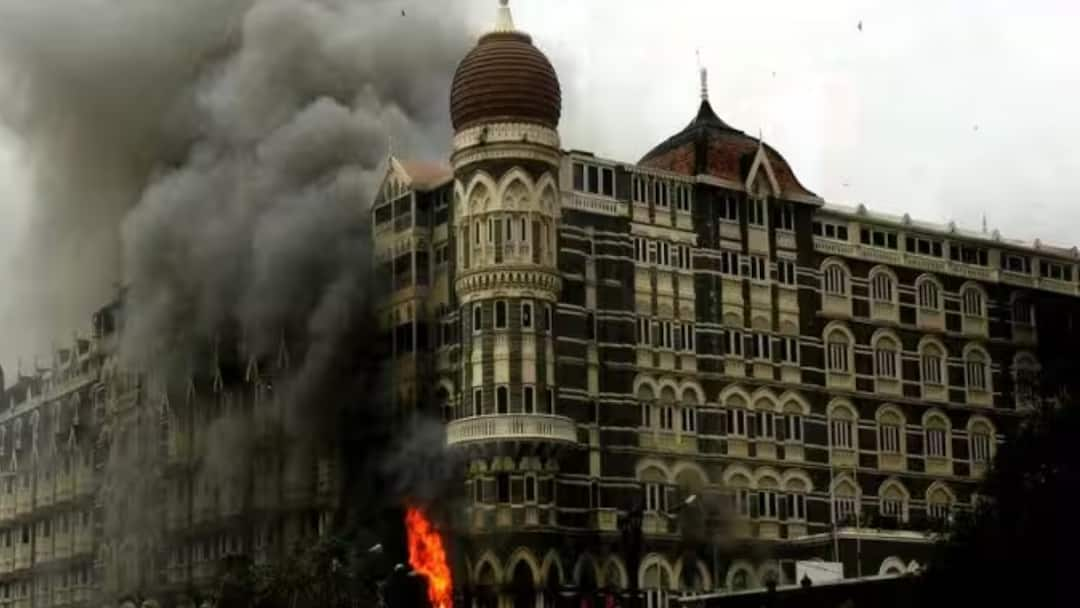
Eighteen years after the 26/11 Mumbai terror attacks, Pakistan’s alleged links with individuals associated with extremist organisations have once again come under scrutiny. Talha Saeed, son of Lashkar-e-Taiba (LeT) founder Hafiz Saeed, has reportedly been seen alongside political leaders in Lahore. The development has renewed concerns in India over Pakistan’s failure to take what New Delhi considers credible and irreversible action against terrorist networks operating from its territory.
Talha Saeed’s Political Visibility Raises Questions
The reported appearance of Talha Saeed with mainstream political figures has brought the issue of the alleged normalisation of individuals associated with extremist organisations into focus.
India has consistently accused Pakistan of allowing anti-India terror networks to operate from its soil. Apart from Lashkar-e-Taiba, security assessments have flagged the activities of Jaish-e-Mohammed (JeM), its affiliates and other extremist groups in Pakistan and Pakistan-occupied Kashmir (PoK).
Despite international scrutiny, including pressure associated with the Financial Action Task Force (FATF), New Delhi has maintained that Pakistan’s action against these organisations has been inadequate.
ALSO READ: Congress Open To BSP Alliance? Imran Masood’s Message To Mayawati Amid Deadlock With SP
Pakistan’s security and intelligence establishment has also faced longstanding allegations of using extremist groups as strategic instruments, particularly in relation to India. The reported proximity of individuals linked to these outfits to political leaders has added another dimension to these concerns.
26/11 Conspirators: Who Is Dead And Who Was Questioned?
Several individuals linked to the wider conspiracy are no longer alive. Abdul Rehman Makki, LeT’s former deputy chief and Hafiz Saeed’s brother-in-law, died in Lahore in December 2024. Ilyas Kashmiri, an al-Qaeda leader associated with Pakistan-based Harkat-ul Jihad Islami, reportedly died in a US drone strike in June 2011, as per reports.
Indian investigators have gained access to only two of the 10 accused in the conspiracy: David Coleman Headley and Tahawwur Rana.
Headley, a US national, was questioned by the National Investigation Agency (NIA) in 2011, although the United States did not hand over his custody to India.
Rana, a Pakistani-Canadian physician and Headley’s childhood friend, was extradited to India in April 2025 and is lodged in Delhi’s Tihar jail. The NIA filed a supplementary charge sheet in July 2025 following his interrogation.
What NIA Documents Say About Tahawwur Rana
According to the NIA’s court submissions, Rana was involved in the 26/11 conspiracy from 2006 onwards and travelled to India between November 13 and 21, 2008.
Investigators have also documented his movements in the days surrounding the attacks. He was reportedly in Dubai shortly before the assault, where he met Pasha, before travelling to China. On November 26, 2008, the first day of the Mumbai attacks, he travelled from China to the United States.
Key 26/11 Accused Still Believed To Be In Pakistan
Among the attackers identified in connection with the operation are Abu Qahafa, Abu Alqama, Muzammil, Abu Anas and Abu Hamza. They allegedly played different roles in preparing the 10 attackers, including training, operational briefings and religious instruction.
Abu Qahafa was identified as a senior LeT trainer responsible for weapons, explosives and technical training. Abu Alqama was described as a senior commander overseeing the group’s Kashmir operations until 2008 and participating in the training and briefing of the attackers.
Muzammil was reportedly a close associate of LeT commander Zaki-ur-Rehman Lakhvi, while Abu Anas allegedly managed an LeT safehouse in Rawalpindi.
Disclaimer : This story is auto aggregated by a computer programme and has not been created or edited by DOWNTHENEWS. Publisher: abplive.com