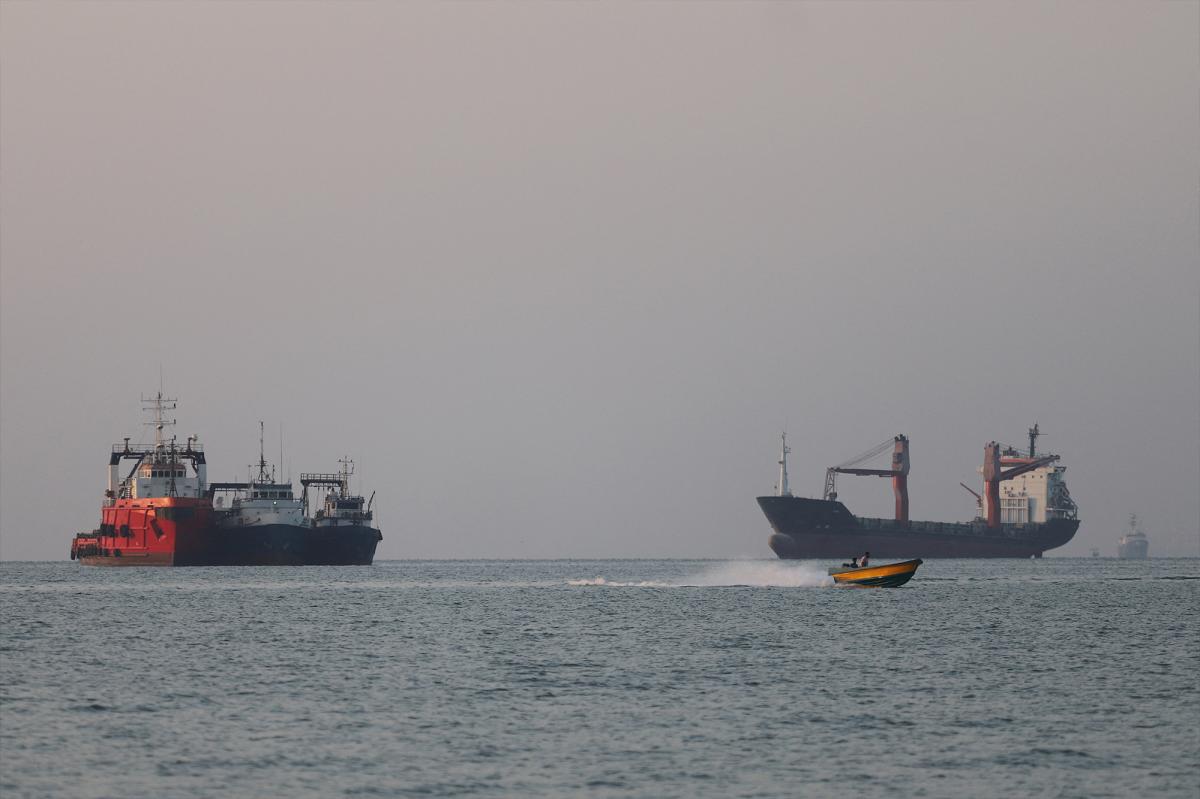
More than 2 million barrels of oil are transiting through the Strait of Hormuz every day despite the naval blockade of the critical passageway, experts said.
About 2.1 million barrels were snuck through the strait in the final two weeks of May, a steady supply that explains why oil markets have yet to suffer the type of shock expected when 15.6 million barrels are suddenly cut off, according to JPMorgan.
“Despite the ongoing naval blockade and the steep decline in commercial traffic, surprising volumes of crude and petroleum products still appear to be transiting the Strait,” Natasha Kaneva, JPMorgan’s head of global commodities strategy, wrote in a client note last week.
Jan Stuart, a global energy economist and strategist at investment bank Piper Sandler, said the 2.1 million barrels accounted for the ships that appeared to pay tolls to Iran for safe passage, CNN reported.
The Islamic Republic has created the Persian Gulf Strait Authority (PGSA) to oversee a toll system through the waterway, with previous reports suggesting oil tankers could pay as much as $2 million to transit.
The PGSA claimed last week that at least 300 non-Iranian ships had applied for the program, with the majority of them being oil tankers bound for Asia despite warnings from the US and its blockade force in the Gulf of Oman.
An additional 900,000 barrels currently flowing through the Strait of Hormuz every day were also being transported through vessels opting to “go dark” in the waterway, Stuart added.
Nearly 900 tankers have passed through the Strait of Hormuz between March 1 and May 19, according to maritime data company Kpler. At least 358 of those vessels did so while employing shadow fleet tactics to avoid detection, with the move gaining wider traction as the conflict in Iran continues.
US Energy Secretary Chris Wright confirmed Tuesday that traffic through the Strait of Hormuz was “rising very meaningfully” during an interview at the Atlantic Council Global Energy Forum.
The flow of oil, however, remains a mere fraction of what it was when more than 130 ships sailed through the Strait of Hormuz every day before the war — with total depletion rates still on the rise as nations around the world are forced to tap into their fuel stockpiles.
The average loss of oil in the first month of the conflict peaked at around 500,000 barrels per day, but starting in May, the depletion rate rose to 710,000 bpd, according to Reuters.
Oil shipments have also become increasingly hard to predict since the ships that turn off their radars can no longer be accurately tracked until they have already arrived at their destination, causing further volatility in fuel prices.
“Things are going to get worse,” Stuart said while predicting the Brent average to soar to an average of $130 a barrel in July and August.
Disclaimer : This story is auto aggregated by a computer programme and has not been created or edited by DOWNTHENEWS. Publisher: nypost.com