Frequently Asked Questions
What are the benefits of hyaluronic acid?
Known as a humectant, hyaluronic acid is “great at holding water and giving skin resilience and firmness,” New York City-based board-certified dermatologist Doris Day, MD, tells Allure. Although we naturally produce hyaluronic acid in our bodies, as we age, the quantities decrease (similar to collagen), making our skin more susceptible to dehydration.
With consistent use of hyaluronic acid, you’ll likely notice an immediate improvement in the hydration of your skin, Jacquelyn Sink, MD, a Chicago-based board-certified dermatologist, tells Allure. “Long-term benefits are seen as early as two weeks with continued improvement through several months,” she adds. All year round, our skin craves moisture to counteract a range of skin-care concerns, including sun exposure, signs of aging (such as fine lines), loss of elasticity, and dehydrated skin.
As with all ingredients, over-the-counter, topical products don’t have the same benefits as prescriptions or in-office treatments—but that doesn’t mean you shouldn’t incorporate them into your skin-care routine. “We can inject hyaluronic acid into the deeper layers of the skin to help restore lost volume, but when used in creams, lotions, and serums, it can also do wonders for rejuvenation and hydration.” You can quite literally get hyaluronic acid fillers at your board-certified dermatologist’s office.
Is hyaluronic acid safe for all skin types?
Because of its non-irritating nature, hyaluronic acid face serums are generally suitable for multiple skin types, including sensitive skin, according to Dr. Sink. To get the most from your serum, she shares her preferred application method. “Hyaluronic acid serums are best applied to slightly damp skin and before applying other products,” says Dr. Sink. “Moisturizing with a thicker cream or serum afterward can help lock in hydration.”
As we mentioned, your skin’s hyaluronic acid levels decrease with age, so if you want to maintain your moisture barrier and replenish hydration, consider adding hyaluronic acid-infused products to your daily skin-care routine. (You’ll also see HA commonly listed as sodium hyaluronate, a stabilized version of the ingredient.)
Is there a downside to hyaluronic acid?
Overall, hyaluronic acid is a gentle, non-active ingredient that’s suitable for most skin types. According to Marisa Garshick, MD, a board-certified dermatologist based in New York City, there are no known side effects of utilizing hyaluronic acid—it’s produced in our bodies, after all—but if you’re prone to sensitivity, consult with your dermatologist before incorporating a new product into your routine. “Active ingredients, which tend to feel irritating on sensitive skin, and synthetics, like fragrance and dyes, could be the culprits of any irritation,” she says.
Meet the experts
- Alexandra Bowles, MD, a board-certified dermatologist at MONA Dermatology based in Cincinnati
- Doris Day, MD, a board-certified dermatologist based in New York City
- Marisa Garshick, MD, a board-certified dermatologist based in New York City
- Deanne Mraz, MD, a board-certified dermatologist based in Westport, Connecticut
- Jacquelyn Sink, MD, a board-certified dermatologist based in Chicago
How we test and review products
When Allure tests a product, our editors look at it from every angle in an effort to best serve you. We review ingredients, scrutinize brand claims, and, when necessary, examine peer-reviewed scientific and medical studies. In addition to testing each and every product that’s included in each and every review, we rely on experts who shape their fields, including dermatology, cosmetic chemistry, and medicine, to help us vet the ingredients and formulas.
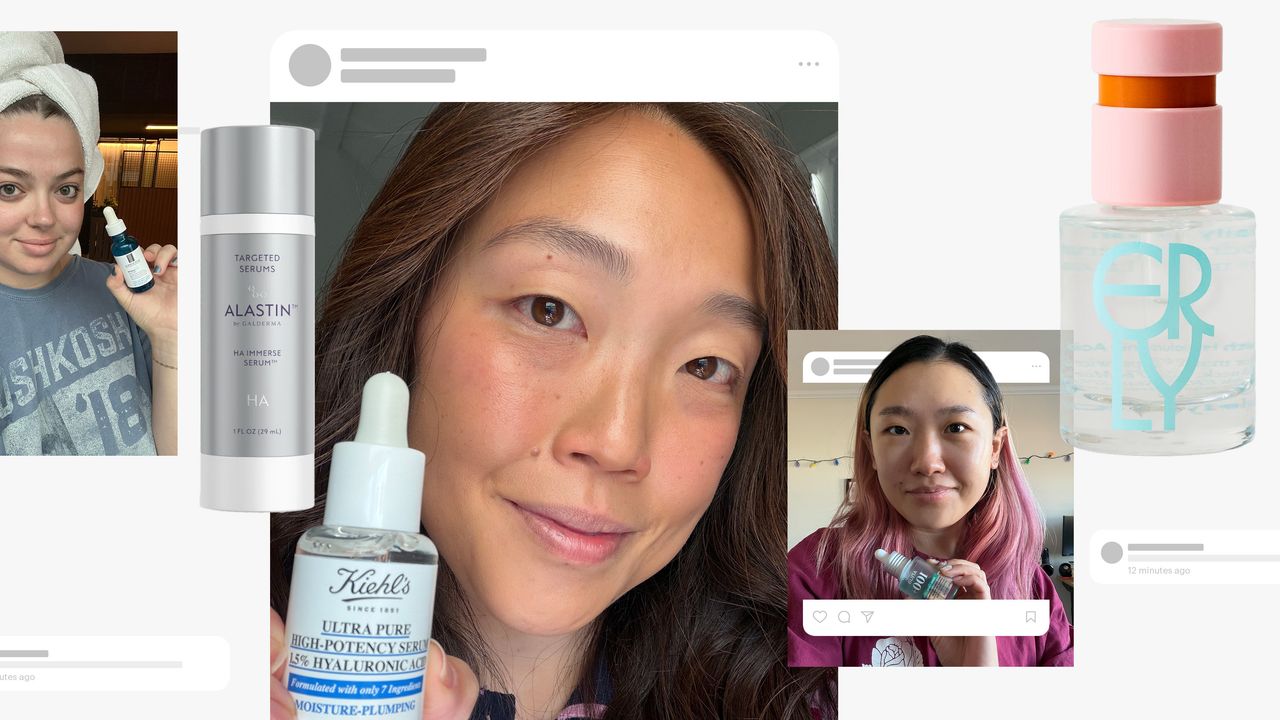
For our list of the best hyaluronic acid serums, we considered each product’s performance across five primary categories: product ingredients and efficacy, packaging, fragrance, texture, and product wear. Every product was determined to have excelled in each category by our editorial team, which is composed of in-house writers and editors as well as contributors—along with special consideration from board-certified dermatologists. To learn more information on our reporting and testing processes, read our complete reviews process and methodology page.
Our staff and testers
A beauty product is a personal purchase. You might be searching for a face cream to address persistent dryness or a new nail product to add to your Sunday self-care routine; you may simply be browsing around for the latest launches to hit the hair market. No matter what you seek or your individual needs and concerns, Allure wants to ensure that you love anything we recommend in our stories. We believe that having a diverse team of writers and editors—in addition to the wide range of outside testers and industry experts we regularly call upon—is essential to reaching that goal.
After all, can we really say a skin-care product is the “best” for people over 50 if the only testers we’ve solicited opinions from folks who have yet to hit 30? Can we honestly deem a high-end diffuser worthy of your hard-earned cash if it’s never been tested on curls? We’re proud that our staff spans a wide range of ages, skin tones, hair textures, genders, and backgrounds, which means that we are able to fairly assess any beauty product that comes into the beauty closet.
Skin-care science 101 starts now—read up about all of the must-know ingredients:
Disclaimer : This story is auto aggregated by a computer programme and has not been created or edited by DOWNTHENEWS. Publisher: www.allure.com