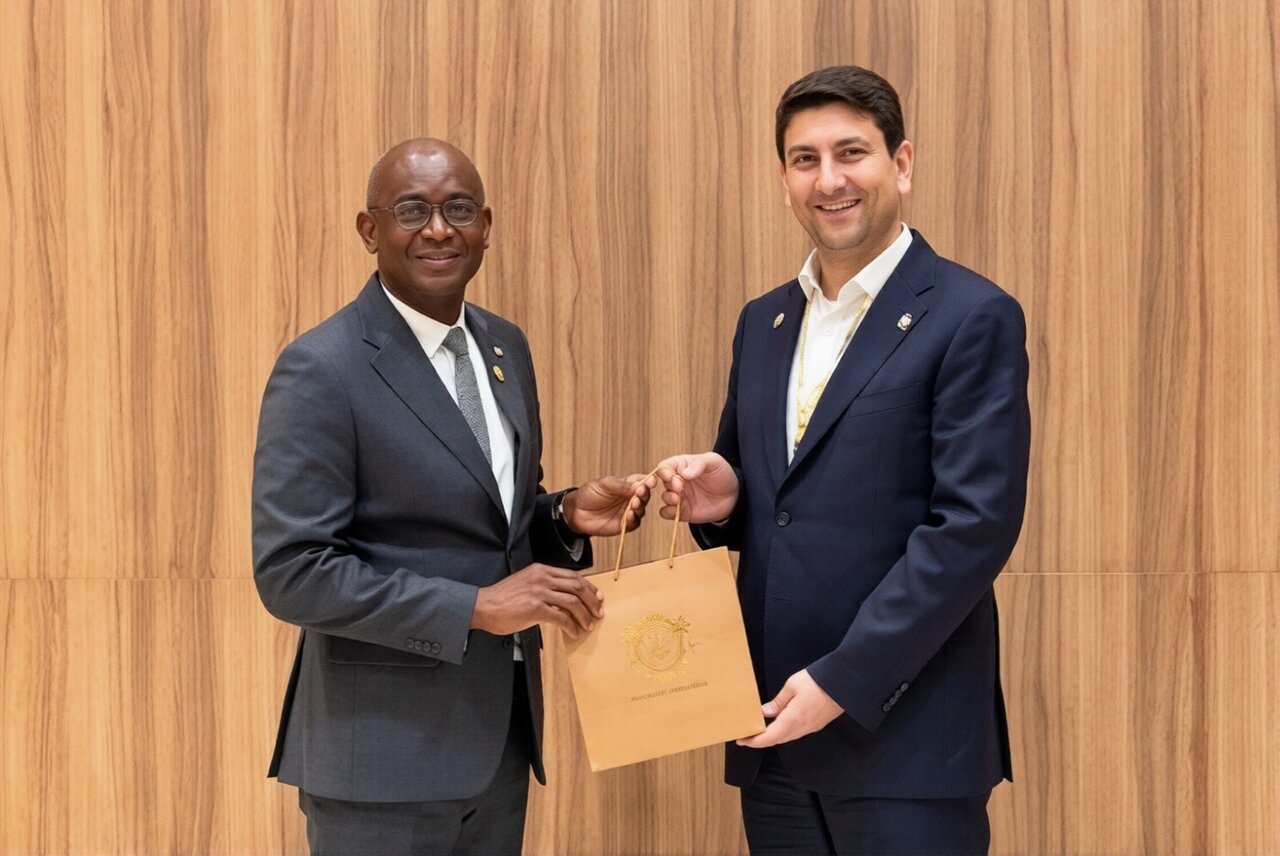
TEHRAN – Information and Communication Technology (ICT) Minister Sattar Hashemi and Ivorian Minister of Digital Transition and Technological Innovation Djibril Ouattara have explored the potential to expand cooperation in the ICT sector.
The officials met on the sidelines of the International Telecommunication Union (ITU) Plenipotentiary Conference (PP-26), which is taking place in Doha, Qatar, from November 9 to 27 November, Mehr news agency reported.
Expounding on some of the important ICT projects and the scientific and academic capacities of the country, Hashemi voiced Iran’s readiness to share expertise and promote collaborations in developing and expanding ICT infrastructures, particularly artificial intelligence, and the joint implementation of fiber-optic projects, as well as to sign a memorandum of understanding in the field of ICT. He also emphasized the necessity of establishing a clear, strategic roadmap to pursue and operationalize technological cooperation between the two sides.
Referring to the importance of cybersecurity in the development of digital services and infrastructure, he stressed the need for the exchange of experiences and solutions to counter cyberattacks.
For his part, Ouattara underlined the significance of enhancing collaborative efforts in the field of ICT, saying the Ivorian ambassador to Tehran will follow up on the agreements reached.
The official also welcomed Iran’s proposal to host an Ivorian specialized delegation, noting that it will help focus on details and developing joint initiatives in digital technologies.
The Plenipotentiary Conference is the principal governing body of the ITU. It serves as the authoritative decision-making mechanism on the organization’s strategic and financial plans, leadership, and overall direction.
Held every four years, the ITU Plenipotentiary Conference (also known as “Plenipot” or “PP”) affirms common positions among ITU’s Member States worldwide. PP-26 calls on countries to work “Together for a connected digital future.”
Delegates from ITU’s 194 Member States will address the world’s most pressing digital opportunities and challenges, define the UN agency’s strategic vision through 2031, and elect its leadership for the coming four years.
The conference is also expected to address critical, collective issues, such as expanding global connectivity and investment, strengthening the resilience of digital infrastructure, ensuring reliable emergency and humanitarian communications, advancing space-based connectivity and sustainability, and harnessing emerging technologies for development.
PP-26 features an extensive Ministerial Program, with high-level thematic discussions on resilience and emerging technologies, offering senior leaders a platform to exchange insights, showcase national achievements, and address shared challenges. The conference further supports the meaningful participation of women and youth, with dedicated activities on inclusion and accessibility in the digital transformation agenda.
ITU Member States will elect the organization’s top management team as well as members of the ITU Council and Radio Regulations Board. Member States will also agree on the organization’s strategic and financial roadmap for 2028 to 2031.
An Iranian delegation led by the ICT minister is attending the conference with the aim of bolstering technology diplomacy, bilateral and multilateral collaborations, and pursuing the interests of the country in global governance of information and communication technologies.
Holding meetings with his counterparts and senior officials of the member states, and exploring opportunities for cooperation in advanced technologies, digital economy fields are among the other scheduled plans of the Iranian delegation.
Tehran hosts meeting of African envoys to boost science, health cooperation
On December 7, 2025, Iranian officials and the ambassadors of 19 African countries met in Tehran to discuss ways to enhance cooperation in the fields of science, education, research, and health.
Addressing the meeting, held in Tehran, Nader Tavakoli, the Chancellor of Iran University of Medical Sciences, said, “Despite coercive sanctions, the country has managed to make great strides in the health sector, from education and treatment to technology and production of medicines, relying on committed and creative human resources,” IRNA reported.
“Now, we are ready to share these achievements with Africans through establishing a strategic health alliance between Iran and African countries,” Tavakoli highlighted.
Elaborating on the core areas of the strategic alliance, he said that researchers will focus on addressing real-time illnesses, such as tropical and endemic diseases, drug shortages, and health service delivery in rural areas.
Admitting African students and developing joint educational courses, with dual accreditation, as well as dispatching professors for training of trainers, will be another part of the alliance.
Other main components of the strategic alliance will include sharing technical knowledge in fields such as manufacturing vaccines, biosimilar drugs, and medical equipment by establishing a collaborative production line in African countries, Tavakoli added.
The expansion of scientific interactions between Iranian and African scientists was the last point mentioned by the official. The strategic alliance will lay the basis for boosting scientific collaborations between over 60 universities and hundreds of top research centers across the country, he further noted.
On December 8, 2025, the ministries of health and foreign affairs, in a virtual meeting with Iranian ambassadors and attachés in Africa, discussed the potential for promoting cooperation with African countries in the health sector.
During the meeting, Alireza Biglari, the deputy health minister for international affairs, highlighted the country’s capabilities in areas related to health. Referring to the existing capacity as a valuable opportunity for the expansion of health diplomacy and the favorable condition for cooperation with African countries, the official announced the readiness of the health ministry to implement decisions and operational plans, IRNA reported.
For his part, Akbar Khosravi Nejad, Assistant to Iran’s Foreign Minister and Director General for Africa, underlined the importance of Africa in Iran’s foreign policy, and said that the country’s health system is one of the main sectors for enhancing collaborations with these countries.
Tavakoli, for his part, presented an account of the current activities and programs of the university in Africa, as well as plans to meet African ambassadors in Tehran.
MT/MG
Disclaimer : This story is auto aggregated by a computer programme and has not been created or edited by DOWNTHENEWS. Publisher: tehrantimes.com