
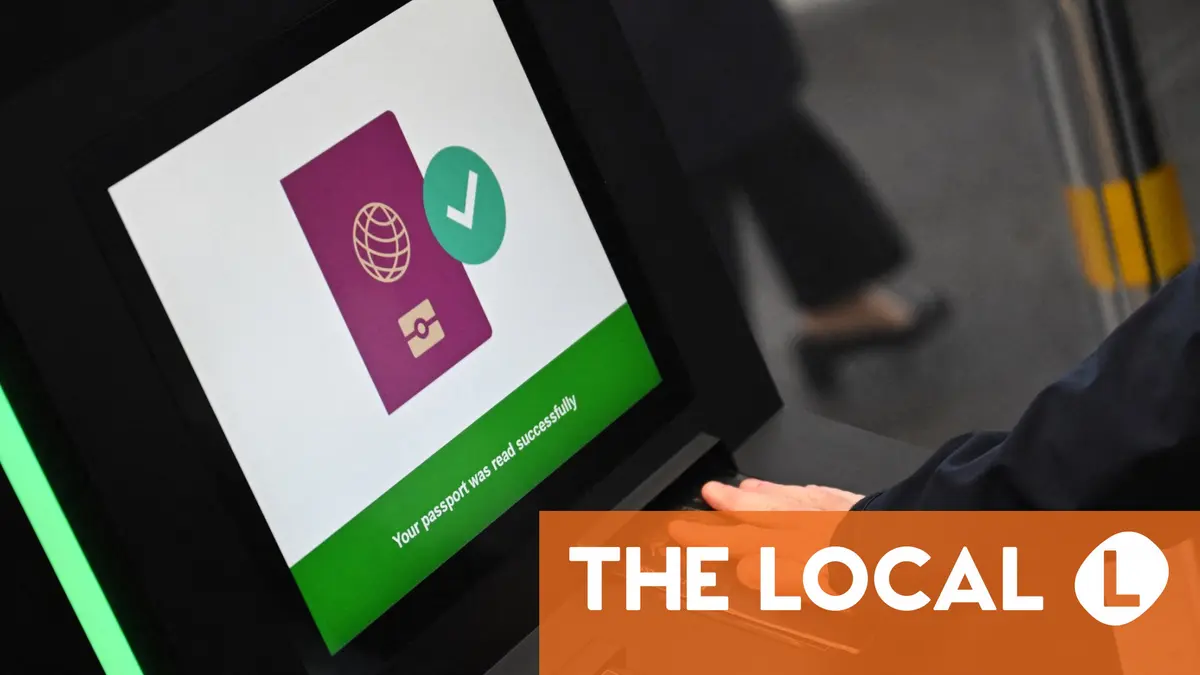
The EU’s new biometric border system is supposed to make counting the 90-day rule easier, but errors in some travellers’ records have been reported – here’s how to check, and what to do if the information is incorrect.
The EU’s new Entry & Exit System, which became fully operational in April 2026, is supposed to increase border security, including tightening up enforcement of the 90-day rule.
This rule allows visa-exempt travellers from certain non-EU countries, including the UK, to spend up to 90 days in any 180-day period within the Schengen zone without needing a short-stay visa.
The allowance is shared across Schengen countries, rather than applying separately to Germany.
Previously this rule was checked through the stamping of passports as people entered or left the Schengen zone – but EES replaces passport stamping with digital entry and exit records for travellers covered by the system.
But some travellers have reported encountering incomplete or inaccurate EES records at Schengen borders, leading to them being wrongly identified as having overstayed their allowance.
So how can you check?
The European Commission provides an EES online tool, intended to show how long you can still stay in the countries using the system.
You can find it here – simply enter your passport number and the details of your trip, and it will tell you how long you have left on your allowance.
READ ALSO: How long are EES waiting times at German airports?
What does this calculator actually show?
The site has some blind spots, which reflect the transition to the new system.
For example, it says: “Please note that the remaining authorised stay does NOT reflect any time spent in the Schengen area that began before April 10th, 2026, regardless of whether the visit ended before or continued after that date.”
The site also carries a warning that, until October 6th, 2026, its “OK” answer could be unreliable for some single- or double-entry visa holders whose permitted entries had been used during the rollout period. That warning’s stated period has now ended.
The tool uses EES information, but not being asked to complete pre-registration at a kiosk does not mean your days won’t count: registration can also be completed by border officers at a manual control desk.
Travellers are advised to continue to keep their own private record of their travels and use it to check that they’re within the applicable 90-day limit. If the online result differs from your records, seek clarification rather than relying on it alone.
There are also cases where the system’s information may be wrong. Issues to check include:
Exit not recorded – the system is supposed to log entries and exits, but missing departures have been reported. If an entry is recorded without the corresponding exit, the record can make it appear that you remained in Schengen and exceeded your permitted stay.
READ ALSO: Pet passports set to be restored between the EU and the UK
Residency permit/visa holders recorded – non-EU nationals with a qualifying residence permit or national long-stay visa issued by a Schengen country, including Germany, should not be registered in EES, since they are exempt from the system.
When crossing an external border, keep your passport together with your valid permit or visa available and make your residence status clear if an officer appears to be processing you as a short-stay visitor.
Incorrect details – if the information associated with your travel document is inaccurate or incomplete, you have the right to request that it be corrected or completed.
What to do if the details are wrong?
If the EES calculator shows a total that does not match your actual travels, you can request access to your underlying record and ask for inaccurate or incomplete information to be corrected.
The same rights apply if a border guard tells you you’ve overstayed, or are close to your limit, and you believe the record is incorrect.
Travellers can contact the controller for the relevant country – which is either the country where the error was made or the country where you last travelled.
In Germany, the Bundesverwaltungsamt, or Federal Office of Administration (BVA), provides an EES access-request service and lists the following email address for further questions: eu-zentrale-services@bva.bund.de.
You can find more contact details for Germany and all other EU/Schengen zone countries here.
Explain which travel record you believe is wrong and the correct dates, along with proof of your departure, such as a boarding pass or ferry/train ticket. If you hold a residence permit or long-stay visa, explain that status too. Ask the authority which copies of identity and residence documents it requires and how to submit them securely.
The BVA’s guidance states that access requests are processed within 45 days of receipt.
If you need to travel within that timeframe, take evidence of your recent journeys into and out of Schengen so you can show your actual entry and exit dates. This is a precaution, not a guarantee there will be no difficulties at the border.
READ ALSO: EU Commission mulls revision of Schengen visa rules and fees
Residency permit/visa holders – holders of a qualifying German residence permit or national long-stay visa are exempt from EES registration. Their authorised stay in Germany is governed by their residence document or visa, rather than the ordinary short-stay allowance.
But ordinary visits to other Schengen countries are generally limited to 90 days in any 180-day period and remain subject to the applicable entry conditions.
With reporting by Tom Pugh.
Disclaimer : This story is auto aggregated by a computer programme and has not been created or edited by DOWNTHENEWS. Publisher: thelocal.de








