Professional women’s sports have entered a new era.
A state-of-the-art training facility is now necessary for franchises to attract the best players and staff and survive in a fiercely competitive landscape. According to a white paper that global design firm Populous and advisory firm Comeback Ventures will release Thursday, companies are reimagining what sponsoring these facilities looks like.
Advertisement
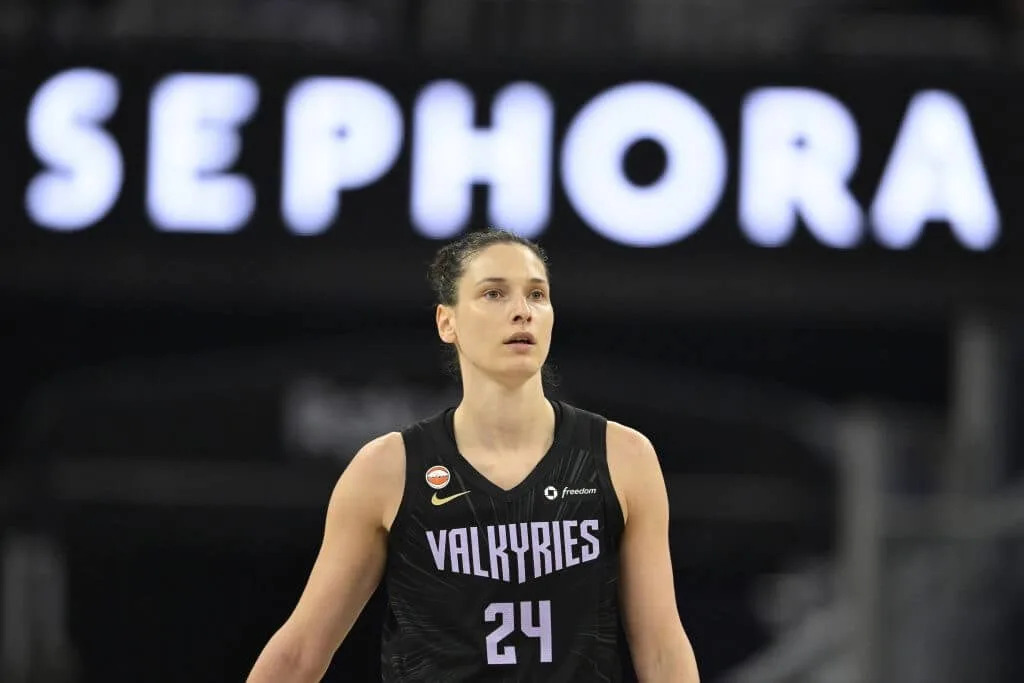
For Denver Summit FC in the National Women’s Soccer League, it meant converting their future naming rights with CommonSpirit Health to upfront infrastructure capital. In the Bay Area, the WNBA Golden State Valkyries’ landmark partnership with Sephora went beyond a naming rights deal, fueling athlete-led storytelling and player-designed fashion events. Whether sponsoring a new league such as Unrivaled or investing in a unique opportunity such as the first performance center shared by WNBA and NWSL teams, women’s sports sponsors are leveling up.
The 16-page white paper was produced by Populous, which has worked on several of the facilities used as examples in their findings, in partnership with Comeback Ventures, an advisory firm that provides strategic management services to clients across sports, media and entertainment. Stakeholders providing insights for their findings include Denver Summit, RAJ Sports, Sequel, Unrivaled and Whitecap Sports Group, a sports investment banking firm.
Sponsors in professional women’s sports, according to the report, are finding ways to establish immersive engagement through their partnerships, rather than treating brand exposure as static inventory, signaling new opportunities for teams and their sponsors. This will likely grow as more teams invest in these facilities, which require outstanding capital that can be fueled by these partnerships, and as the women’s sports space continues to grow.
“As more organizations evaluate these investments, there is a growing opportunity to think more expansively about the role these facilities can play, not only in supporting athlete performance, but also in strengthening partnerships, deepening community engagement, and creating long-term business value,” the white paper reads. “When approached strategically, training facilities become year-round engines for partnerships, content, community engagement, and brand storytelling.”
Advertisement
This is mutually beneficial for teams and sponsors, since women’s sports fans tend to be more engaged with the brands sponsoring their favorite players and teams. A report by MarketCast last year found that, for example, 75 percent of NWSL fans are likely to try products from official sponsors compared to MLS fans, and, similarly, 58 percent of WNBA fans are likely to support official league sponsors compared to 45 percent in the NBA.
Legacy sponsorship models tend to be more static.
The white paper argues that these models were developed when broadcast exposure was the dominant form of sports marketing, which means that brands and teams still rely on a set of metrics, including linear television viewership and static logo exposure, that don’t fully encompass the potential value tied to training facilities. The unique behavior of women’s sports audiences (younger, more digitally native, more values-driven, more engaged with players) is shifting how brands evaluate these partnerships, turning facilities into an opportunity to generate value beyond broadcast.
A facility, the white paper states, offers a daily environment for athletes and staff, production hubs for digital and social content, locations for youth development and mentorship and a year-round destination for fans and local communities — in other words, more touchpoints for brands to engage with athletes and fans.
Advertisement
According to the white paper, the Golden State Valkyries have developed “one of the most deliberate partnership strategies in women’s sports.” One clear example is when Sephora U.S. became the naming rights partner for the 2026 WNBA Champions’ 31,800-square-foot performance center in Oakland and the presenting partner for the “Valkyries Content Day and Training Camp.”
The partnership included game-day activations and non-game-day experiences, including a fashion show featuring player-designed collections and athletes as models. The training facility has become a year-round destination for content, community engagement and brand storytelling, creating a “more durable value” for the team and its partners. This approach resonated commercially, the report argues, and the team’s wild commercial success over the past two years is proof.
The team became the fastest franchise in WNBA history to win a title and the first franchise in women’s professional sports to surpass $100 million in annual revenue in its second season. Recent estimates value the team between $850 million (Sportico) and $1 billion (CNBC), making them possibly the first billion-dollar professional women’s sports team.
Another successful sponsorship model the report points to is Denver Summit FC’s partnership with CommonSpirit Health, which helped finance the team’s training facility. A training facility and access to an elite stadium have become a prerequisite for the NWSL when awarding franchise rights to expansion teams.
Advertisement
“Increasingly, there is more movement in women’s sports to invest in health science and performance, which upped the ante to be a part of what we are doing,” Denver’s president Jen Millet said in the report. “The investment by CommonSpirit is on par with investments across sports, both men’s and women’s. CommonSpirit saw value in being part of the project from the beginning.”
In this case, the club secured CommonSpirit as a founding partner and naming-rights sponsor for their performance center, and then used their long-term contracted sponsorship payments as collateral for a loan to support construction.
A training facility bolsters player recruitment and was surely a driver in helping Denver Summit field its inaugural team for the 2026 season, which included a marquee signing: U.S. women’s national team captain Lindsey Heaps. Guaranteed facilities were an especially important recruitment tool for expansion clubs this year, as the league eliminated its expansion draft.
RAJ Sports, which owns the Portland Thorns of the NWSL and the WNBA’s Portland Fire, built the first performance center serving two professional women’s sports teams across two leagues, offering sponsors a unique opportunity to reach both leagues.
Advertisement
John Torris, RAJ Sports’ executive vice president of commercial strategy, said the performance center drew inspiration from the Olympic Village model, while focusing on creating a space purpose-built for women’s athletes. RAJ Sports partnered with health care provider Kaiser Permanente for their vision. “The partnership with Kaiser Permanente goes beyond branding. It is a collaboration across medical, physical, mental, preventive, and community health. We are focusing on fewer partnerships with deeper integration across both teams,” Torris said in the white paper.
These opportunities continue to grow as more leagues and teams enter the fold.
Unrivaled, the 3v3 professional women’s basketball league, used its partnership with Samsung to help build out players’ daily training ecosystem through recovery tech and tools that enhance an athlete’s experience. Atlanta City FC, joining the NWSL in 2028, is actively planning their future training facility. One concept under consideration includes creating spaces where fans and local organizations can engage with the senior team through youth clinics, educational programming and other community events — another growing space for brands in the women’s sports space that prioritizes long-term community.
“Training facilities sit at the intersection of performance, culture, and commerce. When designed intentionally, they can strengthen athlete development, deepen community engagement, and unlock entirely new partnership models,” the white paper concludes. “The organizations that recognize this opportunity will not only compete more effectively for talent. They will also build stronger, more sustainable business models for the future of women’s sports.”
This article originally appeared in The Athletic.
NWSL, Sports Business, Women’s Soccer
2026 The Athletic Media Company
Disclaimer : This story is auto aggregated by a computer programme and has not been created or edited by DOWNTHENEWS. Publisher: Sports.yahoo.com