
I’ll always remember Fred Nile as one of the LGBTQIA+ community’s inadvertent allies (“Tributes, discord after veteran MP Nile’s death at 92”, November 23). By making opposition to our most basic human rights appear so unhinged and irrational, he rallied many folk to our cause and earned himself the rare honour of having his head carried on a platter in the Sydney Gay and Lesbian Mardi Gras Parade. Peter Fyfe, Enmore
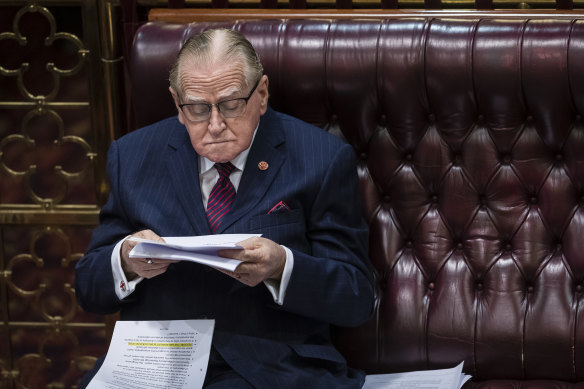
The recommendation for a state funeral for Fred Nile, apart from causing some grief to those whose lifestyles he constantly criticised over decades, brings up the question of such funerals for anyone. Surely people who are able to afford a funeral should not be given limited government resources at a time when we are told spending should be reined in? Being a member of parliament is both a service and a job, for which the person is well paid. A state funeral should be something reserved for the most extraordinary circumstances, if given at all.
Maureen Partridge, Baulkham Hills
Fred Nile was entitled to his political opinions, which were obviously informed by his faith. However, by my calculation, he was 89 at retirement; a very old white guy presumably still aiming to influence parliament over, for example, reproductive and romantic choices for young women. Is his exceedingly long career something to celebrate just in itself? We need wide representation in NSW parliament, of course, but that seems extreme. Even the House of Lords in the UK is looking at capping membership at 80 years of age. Celebrate political achievements by all means, but not the inability to let go of power.
Lucy France, Cronulla
In the spirit of reconciliation, let’s have a joint state funeral for both Fred and Molly (“Molly Meldrum dies aged 83”, smh.com.au, November 23).
Tom Kelly, Potts Point
COP’s success from failure
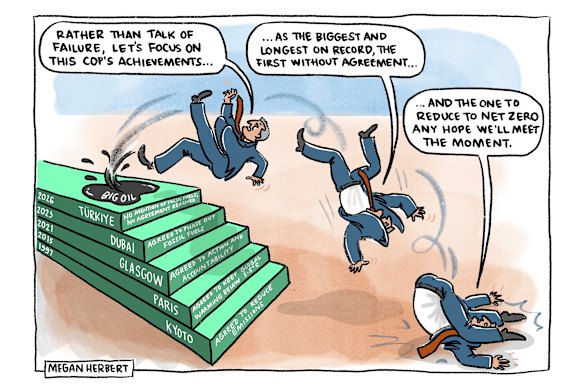
The failure of the COP (“Coalition demands Bowen’s head as COP31 ends without a deal”, smh.com.au, November 23) may be, ironically, a reason to be hopeful. At long, long last a sense of desperate urgency seems to have intruded upon international deliberations on the slow-motion disaster that is climate change. One well-written, popular science article in 1966 was enough to make me a believer in the phenomenon and the threat it imposed, but I was young and naive and thought it should probably be addressed by 1986, or 1996 at the latest. Every year the cost of remediation has risen, but the tools for remediation have also improved so that, with a great effort, humanity may still avoid a catastrophe of its own making. So, this apparent failure may hopefully be the spur to the type of decisive action lip-service agreements have, so far, failed to inspire.
Lance Rainey, South Grafton
If every cloud has a silver lining, I think I found one in COP31. We won’t have to worry about promises made in the final agreement going unfulfilled.
Neville Turbit, Russell Lea
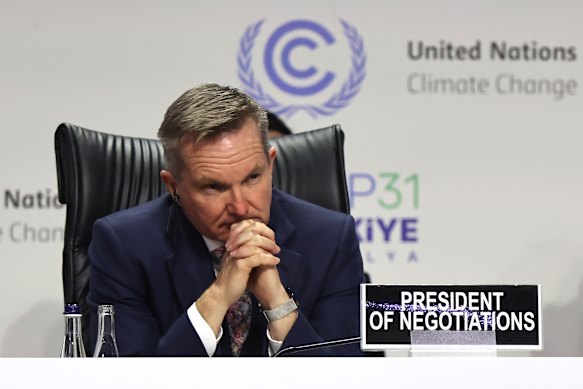
The collapse of the recent COP negotiation without an agreed statement should come as no surprise. The goals of the Paris Agreement to contain global warming to 1.5 degrees are antithetical to the goals of the major fossil fuel producers, notably Saudi Arabia and Russia. But let’s not forget on which side of the line Australia falls. We are the third-largest exporters of fossil fuels, notability coal and unnatural gas. While I am sure Chris Bowen did his best as chair of the COP negotiations, vested interests in Australian politics have made it clear where they stand. State and federal Labor parties continue to approve new coal and gas projects to further increase global emissions. Both sides of politics are in the pocket of the fossil fuel industry. Without transparency on political funding, Australia will continue down the path of fossil fuel dependence, to the detriment of the planet. Until this changes, Australia has no credibility in the climate debate.
Neil Ormerod, Kingsgrove
Opposition leader demands Bowen step down. Only if Angus Taylor steps up. Pigs might fly.
Mike Richie, Haberfield
Power play
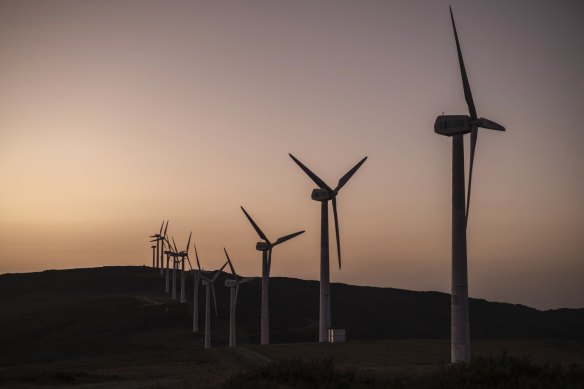
It’s extraordinary that renewable energy has cut wholesale power prices by up to 50 per cent (“Renewables have shielded power bills: economist”, November 23). Year after year the CSIRO and the energy market operator have found that wind and solar, backed by storage, are the cheapest ways to build new power supply. Yet the gap between this economic reality and our current political landscape is staggering. Clean energy is already saving households money while tackling climate change. Rather than being drowned out by the noise around costlier, polluting alternatives, its supporters should be shouting this from the rooftops, especially those covered in solar panels.
Sarah Brennan, Hawthorn (Vic)
How refreshing it is to see a dispassionate comparison of the benefits of renewables compared with carbon based alternatives. Guy Debelle has also torpedoed Angus Taylor and Tony Abbott’s passion for nuclear. If it ever was a viable means of electricity generation, its days are long gone. Angus Taylor just wants to create an argument with the Albanese government, but it seems Tony Abbott is incapable of thinking outside the constraints of his dinosaur mindset.
Ian Adair, Hunters Hill
I am no economist, but Guy Debelle overlooks the network charges driving up household bills when new transmission projects face 100 per cent cost blowouts. Putting solar panels on urban warehouses and commercial rooftops is a sensible way to ease that grid pressure. Yet our network of coal-fired stations is steadily shutting down. Today, 31 countries run nuclear plants and roughly 35 more are planning or building their first. Meanwhile, Australia holds vast uranium reserves alongside wide open spaces for safely storing waste. Dipping our toe in the water by building just one nuclear station on an old coal plant site would keep us up to date with evolving reactor technology and build local expertise. Using existing grid connections would also provide reliable baseload power while cutting the huge expense of building new high-voltage transmission lines. Exporting the small quantity of uranium we actually do mine to power the rest of the world while refusing to use any at home is an expensive luxury we can no longer afford.
John Kempler, Rose Bay
Give us certainty
Sean Kelly made me think (“What politicians could learn from the weakest part of Pat Cummins’ press conference,” November 23). Whether you buy the Australian cricket captain’s defence or not, he spoke with personal certainty. And I respect that. What I can’t handle is my political masters telling me our problems are “complex”, and leaving it at that. Alarming wealth inequality? Complex. Addressing climate change? Complex. Watching the nation’s coffers drained by submarines that may not be delivered? Complex. So, are we expected to cop more uncertainty? Or should we welcome leaders who call a spade a spade? Mark Paskal, Austinmer
Sandpaper ‘truths’ long time coming
Brian Barrett wonders where the “truth” was back in 2018 and why it is only coming out now (Letters, November 22). The obvious explanation is that Cricket Australia both rushed the inadequate investigation and imposed such harsh and disproportionate penalties on the guilty few. Everyone else quickly learned to shut up, and say nothing which might jeopardise their careers. Usman Khawaja is writing about it now after the end of his career as are other players from the touring party. I suspect he is doing it to help clear his conscience rather than as a questionable attempt to “make a fortune” out of additional book sales. Ian Morris, Strathfield
The cricket Sandpaper Gate cover up has gone on longer than the Watergate cover up! As Cricket Australia has had nearly a decade to tell what it knew and failed miserably, maybe we can ask wonderful Kate McClymont to write the expose we all need and want. Over to you, Kate.
Robert Bishop, Woollahra
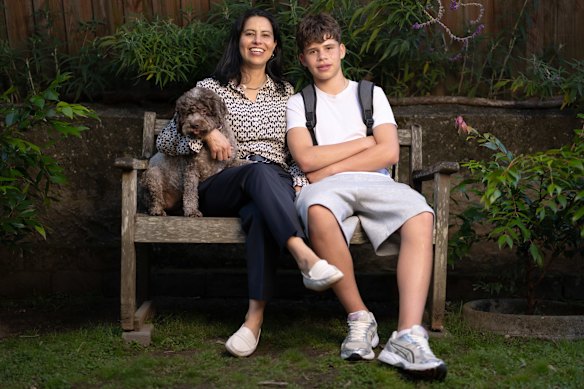
Lift bonnet on private schools
Whilst school tours are fashionable they tell you very little about how a school functions (Is it worth it? The parents rejecting private education, November 23). Parents need to look deeper into a school’s “engine room”, where teaching and learning occurs.
Look past the glossy brochures, the boardroom-style principal’s office, and the scripted tour. Instead, ask to walk the grounds unaccompanied, sit outside classrooms to hear real teaching in action; observe how students interact in the playground and outside the gates; ask to inspect a random sample of student workbooks to see if there is pride in presentation and meaningful teacher feedback, rather than pages of unmarked, unsupervised work; look for evidence that errors are actually worked through with the student, and that effort is genuinely praised.
Finally, look behind the curtain of the school’s daily structure. Ask if there is a planned homework program tied to daily lessons. Is there an over-reliance on iPads over textbooks? Ask how teachers are supervised and assessed. Enquire whether you can sit in on a P&C or staff meeting. There are plenty of other questions to ask, but the engine room is always the place to start if you want to know about a school. Ray Armstrong, Tweed Heads South
Family Court harming victims once again
How very short-sighted of the government to cut funding to Family Courts which deal with domestic violence (Women’s lives ‘in danger’ after cuts to Family Court services, November 23). Of course the government should be attending to “frontline domestic violence” but this does not excuse the lessening of support for victims before the Family Courts. Women need aid when they are faced with confronting circumstances. Men also need support to overcome any tendency to domestic violence. It must be obvious to anyone in government that prevention is better than cure but that is not always possible, so do not make the victims suffer any more.
Nola Tucker, Kiama
Appointed by Liberal Attorney-General Christian Porter to rein in the number of cases going to trial and thereby limiting burgeoning public expenditure by the family courts, Chief Justice William Alstergren oversaw the amalgamation of the Federal Circuit Court, compulsory procedures pre-commencement of taking cases before the court and an emphasis on multiple mediations that have resulted in “court-based dispute resolutions costs (that have) risen tenfold over five years”.
Alstergren is immovable that his system makes the Family Court workable, but the eye-watering costs to separated parties and the onerous mountains of procedure to get to a trial take a toll that to this former family lawyer is impeding access to justice.
Parties settle unfairly or give up because they can’t cope financially and, probably more importantly, because they can’t cope emotionally. Family law has never been an easy road to go down, but nowadays it has become a lot harder. Gone are the days when two parties spending $100,000 or more before trial was unusual or exceptional.
Andrew Cohen, Glebe
PM should slash adviser numbers
The primary purpose of political advisers is the re-election of the government (“Call for tribunal as PM’s adviser bill soars”, November 23). They are effectively taxpayer funded spin doctors with virtually no scrutiny of their appointment and functioning. In contrast, public companies are required to publish the salary bands of their senior executives and they are subject to questioning at their AGMs. The PM should reflect on Gough Whitlam who had a staff of three and Kevin Rudd who reduced the office head count by 30 per cent.
Tony Simons, Balmain
Albanese eyeing winners exit
I agree with George Brandis about the PM’s prospects in the top job (“To the dismay of Liberal friends, I’ve always liked Albo. It started in Cuba”, November 23). Even the longest, most glittering reign must come to an end some day and no doubt the PM already has one eye on his future and the other on his legacy. The generous parliamentary pension is assured, the house in Copacabana is there, the speaking engagements will flow, and a place on the wider international stage beckons. And as Brandis says, he’s unlikely to suffer the ignominy of losing his own seat like Bruce, Howard and (eventually) Abbott.
Contrast all that with continuing the daily squabbles and spot-fires of party politics, the worry of the polling du jour, and a crumbling domestic reputation that every leader suffers over time. All-up, his post-political life is looking pretty alluring and the reasons for staying are getting thinner. I’m betting he times his exit so that he does indeed “go out a winner”.
Adrian Connelly, Springwood
What a delight to read an essay from one side of politics to another, actually observing good and worth. George Brandis has been in politics long enough to know that positivity does exist in an opposing party. His well measured words and reflections of our current Labor PM comes as a welcome relief. Opposing political parties have for far too long resorted to observations requiring boxing gloves and negative rhetoric. It was indeed a pleasant relief to read that while we do have differing views regarding politics, quite often agreement can also be part of the scenario.
Greg Vale, Kiama
- To submit a letter to The Sydney Morning Herald, email letters@smh.com.au. Click here for tips on how to submit letters.
- The Opinion newsletter is a weekly wrap of views that will challenge, champion and inform. Sign up here.
Disclaimer : This story is auto aggregated by a computer programme and has not been created or edited by DOWNTHENEWS. Publisher: www.smh.com.au



