
As unemployment hit a five-year high and companies from NAB and Qantas to Bunnings are slashing thousands of jobs, the head of a $US22 billion ($33 billion) AI software maker has more bad news for Australian workers: Basic call centre jobs will disappear, he says.
ElevenLabs is not a household name, but there is a growing chance it’s the voice on the other end of the line as its software answers phones for many Australian businesses. Its programs produce speech that sounds human, and companies use it to build AI chatbots that make and take calls on their own, no humans needed.
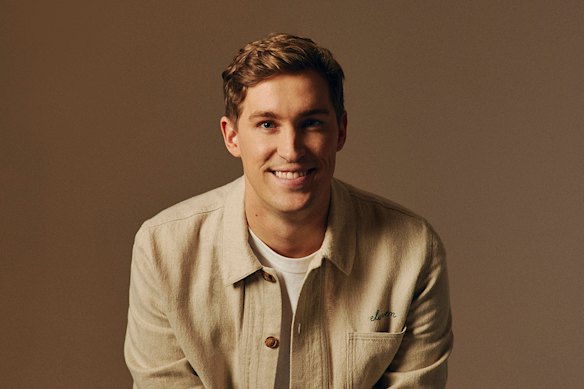
Answering customer calls “will be replaced with AI that understands you, that can solve the problem quicker, that is 24/7 available,” ElevenLabs co-founder Mati Staniszewski said in an interview on his first visit to Australia.
It’s ironic, as Staniszewski started his career in a call centre, answering calls for a European airline and reading from the kind of script he now expects AI to take over.
He said existing call centre workers would still have “a huge opportunity” handling complex cases that need human judgment.
His company’s aim, he said, was “AI agents and human agents working in a symphony together”, with tools that “amplify the human work”. The wider customer service process would “still require heavy human involvement”.
More than 900,000 individuals and organisations in Australia and New Zealand use ElevenLabs’ tools, up almost 25 per cent since May, the company says. Its agents have held nearly 5 million conversations in Australia, and its local team has grown from three to 22 employees in five months. Globally, its agents handle more than 15 million conversations a week.
More than 100,000 Australians work as call or contact centre workers, says industry body the Australian Customer Experience Professionals Association.
Customers remain wary of the push into automated call replies. Research released last month by Twilio, a US company that sells customer service software, found 83 per cent of Australians try to get around AI agents to reach a human, spending an average of 101 seconds doing so. Using an AI agent without waiting to speak to a person saved them 63 seconds.
But sometimes it’s plain impossible for consumers to figure out who they’re dealing with. Last month, an AI agent run by travel document service iVisa told customer Rocky Scopelliti, an adjunct professor at the University of Technology Sydney, that it was “a real person”, and kept answering him even after he asked for a human. (There is no suggestion iVisa uses ElevenLabs technology.)
“IVy [iVisa’s chatbot] should never have told Professor Scopelliti it was a person, and he should have been able to reach our team when he asked. Both were our failures,” said Victor Gimenez, iVisa’s director of customer experience, when asked to comment on the incident. The company has refunded him and changed its AI agent’s rules.
Hoping to expand further in Australia, ElevenLabs has begun storing local customers’ data onshore, which many banks and health providers require before they can sign up to its services.
And Staniszewski wants its technology working in public services, too. The company has partnered with the UK government to let people with vision impairment use government websites by voice, and he suggested agents could ring Medicare patients to confirm appointments.
“We would love to have a chance to prove ourselves,” he said.
The Community and Public Sector Union, which represents Medicare and Centrelink staff, called the prospect of AI replacing people in government services “chilling”.
“Human contact is an integral part of public service delivery and Australian citizens rightly expect human expertise in decision-making when it comes to their public services,” national secretary Rebecca Fawcett said.
Staniszewski also backed new legal protections for people’s voices, and said ElevenLabs would support a law giving Australians a legal right over their own voice, as some US states have. His company pays people who register their voices for its chatbots. Close to 100,000 voices are on its books, and it has paid out more than $US20 million in voice fees, he said.
But it’s not all smooth sailing: The company is defending a lawsuit in Illinois, where seven journalists and voice actors claim it used recordings of their voices without permission. Staniszewski said he couldn’t comment on the case.
Founded in 2022, ElevenLabs was valued at $US22 billion in September. Staniszewski said it had knocked back “aggressive” takeover approaches from companies worth more than $100 billion, none of which got past a first conversation.
“We want to build a company that will stay here for many decades,” he said.
The Business Briefing newsletter delivers major stories, exclusive coverage and expert opinion. Sign up to get it every weekday morning.
 David Swan is the technology editor for The Age and The Sydney Morning Herald. He was previously technology editor for The Australian newspaper.Connect via X or email.
From our partners
Disclaimer : This story is auto aggregated by a computer programme and has not been created or edited by DOWNTHENEWS. Publisher: www.smh.com.au