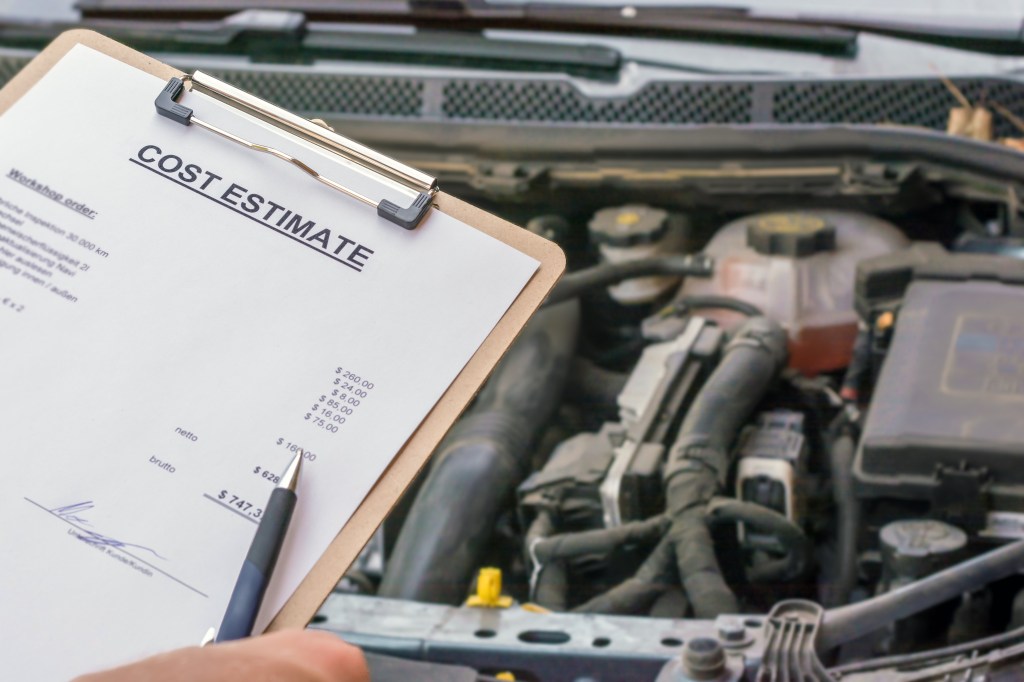
Americans are keeping their cars longer, but the cost of maintaining them is becoming harder to manage.
According to a recent Capital One survey, 58% of consumers were concerned about being able to afford another vehicle, whether new or used. With new-car prices hovering around $50,000, many drivers are choosing to repair their existing vehicles rather than replace them.
But holding onto an aging car comes with its own financial risks. According to the Bureau of Labor Statistics, motor vehicle maintenance and repair costs rose 5.8% in the 12 months ending September 2026. Meanwhile, the average age of vehicles on American roads reached 12.8 years in 2025.
For millions of households, that creates a difficult financial question. How do you keep an older vehicle running without putting your savings or your credit card balance at risk every time the check-engine light comes on?
Advertisement
A September 2026 survey conducted for CarShield suggests that many drivers haven’t worked out an answer. More than half of the 1,000 Americans aged 35 and older surveyed had no repair-cost plan or service contract in place. Among those without a plan, nearly 41% said they mainly hoped major repairs wouldn’t happen.
That’s not much of a financial strategy. And it helps explain why month-to-month vehicle service contracts, which offer coverage for certain repairs in exchange for recurring payments, are attracting attention as an alternative to paying large repair bills out of pocket.
Advertisement
When a repair bill becomes a credit card balance
The problem with relying on hope is that mechanical failures rarely happen when households have extra cash.
According to the CarShield survey, 66% of U.S. adults who had an unexpected, major vehicle repair or replacement spent at least $1,000, and 21% spent $5,000 or more. For households already managing mortgages, childcare, groceries and other expenses, an unexpected $1,000+ repair can disrupt an entire month’s budget. And when savings are insufficient, credit cards often become the default solution.
Of the 769 survey respondents who had faced an unexpected repair bill, more than half took on debt or deferred payment. Nearly 42% used a credit card, while approximately 8% used a repair shop’s payment plan and 6% borrowed money or took out a loan.
Credit cards can provide immediate access to funds, but they can also turn a one-time repair into a longer financial obligation. A driver who pays the balance in full by the due date may avoid interest. Someone who carries the balance could end up paying considerably more than the original repair cost.
Advertisement
Interestingly, this behavior wasn’t confined to lower-income households. The survey found that 52% of households earning between $100,000 and $200,000 used credit cards for unexpected repairs, compared with 31% of households earning $25,000 or less. The financial challenge isn’t always insufficient income. Sometimes, it’s a lack of available cash when an expense comes due.
And while nearly half of respondents who faced unexpected repairs paid with cash or savings, fewer than 8% used a vehicle service contract to help cover the expense.
The drivers facing the greatest risks have the least protection
Sadly, drivers with the greatest exposure to expensive repairs are among the least likely to have protection against them, according to the survey.
Advertisement
Among respondents without a vehicle service contract, 62% described themselves as “very or extremely worried” about facing a major repair bill. But service contract usage declined sharply as vehicle mileage increased. Approximately 23% of respondents driving vehicles with fewer than 30,000 miles had a service contract. Among those whose vehicles had traveled more than 150,000 miles, that percentage dropped to just 5%.
And high-mileage drivers were more likely to postpone maintenance because of financial constraints. Nearly 29% of owners with vehicles exceeding 150,000 miles deferred maintenance, compared with approximately 5% of owners with lower-mileage vehicles. In fact, CarShield’s research found that nearly 32% of high-mileage drivers had experienced three or more unexpected repair bills over the previous three years, compared with approximately 10% of low-mileage drivers.
Many drivers don’t understand their coverage options
Part of the problem may be that consumers don’t fully understand the alternatives available to them.
According to the CarShield study, 53% of surveyed drivers had little or no understanding of what vehicle service contracts could cover. Nearly 22% had never heard of them. Among those unfamiliar with these contracts, 56% were very or extremely worried about unexpected repair costs.
Advertisement
A vehicle service contract is an agreement with a third-party company (not your dealer) where the company promises to pay for certain mechanical repairs under specified conditions. Unlike manufacturer warranties, which generally come with new vehicles, service contracts are purchased separately. Coverage varies by provider, but contracts may include certain repairs to engines, transmissions, electrical systems and other mechanical components.
Service contracts don’t cover everything: Routine maintenance, normal wear and tear, pre-existing mechanical problems and certain types of damage may be excluded. Drivers may also have to pay deductibles or obtain authorization before repairs begin.
But when compared to the out-of-pocket cost of a necessary repair — especially if your car is also your economic lifeline as it is for anyone who drives to work — having coverage gives peace of mind.

Advertisement
Why month-to-month protection is getting attention
Traditionally, many vehicle service contracts have been sold through dealerships, sometimes with multiyear commitments or costs financed into an auto loan. Month-to-month contracts offer a different approach.
Instead of committing to a lengthy contract, drivers can purchase renewable coverage and pay a recurring monthly charge. That makes it easier to fit the expense into a household budget and potentially discontinue coverage when the vehicle is sold, traded in or replaced.
For example, CarShield says most of its vehicle protection plans operate month-to-month, with no fixed end date or early-cancellation penalty. Other providers also offer monthly arrangements, although contract terms differ. This flexibility can be particularly useful for owners of aging vehicles who aren’t sure how much longer they intend to keep them.
The financial appeal is straightforward. A predictable monthly payment can make it easier to budget for certain mechanical failures rather than face an unexpected expense all at once. A service contract could prove valuable if a costly covered breakdown occurs, depending on the repair, the deductible, exclusions and payment limits.
Advertisement
Finding the right balance between coverage and cost
For drivers without substantial emergency savings, month-to-month protection can offer a way to manage the risk of certain expensive repairs without committing to a lengthy agreement. But purchasing coverage is only one part of managing vehicle expenses. A service contract won’t eliminate the need for routine maintenance, and some repairs will remain the owner’s responsibility.
Before choosing a plan, drivers should first determine whether their vehicle has existing warranty coverage. Next, they should compare contract prices, deductibles, exclusions, waiting periods, repair-shop restrictions and cancellation terms.
Someone with reliable transportation and several thousand dollars in emergency savings may prefer to cover repairs independently. A driver who depends on an aging car to commute to work and couldn’t afford an unexpected transmission failure may value the certainty of a contract that covers that repair. The decision ultimately comes down to which arrangement offers greater financial security at a reasonable cost.
Advertisement
This article was written by Brooklyn-based financial journalist and Commerce Editor for the New York Post Will Kenton. Specializing in investing, personal finance and retirement planning, Will’s expertise is rooted in behavioral economics — a field he explored as associate editor of the New School Economics Review. Will aims to help readers navigate the “predictable irrationality” that influences financial decisions, providing practical real-world solutions to student loan debt, investments, mortgages and more. Before joining The Post in 2026, Will covered the intersection of money, economics and culture for Investopedia, AP News, Business Insider and TIME Stamped.
Disclaimer : This story is auto aggregated by a computer programme and has not been created or edited by DOWNTHENEWS. Publisher: nypost.com