VIENNA- Israel’s war camp is still bent on pulling America deeper into an utterly futile military gamble against Iran. Netanyahu and his Washington lobbyists failed in their original goal of pushing the White House into a ground operation.
It took no more than the first airstrikes for many senior American politicians, military officers, and diplomats to reach the logical conclusion that the operation had nothing to do with America’s national interest. Vice President Vance had to work hard to stop the pro-Israel lobbying machine and give pragmatic negotiations a chance. It’s no surprise that the Iranian side was willing to talk to him, and not to Secretary of State Rubio, who has fully bought into the agenda of pro-Israel war camp. The American public saw through it, too. By July, nearly seven in ten Americans felt the war wasn’t worth what it had cost us, and roughly two-thirds wanted no part of sending troops to topple the regime in Tehran. Whatever Netanyahu’s lobbyists are selling, Americans aren’t buying.
But don’t expect Netanyahu, whose political survival depends on war, to throw in the towel and accept a deal with Iran. He has always had a Plan B, and lately it has been coming into sharper focus. In September 2020, Azerbaijan launched a full-scale war against Nagorno-Karabakh, a historic Armenian province that Stalin handed to Soviet Azerbaijan. As the Soviet Union was falling apart, war broke out between Armenia and Azerbaijan; it ended in an Armenian victory and a ceasefire signed in 1994. Twenty-six years later, the Azerbaijanis, ostensibly tired of peace talks, decided to settle the score by force.
Which raises the question: what does Israel have to do with any of this? After all, we’re talking about two South Caucasus nations locked in a seemingly ordinary territorial dispute. More than you might think. After the Soviet collapse, Israel forged close ties with newly independent, predominantly Shiite Muslim Azerbaijan, which it saw as a potential staging ground against Iran. Israel became one of Azerbaijan’s largest arms suppliers: between 2016 and 2020, it provided 69 percent of Azerbaijan’s major weapons imports, according to the Stockholm International Peace Research Institute. Meanwhile, pro-Israel lobbying groups in the US and Europe helped Baku push back against Armenian organizations campaigning for international recognition of Nagorno-Karabakh.
Senior Iranian officials and state-sponsored media have often complained that Israeli intelligence runs operations against Tehran out of Azerbaijan, using its territory and infrastructure. Baku has always denied the accusations, but its assaults on Nagorno-Karabakh in 2020 and 2023 put many doubts to rest. Israel didn’t just cheer from the sidelines as Baku drove out Karabakh’s 150,000-strong Armenian Christian population; it also provided extensive political, military, technical, and intelligence support. No wonder Baku now not only openly calls Israel its closest friend and strategic partner, but also unabashedly backs Israel’s stance on Palestine, angering Iran and even Turkey, once its close ally. The relationship runs both ways: last year, Azerbaijan supplied nearly half of Israel’s oil imports, shipped through Turkey despite Ankara’s trade ban on Israel. That’s the price of Israeli help, without which victory over Nagorno-Karabakh would have been highly unlikely.
President Donald Trump brought the leaders of Armenia and Azerbaijan to the table in August 2025, and the two sides signed a deal at the White House known as TRIPP, the Trump Route for International Peace and Prosperity. It calls for a multimodal transit corridor through Armenia’s Syunik province that would link mainland Azerbaijan to its exclave, the Nakhchivan Autonomous Republic, running right along the Iranian border. Eventually, the corridor is meant to become part of the Trans-Caspian International Transport Route, better known as the Middle Corridor.
On November 23, 2026, Trump and Pashinyan announced the launch of TRIPP’s practical implementation phase, with preparatory construction work beginning in Syunik province. What began as a diplomatic initiative is now taking shape on the ground, lending greater urgency to the project’s geopolitical implications.
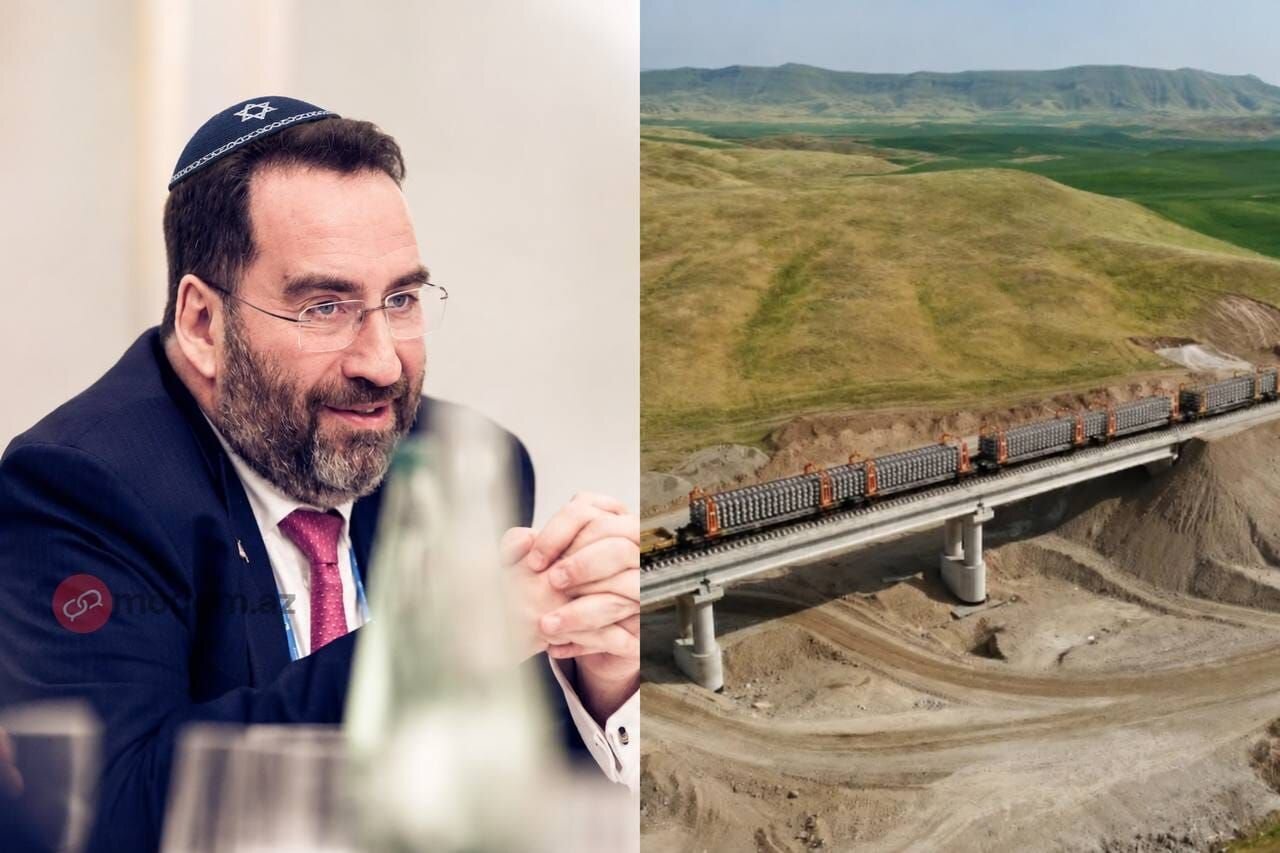
Oddly enough, the two men now steering TRIPP are both very close to Netanyahu and the Israel lobby: Aryeh Lightstone and Konstantin Sokolov. Lightstone is a senior adviser to Trump’s special envoy Steve Witkoff, while Sokolov is a businessman appointed to chair the State Department’s TRIPP+ fund. Sokolov is known as one of the biggest donors to Trump and several of his pet projects; he was among the top funders of Trump’s sprawling new White House ballroom. Beyond his heavy involvement in TRIPP, Sokolov has been buying up Armenia’s key strategic assets, from telecom networks to gold deposits, and now has his sights set on an even more critical one: a copper-molybdenum plant less than an hour’s drive from the Armenian-Iranian border.
From the standpoint of US national interests, TRIPP is a major undertaking that could not only help bring peace to the South Caucasus but also serve as a geoeconomic counterweight to China. Netanyahu and his lobbyists, however, see something else: American money and muscle they can turn against Iran, all under the noble banner of economic and logistical integration linking Azerbaijan, Nagorno-Karabakh, Armenia, and Nakhchivan. Tehran sees through this dangerous game by Israel’s war camp and has gone out of its way to make clear to Armenia’s and Azerbaijan’s leaders that it will not tolerate a hostile foreign presence on its borders. It’s not hard to see how this could end badly for Yerevan and Baku. The bigger question is whether we’ll let Netanyahu drag us into a Middle East quagmire all over again.
Den Kalmyk, Ph. D., is a Vienna-based foreign policy analyst specializing in Eurasian security, ethnic politics, and regional dynamics across the post-Soviet space. His commentaries have appeared in American Thinker, The Washington Times, Washington Examiner, and Stars and Stripes.
Disclaimer : This story is auto aggregated by a computer programme and has not been created or edited by DOWNTHENEWS. Publisher: tehrantimes.com