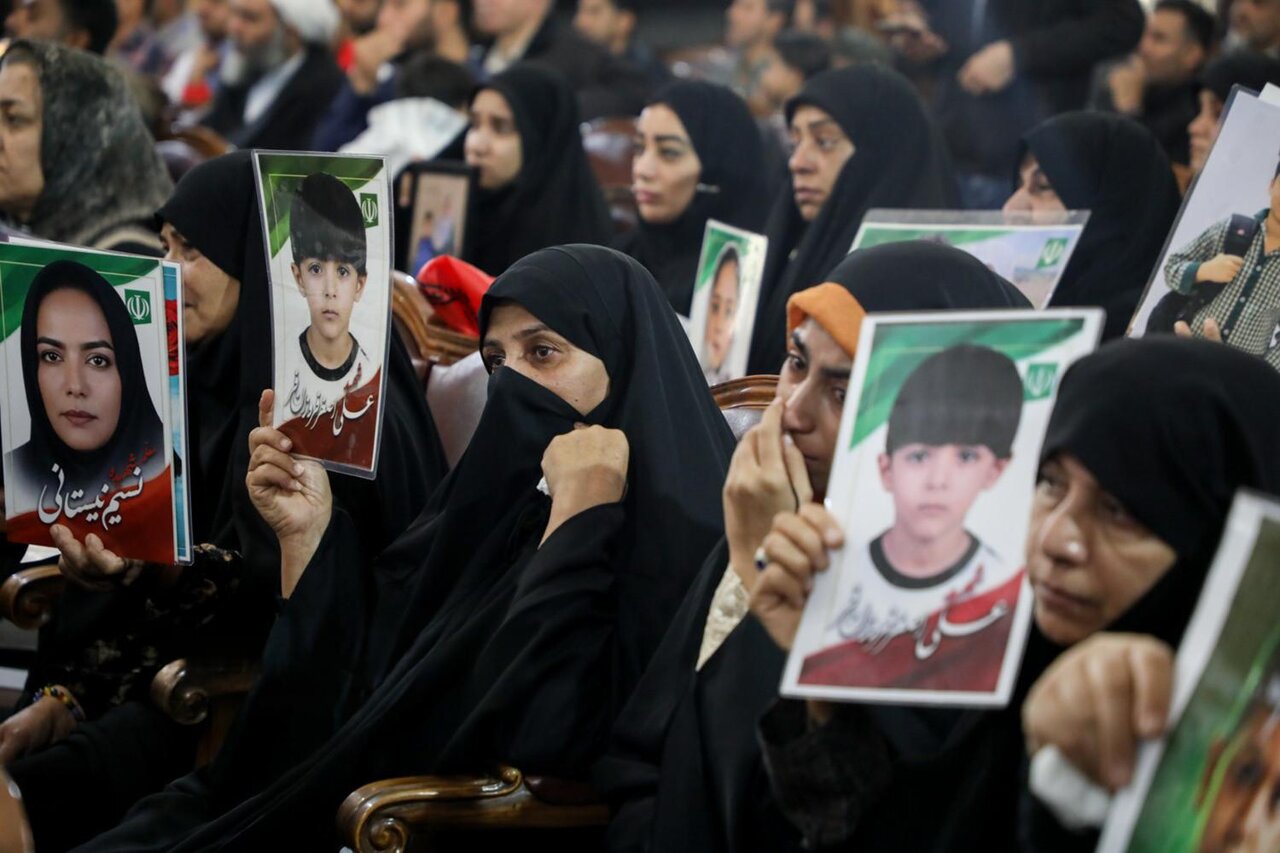
TEHRAN — Branch 55 of Tehran’s International Court convened on Tuesday to hear the war-crimes lawsuit filed by families of victims of the attack on Shajareh Tayyebeh primary school in Minab over the Feb. 28 strike that killed schoolchildren and teachers.
Presiding Judge Hossein-Zadeh said the court considers itself competent to hear the claim for material, moral and punitive damages against the US government, the sitting U.S. president and leaders of the Israeli regime.
Citing Article 34 of the Constitution, the 2012 law on jurisdiction over civil claims against foreign governments on the basis of reciprocal conduct, and Articles 3 of the Universal Declaration of Human Rights and 9 and 2 of the International Covenant on Civil and Political Rights, he said Tehran’s court has both domestic and international grounds to admit the case.
The morning and afternoon sessions were attended by Supreme Court Chief Hojjatoleslam Montazeri, Tehran Justice Chief Nasser Atabati, Judiciary spokesman Seyed Ali Kazemi, Bar Association Chief Hassan Abdolianpour, Iranian and foreign lawyers, journalists, and bereaved families.
Abdolianpour, representing the families, said the case concerns 168 martyrs and described the school as a purely civilian site. Lawyer Hossein Tanhaei presented enrollment records, report cards and satellite imagery from 2016 to Dec. 1, 2025, saying the non-governmental complex, operating since September 2015 under codes 96018626 and 96018627, hosted 403 pupils and 36 staff at the time of the attack, with no sign of weapons or military use in a fully residential area.
Technical expert Mohammadreza Jalali-Nasab said debris matched a U.S. Tomahawk cruise missile, identified through a barcode linked to a U.S. tracking system, citing the U.S. Fifth Fleet in Bahrain and the missile’s ability to store 16 targets and retarget in flight. AI expert Alireza Rostamzadeh said a senior Pentagon official had acknowledged use of the MSS intelligent system and WEP warfighting data platform in the war on Iran, stressing AI cannot absolve humans of target-verification responsibility.
A French international law expert and international lawyer Baboubaker Noormohammad told the court the direct hit on a marked, walled school violated distinction, proportionality and precaution, constituting a war crime entailing command responsibility.
Surviving students, a teacher and parents gave emotional testimony about three successive blasts, collapsed classrooms, bodies torn apart, and identification through clothing, jewelry and DNA. One injured second-grader displayed his burned sportswear, asking why the U.S. struck a school where “not even a bullet could be found.”
The judge noted the defendants, though duly served twice, submitted no defense and did not appear. He said he personally visited the scene, court-appointed experts examined the site, and inquiries continue, adding a second session will be held if necessary before a verdict is issued.
Disclaimer : This story is auto aggregated by a computer programme and has not been created or edited by DOWNTHENEWS. Publisher: tehrantimes.com