NEWYou can now listen to Fox News articles!
Before polling began to show dire warning signs for the GOP ahead of the midterm elections, some in conservative circles felt they had a not-so-secret weapon that would give them an edge over their Democratic rivals — a massive amount of cash.
Across the Republican National Committee, Senate Leadership Fund, Congressional Leadership Fund, National Republican Congressional Committee and the National Republican Senatorial Committee, the GOP brought in roughly $1.7 billion in funds to fuel its ill-fated midterm campaigns.
The five equivalent Democratic committees, meanwhile, raised well over $300 million less than that total but walked away with massive pickups in even traditionally deep red strongholds like Texas, South Carolina, Kansas, and Mississippi.
Experts from across the political spectrum explained this result to Fox News Digital by arguing that the impact of money on politics is less than what many in public may assume and that massive fundraising hauls can only take a party so far when it faces political headwinds as strong as those weathered by the GOP in the run-up to Election Night.
MUSK PICKS HIS FIRST GOP WARRIORS AS A 2026 MONEY SURGE TAKES SHAPE
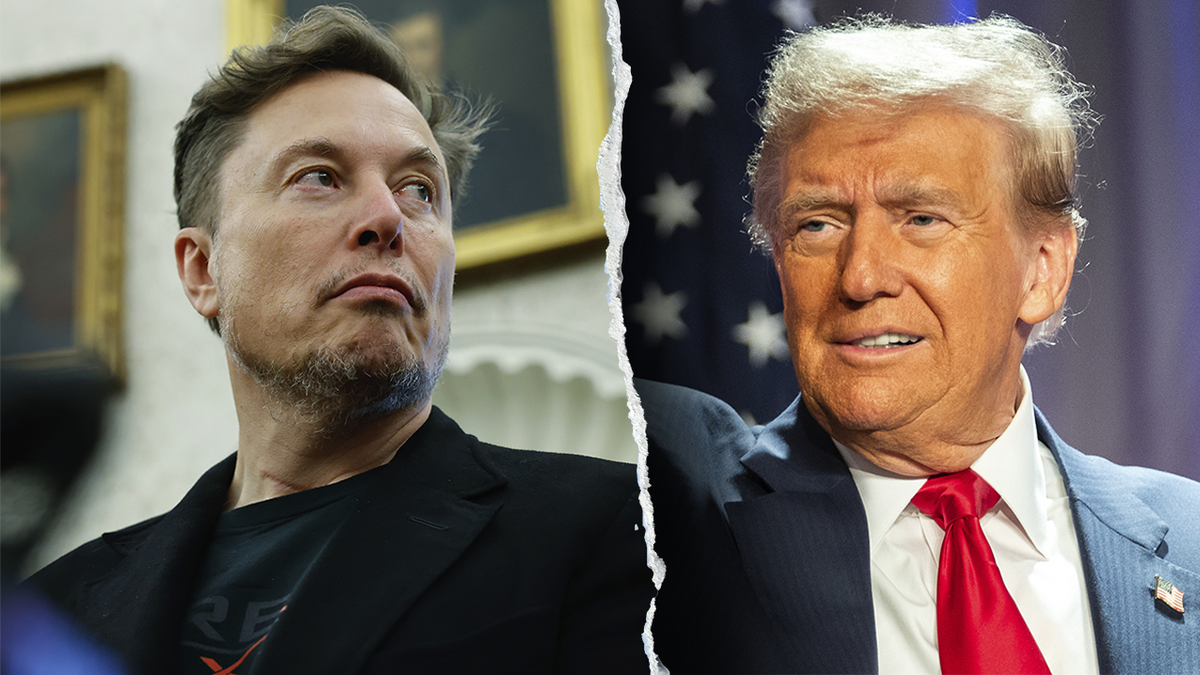
Elon Musk and President Trump are set to hold a joint press conference following Musk’s exit from the Department of Government Efficiency and his criticism of Trump’s latest spending bill. (Getty Images)
On top of their already significant nine-figure lead, GOP electoral efforts were also buoyed by a duo of PACs — President Donald Trump’s MAGA Inc. and Elon Musk’s America PAC — which themselves collected an additional $665.4 million for Republicans to burn through. Despite such a massive financial edge, the GOP suffered one of its worst midterm performances in history, losing Senate seats even in deep red jurisdictions like South Carolina and Mississippi.
Still, Capital Research Center President Scott Walter, argues: “Money is not magic.”
“Democrats should remember that when tempted to curtail political speech with donation limits, and Republicans should remember that when tempted to think more money automatically means more votes,” the laeder of the right-of-center group told Fox News Digital. “That will be news to those like Sen. Sheldon Whitehouse, D-R.I., who thinks billionaires and ‘dark money’ control the cosmos.”
Walter pointed out, citing data aggregated by OpenSecrets, that the biggest donor in any given election cycle rarely ends up getting what they want out of the American political system.
Brendan Glavin, the director of insights at OpenSecrets, a nonprofit dedicated to tracking money in politics, told Fox News Digital that, while money certainly moves the needle in elections, its actual impact can be blunted by a variety of factors — many of which were at play during the recent midterms.
AI IS SUPERCHARGING POLITICAL AD WARS. BUT VIRAL DOESN’T MEAN VICTORIOUS
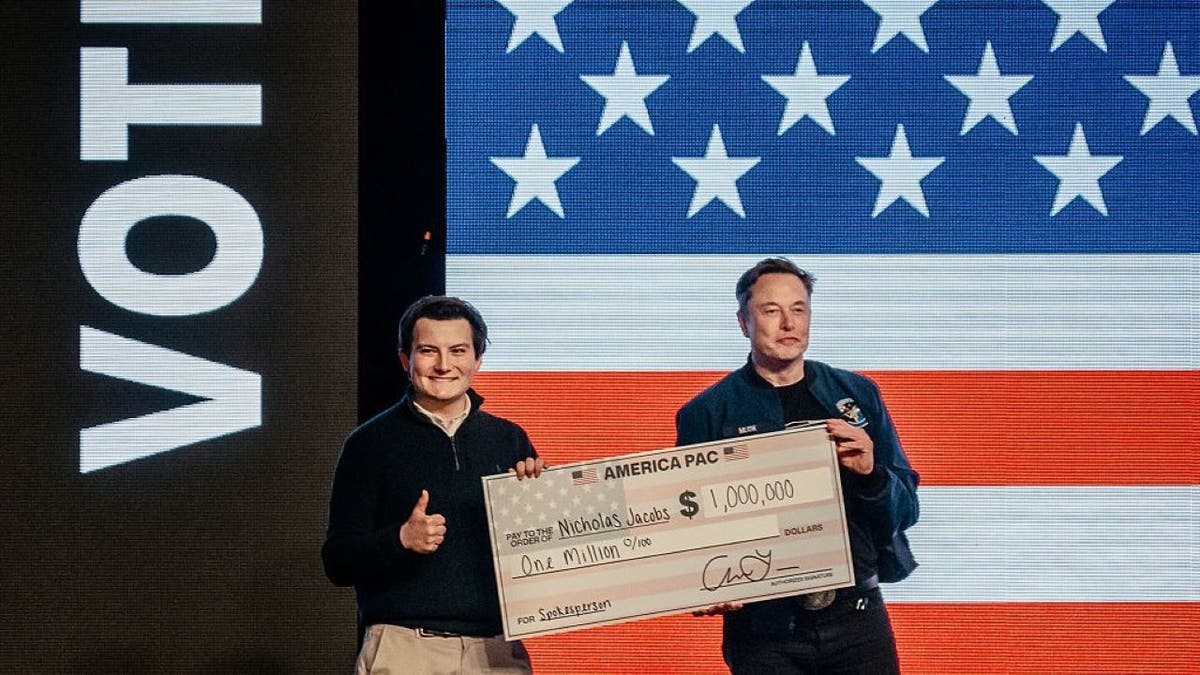
Elon Musk, chief executive officer of Tesla Inc., right, presents a one million dollar check to an attendee during an America PAC town hall ahead of the Wisconsin Supreme Court election at the KI Convention Center in Green Bay, Wisconsin, US, on Sunday, March 30, 2025. Musk’s plan to hand out $1 million checks to two residents for participating in Wisconsin’s Supreme Court election is barred by state law, a new complaint said Friday. Photographer: Jamie Kelter Davis/Bloomberg via Getty Images (Getty Images)
“Certainly, you know, the money makes a difference,” said Glavin.
“When both sides are engaging in a sort of arms race, right, and they’re both spending almost equivalently, then really the effect is lost,” he explained. “If you’re somebody [who] sees an ad for one candidate, and then it’s immediately followed by an ad for another candidate … essentially, you’re not moving the needle.”
In many of the marquee races of Election Night, such as the Senate races in Texas and Michigan, both parties had enough money to saturate the airwaves with their messaging, potentially creating the environment described by Glavin.
“This election was very unique,” he told Fox News Digital. “What people probably really didn’t see until afterwards is there was this significant headwind and voters were feeling a certain way and more ads were not going to change that.”
SCHUMER WARNS OF REPUBLICAN ADVANTAGE THAT COULD CHANGE THE BATTLE FOR SENATE CONTROL
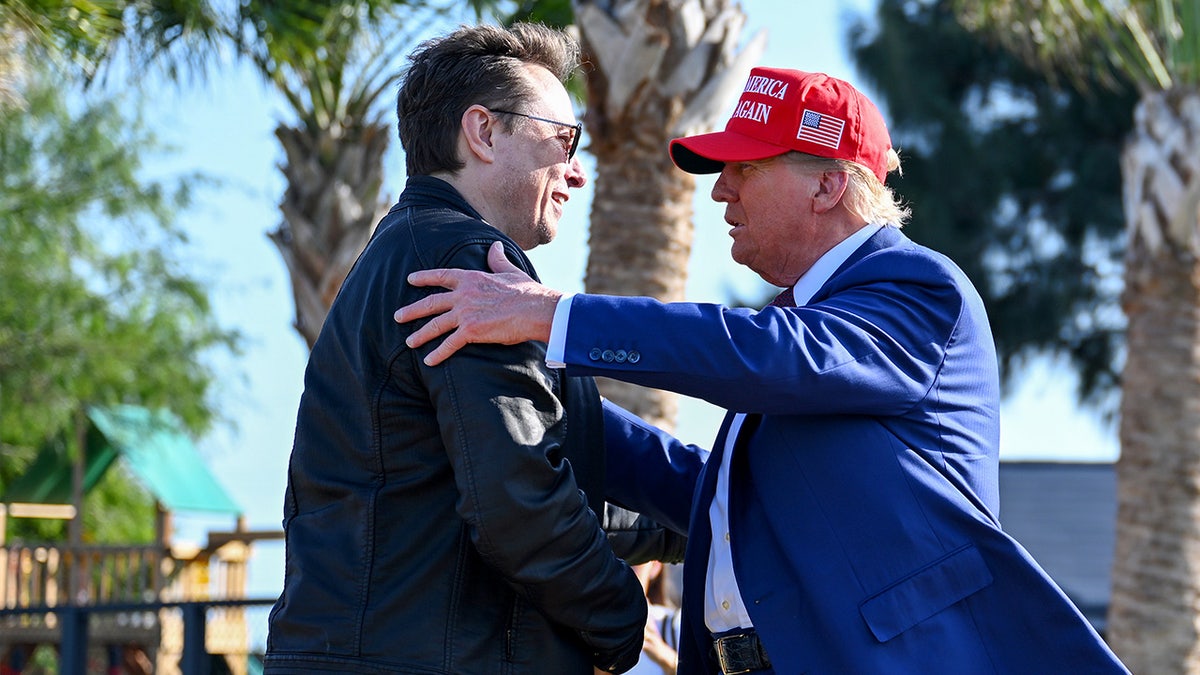
President Donald Trump’s friendship with Elon Musk is warming up again as the president reignites praise and mentions of Musk in public. (Brandon Bell/Getty Images)
Glavin, to support his argument, pointed to the fact that self-funding candidates running in elections often fail to make much headway, serving as evidence for the claim that ludicrous amounts of money don’t automatically equate to political success.
One of the most obvious recent examples is former New York City Mayor Michael Bloomberg, who spent roughly $1.1 billion of his own money on his 2020 presidential campaign. He won only 55 delegates in the Democratic Primary at an approximate cost of $18 million per delegate.
Academics who spoke to Fox News Digital were divided on the impact money has on elections.
“Money has diminishing returns,” Ray La Raja, a professor of political science at the University of Massachusetts, Amherst, told Fox News Digital. “And in [an] election wave environment where the president and his party is overwhelmingly disliked or distrusted, money can do little to save them.”
JASON CHAFFETZ: FIVE TIMELESS POLITICAL LESSONS THAT GOT LOST IN 2026

Newly announced Democratic presidential candidate, former New York Mayor Michael Bloomberg speaks during a press conference to discuss his presidential run on November 25, 2019 in Norfolk, Virginia. The 77-year old Bloomberg joins an already crowded Democratic field and is presenting himself as a moderate and pragmatic option in contrast to the current Democratic Party’s increasingly leftward tilt. In recent years, Bloomberg has used some of his vast personal fortune to push for stronger gun safety laws and action on climate change. (Photo by Drew Angerer/Getty Images)
John Sides, a political science professor at Vanderbilt University, meanwhile, pointed Fox News Digital to a 2022 study he and two other academics conducted studying the impact of television advertising on election outcomes.
According to their study, there is a relatively direct relationship between ad spending and voter share and, while there is a degree of diminishing returns in elections with very high spending, there is still a marginal impact.
Joe Arlinghaus, a Texas-based conservative political strategist, told Fox News Digital that how money is spent matters more than how much of it is spent, an assertion he said could explain why the GOP did so poorly despite its hefty cash advantage.
“Most people understand that new technologies get better and better and better as time goes on,” he said. “Bugs get worked out. Inferior practitioners get pushed aside. Trial and error leads to better and better practices. This is what has been happening in the Democratic election world.”
He noted that Republicans have failed to keep up on that front.
“I am inclined to believe that almost every dollar spent by the big SuperPAC funded by Elon Musk was worthless,” Arlinghaus added.
Glavin shared that perspective, noting how “Musk just recently commented about how he may be regretting a little bit all the money he spent.”
“It’s hard to tell how serious he is about that and whether or not he’ll just come back again for the next election,” he added, speculating that the massive flood of money seemingly doing very little for the GOP on Election Night could cause some megadonors to reconsider their future giving.
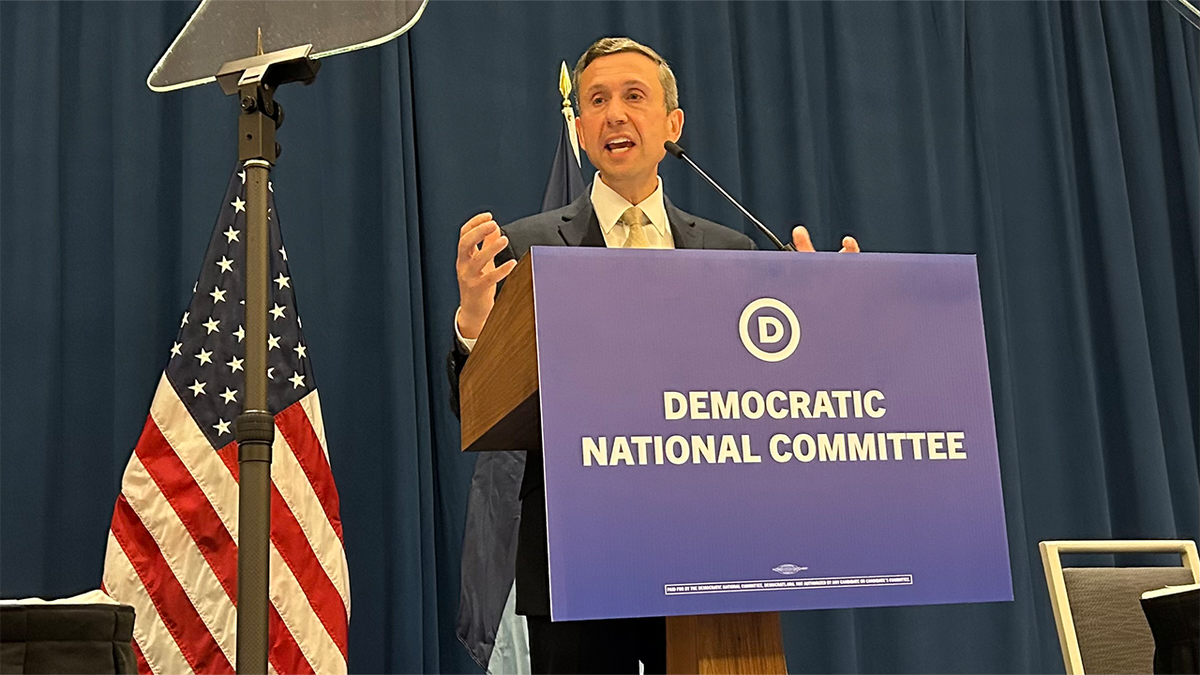
Democratic National Committee chair Ken Martin addresses party members at the DNC’s summer meeting, on Aug. 25, 2025, in Minneapolis, Minnesota. (Paul Steinhauser – Fox News)
One source familiar with Republican politics told Fox News Digital that “advertisements pay for mortgages in Great Falls,” a reference to claims that political consultants spend money in ways that make them wealthier, not necessarily in ways that help candidates win. Great Falls is a wealthy suburb of Washington, D.C.
While Republicans enjoyed an overall fundraising advantage, largely driven by wealthy large-dollar donors, individual Democratic candidates in high-priority races generally raised more money than their Republican rivals, as was the case in Georgia, Michigan and Texas’s Senate elections, among other contests. Some say this should have been an early warning sign for the GOP that grassroots support was wavering, though others are skeptical of such an assertion.
Colin Seeberger, the chief strategy officer at the Center for American Progress Action Fund, a liberal advocacy group, told Fox News Digital that the fundraising advantages enjoyed by individual Democrats were a “reflection of voters enthusiasm with those individual campaigns.
He also said voters has an “overwhelming frustration with the direction of the country and how the president and majorities in Congress… were disconnected from what voters said that they wanted the people of their government.”
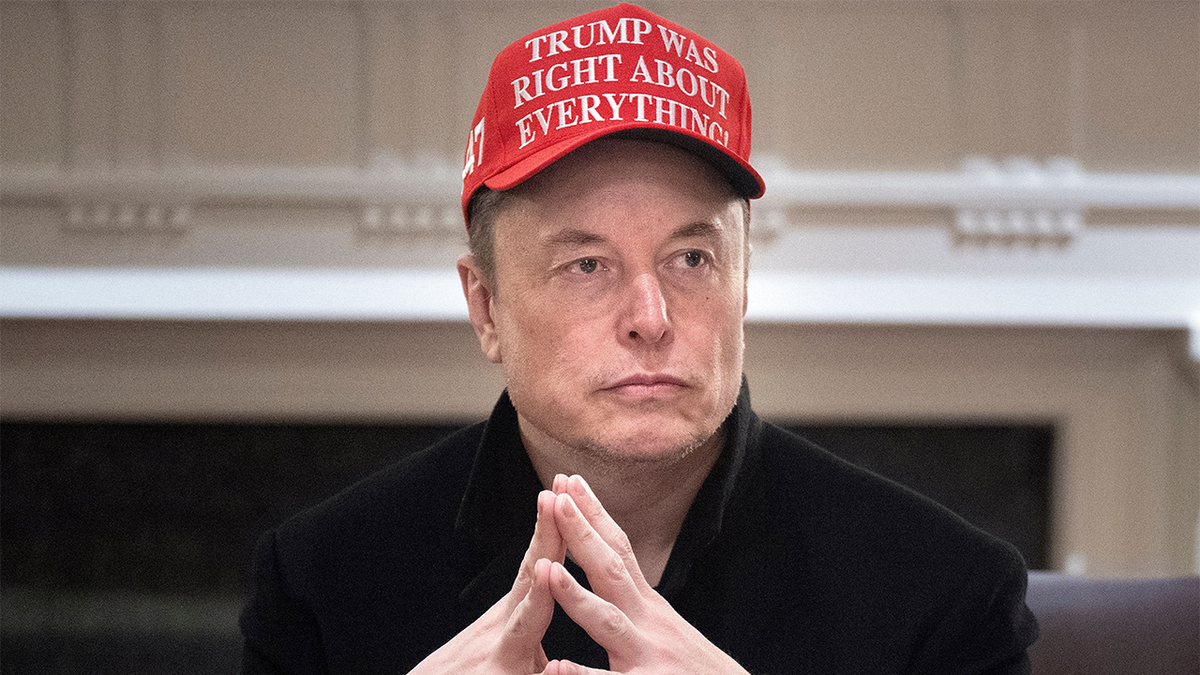
Billionaire entrepreneur Elon Musk has indicated he may support Republican candidates in the upcoming midterm elections. (BRENDAN SMIALOWSKI/AFP via Getty Images)
“I’m not sure that the party that raises more definitively has an enthusiasm advantage,” Sides, the Vanderbilt professor, said, pointing to past elections where Democrats have secured more donations than the GOP but lost anyway.
CLICK HERE TO DOWNLOAD THE FOX NEWS APP
Seeberger echoed Arlinghaus’s claim that Republicans may have squandered some of their financial advantage by making poor spending decisions, saying that “when you’re spending the majority of those sums to talk about issues that register low on the rankings of what voters say are their priorities, there’s going to be limited returns on the impact.”
Disclaimer : This story is auto aggregated by a computer programme and has not been created or edited by DOWNTHENEWS. Publisher: moxie.foxnews.com