
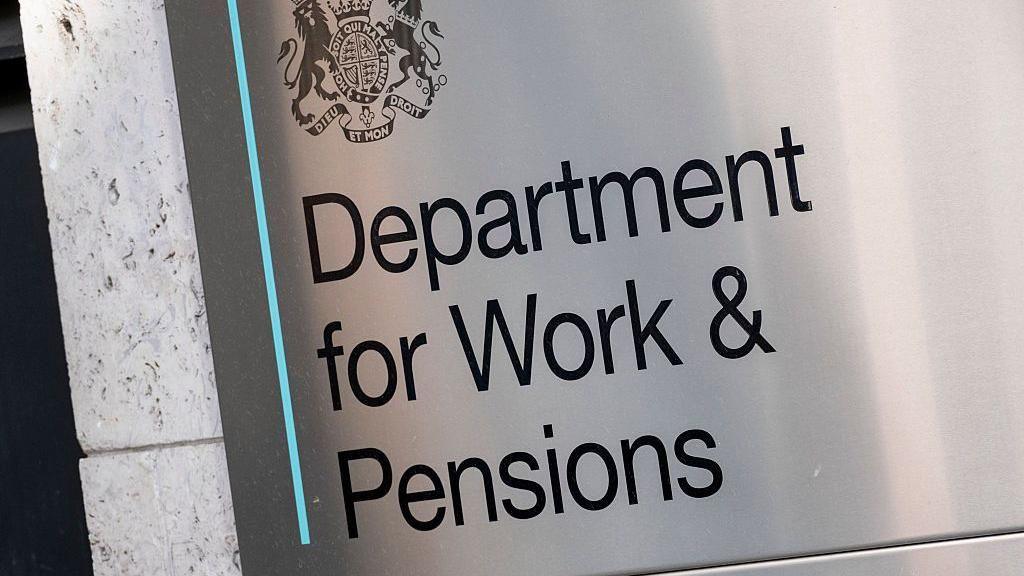
What we know about Department for Work and Pensions cyber attack
-
Published
The Department for Work and Pensions (DWP) says that a cyber attack forced it to take some of its services offline.
Online benefits and pensions services were still down on Saturday after the incident forced the government to take them offline.
Here’s what we know so far and which services have been affected.
Which services have been affected?
Nearly all of the DWP’s online systems have been taken down, including those for pensions, universal credit and Pip applications, as well as the “Tell Us Once'” system used to let the government know if someone has died.
Services that allow people to apply for their state pension are also down.
Work and Pensions Secretary Pat McFadden said on Saturday he could not say when those online services would return, only that it would be “as soon as possible”.
There is no evidence people’s personal information has been compromised, he said, adding “we don’t believe they have”.
Will I still get my pension or benefit payments on time?
The DWP has assured users that pension and benefit payments will not be affected by the incident and will be paid as normal.
However, when users try to log in to the universal credit or pensions systems, they are met with the below error message. This could affect users’ ability to check or make changes to their accounts.
The DWP said it had “well-rehearsed plans for these scenarios, which were immediately implemented”.
Addressing the issue of delays, McFadden said payments were cleared several days in advance, so if anyone did not receive a payment on Friday, it is not thought to be linked to the attack.
He advised those people to contact the department during operating hours to discuss their payment.
 Image source, Gov.uk
What do we know about the cyber attack?
The government has given little away so far.
McFadden said there had been an “unauthorised attempt to gain access to DWP systems”.
He said he was alerted to the incident overnight between Thursday and Friday morning, said: “It’s right that we took our time to try and identify what happened.”
The fact the DWP felt forced to take vital services offline implies that this was an intrusive cyber attack that either gained entry to sensitive systems – or nearly did.
The DWP says that there is no evidence that any customer data was accessed, but we have heard this many times before from cyber attack victims and that evidence can – and sometimes does – shift.
One worker at DWP has told the BBC that staff there are becoming increasingly concerned for claimants as the system outage drags on.
“Morale is low as we are getting more information from BBC News at the moment than the DWP,” they said.
“We are all wondering what does this mean for us but more importantly – what does it all mean for claimants. This is not a job you do if you don’t care about these people who are often vulnerable or have specific conditions so it’s worrying.”
Scammers may seek to take advantage of the cyber-attack by sending what appear to be official messages.
Lisa Webb, a legal expert at consumer magazine Which? warned people to be wary of unexpected messages they receive in the coming days and weeks – especially if they are claiming to be from the DWP or their bank.
“If you’re ever unsure who you’re speaking with, end the conversation immediately and contact the company directly. You can dial 159 to speak to your bank’s fraud team or use the number on the back of your card,” she said.
Today’s incident comes just weeks after the government carried out inspections on several websites after a flaw was identified in a global programming language.
The PHP security flaw prompted a worldwide race for organisations to identify whether they were impacted and fix it before it could be exploited.
So far there is no indication that those checks and this latest incident are related.
-
-
Published20 November

-
-
-
Published23 October

-
-
-
Published8 October

-
Disclaimer : This story is auto aggregated by a computer programme and has not been created or edited by DOWNTHENEWS. Publisher: BBC







