
The morning after Smara’s first birthday party, all the leftovers fit into a single bowl.
No overflowing garbage bags. No crumpled paper plates or plastic streamers. Just a handful of leftovers, which is pretty remarkable for a celebration that hosted 50 guests. For Smara’s parents, that wasn’t surprising at all. It was exactly what they had planned for.
Their daughter had just turned one. The celebration, they decided, would not begin with excess and end in waste.
It would be a test of intention, and of whether a milestone could be marked without leaving a trace (or trash) behind.
A celebration without disposables
Children’s birthday parties are often shorthand for abundance. Balloons, single-use decorations, packaged return gifts.
But at Smara’s party, the visual language was different.
There wasn’t a single balloon in sight.
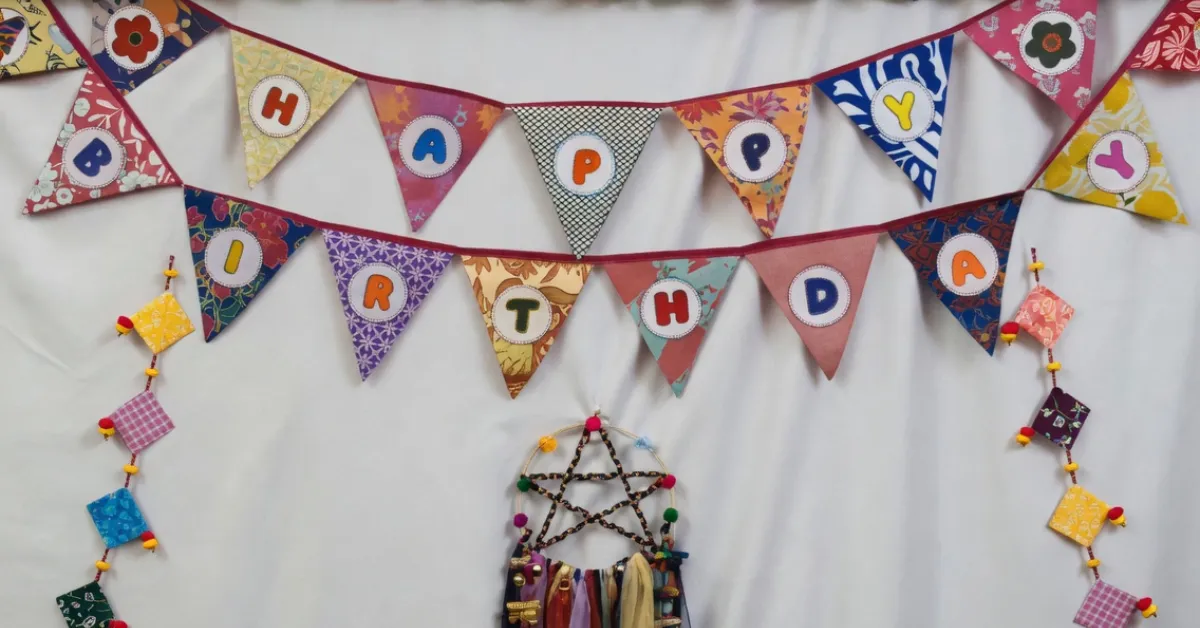
Instead, the space was dressed in banners made from upcycled fabric, stitched and assembled by hand. They added colour, without the burden of plastic.
A chalkboard stood in one corner, with a simple hand-drawn illustration, and greetings, all done with colourful chalks.
By the end of the evening, nothing needed to be torn down and thrown away. The decor would fold back into cupboards, waiting for another gathering.
Food, served with intent
The choices were extended to the table as well.
The family worked with a restaurant that agreed to deliver food in reusable containers, without cling wrap or disposable packaging. It required coordination and a willingness to ask for something different.
Serving followed the same logic, too. Steel plates and glasses replaced paper and plastic. Water was poured into steel glasses.
A group of cousins took charge of distribution, serving portions mindfully. This was done to ensure that plates returned with less waste and no one really has to think about the guilt of excess.
But, leftovers that did remain were not scraped into bins.
They were collected, set aside, and later composted.
Closing the loop
What happened after the guests left mattered just as much.
Water used for washing hands and utensils was redirected to a patch of soil. Uneaten food was packed into large curd dabbas, ready to be shared. These containers had been carefully collected by Smara’s parents over several months.
By the next day, the house had reset itself.
The chalkboard was wiped clean. Steel utensils were washed, dried, and stored. Fabric banners were folded away.
The small amount of organic waste was moved to a compost bin, where it would break down, returning to the earth without harm.
Teaching by doing
For Smara, the memory of her first birthday will not be visual. She is too young to remember the details.
But her parents were not planning for memory alone. They were setting a precedent.
“This is the little we could do to protect her future,” they said.
Disclaimer : This story is auto aggregated by a computer programme and has not been created or edited by DOWNTHENEWS. Publisher: thebetterindia.com



