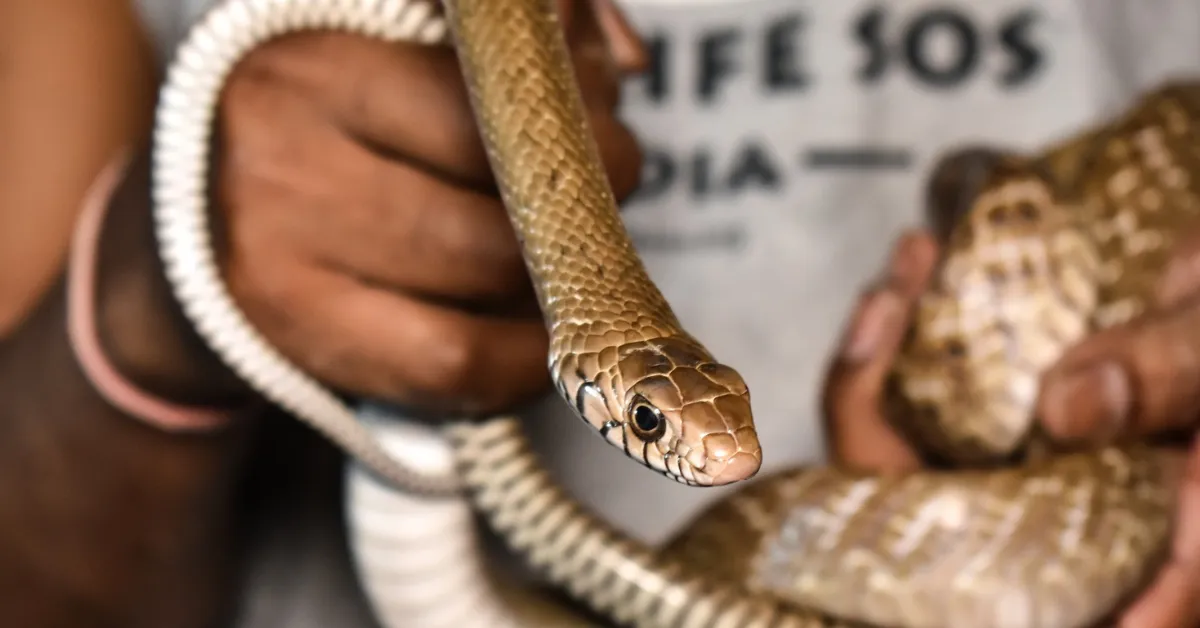
In Gujarat, help for wildlife no longer begins in forests or formal rescue centres. Currently, it begins with a phone buzzing on a table, a WhatsApp message lighting up a screen, or a shaky voice note from someone who has just spotted a snake in a staircase or a bird trapped on a ledge.
It usually unfolds in a familiar pattern. Someone reads the message, someone responds, and before long, a young volunteer has already picked up their bag and left.
This is not a community with offices or uniforms. It is a loose, fast-moving network of Gen Z volunteers who have become first responders for wildlife across parts of the state. Many of them are students or early professionals who, until recently, were only passive viewers of wildlife content online. They watched rescue videos, shared posts, and scrolled past animal encounters like everyone else. But somewhere along the way, watching turned into acting.
Now, instead of forwarding videos, they forward themselves.
When a message becomes a call to move
The system that holds them together is informal but surprisingly effective. WhatsApp groups act as the central thread, carrying SOS messages about animals in distress. A call comes in, often from a resident who is frightened or unsure what they are seeing. Within minutes, the message is passed along, locations are shared, and whoever is closest steps forward.
There is no assignment of duty, no rota, and no official instruction. Just instinct and availability.
A student might leave college halfway through the day, while someone else steps away from work without much hesitation. Another volunteer might start a scooter in the middle of dinner plans. What they carry is minimal, sometimes just basic rescue tools, sometimes only knowledge passed down from previous calls.
When they arrive, the situation is rarely under control. People are anxious. The animal is usually stressed or injured. Fear sits in the middle of everything. And the first task is often not the rescue itself, but calming the room.
Volunteers speak softly, asking people to step back, to give space and not to panic. Only then does the actual work begin. A snake is guided carefully into a container, not forced. A bird is lifted gently, checked for injury, wrapped for safety, and taken for care. Every movement is slow and deliberate because haste is what leads to dangerous situations.
The fact that stands out in all of this is how unglamorous it really is. There are no dramatic moments, no applause, and no audience once the animal is gone. Just a silent return to whatever the volunteer was doing before the message arrived.
From scrolling feeds to stepping into fear
Almost all of these volunteers describe a similar beginning. Wildlife first came to them through screens. Short videos of rescues, clips of animals appearing in places they should not be, or posts that are liked, shared and then fade out of memory just as fast. At that stage, it was distant, almost entertaining in its unpredictability.
/filters:format(webp)/english-betterindia/media/media_files/2026/04/24/gen-z-wildlife-rescue-2026-04-24-13-46-33.png)
But distance does not last long in cities where wildlife and human spaces overlap so closely.
A message about a snake in a nearby building. A bird caught in a balcony grill. A call from someone just a few streets away. Suddenly, what once felt like content becomes real and unignorable.
That is usually the turning point.
They do not describe it as a decision so much as a shift. One moment they are watching, the next they are going. And after that, it becomes easier to go again.
Over time, this repetition builds something consistent. Fear does not disappear, but it becomes familiar enough not to stop them. Experience comes not from training manuals, but from showing up repeatedly, from watching others handle situations, from learning what not to do when panic rises.
Slowly, a cycle forms. A message arrives, and someone moves. An animal is rescued. Life continues.
The impact of this growing network is already visible in small but thoughtful ways. Animals that might once have been harmed in fear are now more often rescued and released safely. Residents are learning to call for help rather than react with violence. Conversations around wildlife in urban spaces are beginning to shift, from threat to coexistence.
/filters:format(webp)/english-betterindia/media/media_files/2026/04/24/gen-z-wildlife-rescue-2026-04-24-13-49-23.png)
But perhaps the most important change is subtler than that. It is in a generation of young people who have stopped being bystanders, and instead, without much noise or attention, have started showing up when it matters most.
Source:
“Answering wildlife SOS: Gujarat’s Gen Z networks, trade reels for real-world animal rescues”: by Ashok Adepal for The Times of India, Published on 21 April 2026.
Disclaimer : This story is auto aggregated by a computer programme and has not been created or edited by DOWNTHENEWS. Publisher: thebetterindia.com