
Has the romance gone out of travel?
A well-travelled friend just returned from Paris, and instead of getting a boost from his trip, he came back feeling dispirited. Not one to complain, and ever grateful for the ability to travel, he nevertheless was discouraged by the behaviour of others.
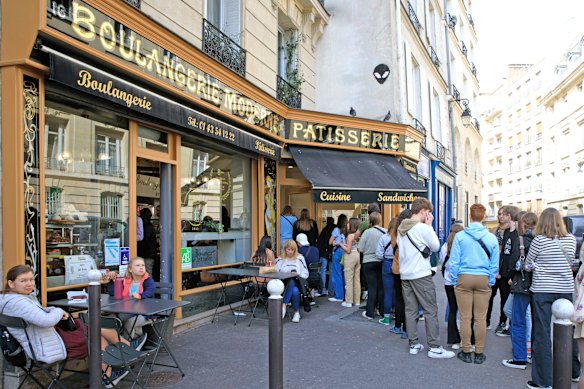
They weren’t behaving badly – but they were boring. Everywhere he went, there were lines around the block, not for attractions like music and art, but for … bakeries. People were glued to their phones, uninterested in engaging in conversation or even a smile.
As someone who had drunk in the romance of travel when young, heading off from Australia when the world seemed big and undiscovered, he now felt travelling was a diminished experience. Not just because of the many discomforts involved in getting anywhere, but because globalism has meant most things are familiar – the same shops, the same obsessions, the same images.
Places populated by a platoon of phone-staring zombies. There’s barely a destination on Earth that hasn’t been amplified on social media or, worse, trampled in the rush to expose it and boast about it to thousands of strangers.
Sign up for the Traveller Deals newsletter
Get exclusive travel deals delivered straight to your inbox. Sign up now.
Everywhere is well trodden, and if we can’t get there, it’s available virtually. When we travel, modern society demands that the destination be viewed, interpreted and shared. If you’re constantly engaging with the content provided for you by others via your screens, to the detriment of engaging with what is going on around you, you might, in fact, be boring.
I’m no purist about phones. They’re useful, entertaining and comforting – and addictive. I’ve had to discipline myself to put mine down. If I don’t, I miss out on the wonderful textures of life. Not just in Paris, but in my own neighbourhood too.
Until you really smell a place, in my opinion, you don’t know it. Travel is all senses, not just sight and swiping fingers. My well-travelled friend had the advantage over Gen Z of starting his travelling life in the 1960s and ’70s, at a time when most places were an exotic mystery, seen only on maps, in friends’ slide shows and postcards.
An older generation’s access to travel information was limited to print publications, brochures, travel agents and word-of-mouth testimonials. They saved up for glossy magazines from overseas, which they could afford only occasionally, pored over them and dreamed of one day going to these magical places. They devoured the works of the great travel writers.
Maybe travelling the world for a cake you’ve seen on TikTok or Emily in Paris is as thrilling to some people today as having a Bali beach to yourself was 50 years ago.
And when they were finally ready to take the step, travelling involved financial sacrifice and a good deal of courage for anyone going solo. Communication with those back home involved expensive phone calls and, later, faxes. You could indeed get lost if you couldn’t read a map. You couldn’t easily ring your parents for help. But that was character building.
Still, every generation needs to find out things for itself and has its own contexts, perspectives and aesthetics. I don’t scoff at the crowds lining up for the pastries at Cedric Grolet in Paris (at up to €45 [$74] a piece, they are bound to be a disappointment).
Maybe travelling the world for a cake you’ve seen on TikTok or Emily in Paris is as thrilling to some people today as having a Bali beach to yourself was 50 years ago. I’m of a generation that would never be seen dead lining up for hours for something if I didn’t need to, no matter how desirable. These days the line itself is the destination, it seems.
Certainly, travel is now easier, cheaper and safer, current events notwithstanding. It can also be a real pain – hours-long waits at immigration desks, cramped seating on long-haul flights, delays and crowded attractions. So maybe we’ve gained something, but we’ve lost something too.
The Merriam-Webster dictionary defines romantic as “the imaginative or emotional appeal of what is heroic, adventurous, remote, mysterious or idealised”. Could the missing ingredient be romance? The mystery? Of going where no one you know has gone before?
Maybe the last true romantic era of travel ended in the years after World War II, when people began travelling the world again, before the advent of mass tourism. Or maybe it ended earlier, with the great explorers, women and men, of the 19th century?
You can be sure that a later generation will look at the way we travel now, staring into hand-held portals, transfixed by a digital interpretation of the real world all around us, and think: “Wow, they did that?”
 Lee Tulloch – Lee is a best-selling novelist, columnist, editor and writer. Her distinguished career stretches back more than three decades, and includes 12 years based between New York and Paris. Lee specialises in sustainable and thoughtful travel.Connect via email.
From our partners
Disclaimer : This story is auto aggregated by a computer programme and has not been created or edited by DOWNTHENEWS. Publisher: www.smh.com.au


