
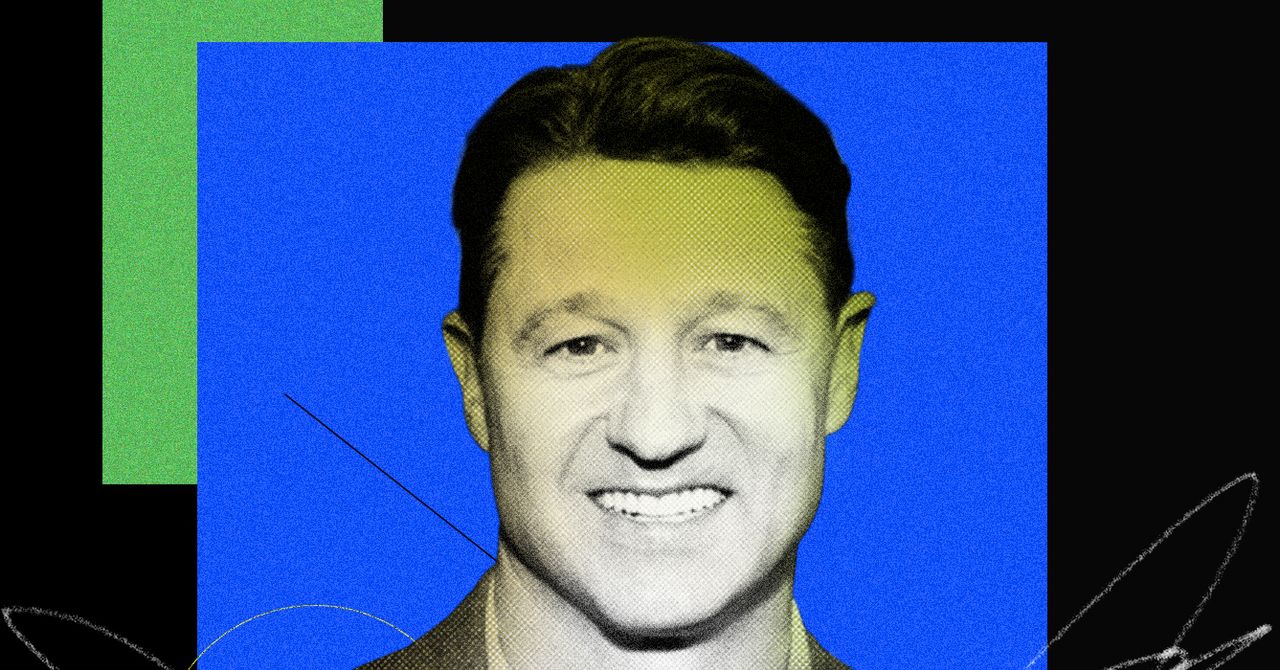
The identity of Satoshi Nakamoto, the pseudonymous creator of Bitcoin, remains one of the blockchain’s great mysteries. Countless news articles, documentaries, and bits of internet speculation have attempted to unmask Satoshi to no avail. Earlier this month, The New York Times published a massive investigation into who they believed was behind Bitcoin. The man they identified protested that it wasn’t him.
Ben McKenzie—yes, Ryan from The O.C.—thinks it’s better, for Bitcoin at least, that Satoshi remains anonymous. Crypto, he says, “has a lot of aspects of a cult,” and “a deified figure who only exists as a pseudonym” is good for those.
Just to be clear, McKenzie doesn’t want this. He’s spent the last five years on a quest to tell anyone who will listen that cryptocurrency is a bad idea. In 2023, he and journalist Jacob Silverman released Easy Money: Cryptocurrency, Casino Capitalism, and the Golden Age of Fraud, a book on the topic that includes interviews with FTX founder Sam Bankman-Fried and Tether cofounder Brock Pierce, among others.
Earlier this month, McKenzie, who has an undergraduate degree in economics, released Everyone Is Lying to You for Money, a documentary based on his experiences investigating crypto and writing the book. As it was rolling out to theaters, McKenzie attended the inaugural WIRED@Night event to talk about the book and film (and read some mean tweets). He also sat down with me prior to the doc’s release to discuss his crypto fears—and what might happen to Bitcoin in the future.
This interview has been edited for length and clarity.
KATIE DRUMMOND: Ben, thank you so much for joining me.
BEN MCKENZIE: Thank you for having me, Katie. It’s an honor to be here.
So, I actually was just at my desk upstairs and was reading the New York Times’ recent investigation into the identity of Satoshi Nakamoto, the creator of Bitcoin. I’m not even interested in talking about who Satoshi is; I haven’t cared about that for a really long time. But because this piece just came out, I’m curious about your impressions of the sort of mythology and online fascination, almost obsession, with Satoshi. He’s almost treated like some mythical figure, like this magician or wizard who created Bitcoin and catalyzed this entire movement.
If you think of crypto as a story, it’s a story with this really devoted, small following. And it has a lot of aspects of a cult. One great thing for a cult is a deified figure who only exists as a pseudonym. Because, in reality, it might be maybe this guy Adam Back, who’s a very interesting character, or some other cypherpunk cryptographer from that era. But then it would be a real person and a real person would be a little bit of a letdown probably. Right?
Whoever it is.
Right. It’s just such a better story to have it be a mystery and to have the code take on this mythological status, like it’s gonna fix everything that ails our traditional financial sector. Because the crypto story is really simple. It’s basically, “Do you hate our current system?” Everybody raises their hand and then, “Well, Bitcoin fixes this.” And it’s the second part that’s the lie. I would argue it’s far worse if we were to try to somehow use cryptocurrency as a form of money on a global scale or even a national scale. But the story is really simple, and it’s so powerful because the first part we all agree on: Our current system sucks. So that gets them pretty far.
I love a long story, but at one point in the Times story I was like, I gotta scroll to the end. Like, did they get the guy? Once again, it’s not dead to rights. He’s not like, yes, you got me, it’s me. I would imagine that whoever it is, it is advantageous for that person if they are still alive to retain that sort of mysterious, mythical air about them. Because, as you said, as soon as everybody knows who you are, that veil of mystery and the sense of nobility, a noble cause, dissipates, or at least starts to dissipate.
And I mean, I would be happy to talk about Adam Back specifically.
What do we know about Adam Back?
So a couple things. I’ve never met him and never interviewed him. He does not like me. He’s referred to me as a crisis actor.
No.
Well, I am an actor.
You are an actor.
It is a crisis.
So, you know, points for creativity. Adam is a cryptographer. He’s the first person that Satoshi emailed. So this person that doesn’t exist emailed this real person. That’s interesting. Then in the article, apparently, there’s a lot of similarities in terms of how Adam writes and Satoshi wrote.
But in terms of Adam himself, he started this company called Blockstream, and Adam met with Jeffrey Epstein in the mid-2010s, and apparently there was some sort of financial relationship. There was some sort of investment of some kind at some point.
I think that’s really interesting because, of course, cryptocurrency, when it started with the white paper in 2008 and then came into existence in 2009, there really wasn’t a use case for it. What could you really do with this stuff? It’s just lines of code on ledgers called blockchains.
The first use case was crime. It was the Silk Road, this dark web drug marketplace. That has been a throughline throughout cryptocurrency for forever, far before the retail public got really involved in it. Because that’s what you can use it for. Crypto’s really only good for speculation or gambling, betting the price is gonna go up and down, or crime, right?
It’s trying to get outside the regulated system. It’s a tool. Could you use crypto for good? Sure, you can imagine you’re trying to send money to a country under sanctions that you don’t believe in. Sure. But I mean, let’s be adults.
How are people actually using this?
They’re using it for crime, and the amount of crime is staggering. There’s a crypto company that did an analysis study last year and found that something like $150 billion of illicit activities are financed via cryptocurrency. In a year.
That is just a shocking amount.
And that’s from a crypto company’s analysis, so it might be on the low end, you know what I mean? So we’re talking about like just a staggering amount of crime. Some of the worst people in the world … Jeffrey Epstein loved crypto. Russian oligarchs selling sanctioned oil to the Chinese in exchange for drones that they’re gonna send to Ukraine, and it’s all done via cryptocurrency.
That’s the thing I’m beating on is like, what are we doing? What good is this doing?
I’m not saying to outlaw it, because I don’t think that would do any good, but we do have to regulate it stringently, and treat it for what it is, which is both a Ponzi scheme on the speculative side in terms of cryptocurrencies like Bitcoin, Ethereum, Melania coin, Trump coin, fart coin, CumRocket, my favorite meme coin.
Then there is black market money on the other side, which is the stablecoins. Which is really where the game is headed.
The other thing you get, and this is really important for people to understand, the libertarians that love crypto will say, “Oh, this is great. This is money that’s free from the dead hand of the state.” Well, first of all, we live in a democracy, at least theoretically. So that seems a little overwrought, but if the money doesn’t come from the government, where does it come from?
They don’t like to talk about it, but the answer in cryptocurrency is corporations.
Right.
It’s World Liberty Financial, but it’s also Bitcoin. The Bitcoin that’s mined today, the vast majority of it, is mined by multibillion-dollar corporations, some of which are publicly traded.
So we’re talking about literal corporate money. If that seems like a good idea to you, then OK. But the vast majority of the public already hates corporations for good reason and is skeptical of them having even more power over our daily lives. So this is a terrible idea.
In 2022, you were invited to testify before the Senate Banking Committee, which I think says a lot about the expertise and the reputation you’ve built for yourself as a leading expert on the underpinnings of what is actually happening in the crypto industry. What is it like to get an invitation like that? Is it a phone call, is it an email? Like how did you react to that invitation? What did you think when that came up?
Over the summer that year I was really fully into this crypto investigatory stuff and sort of writing articles with my coauthor Jacob Silverman and working on this book that we would publish and interviewing people and being very vocal online.
I was trying to get the attention of people on Capitol Hill, so I met with a couple of folks over the summer and I kept saying, “Look, the only hearings that are happening are just glorifying crypto and talking about how wonderful it is.” And it was finally crashing over the summer. I said, “You gotta have hearings for the victims, you gotta talk about the cost, because all people are seeing is the one-in-a-million person that makes a fortune on it.” That’s all the media focuses on.
Basically, the staffs were sympathetic, but this just wasn’t the right time. It was with the vibe. And then that fall, FTX’s Sam Bankman-Fried got arrested. His empire exploded fantastically. He was kind of the figurehead of crypto at the time. He was arrested in the Bahamas and eventually extradited.
Then there was a chance for a hearing, and I got the call, and yeah, it was a really nice moment. I mean, to be honest, I was instantaneously incredibly nervous.
Yeah, no, of course.
I’d never done it before.
One of the observations that I have made many times around congressional testimony of this nature is that when it’s anything technology-related, you sit and you watch and you listen and you look at the lawmakers who are listening, and you hear their questions and you sort of think to yourself: Oh my God, how are we ever gonna get anywhere? I say that with all respect to some of the political leaders of this country. Some of them, not all of them. But there is a troubling disconnect between often what is said and what is understood, and then what is done. When you walked out of that room that day, did you feel like anything would materially change? Do you feel like they actually understood what was happening and sort of what the stakes were?
I think some of them did.
Sure, I mean, it’s not a monolith.
As to whether I felt like things were gonna change, I can’t remember what I felt at the time.
It felt good to clear the air. It felt necessary. I went hard.
Yeah.
I did not mess around. I remember asking my wife, “Do I use ‘biggest Ponzi scheme in history’? Is that too simplistic?” She’s like, “No, you have to say that. Because that’s how people understand these things, popularly. You can be nuanced in a 300-page book. But in five minutes on Capitol Hill, and in a specific clip that you’re gonna be clipped for, you need to be as direct and as hard-hitting as possible.”
So I wrote my remarks, and the good part about being an actor, and a writer, is that you specialize in communications, and I think I knew how to hit my marks.
Then what was so fascinating about actually testifying is how similar to showbiz it was. Like, you’re up there, you’re giving your speech, you’re on camera. But off-camera you’re seeing people milling about. The hearing was two crypto skeptics, me and this wonderful professor of law at American University, Hilary Allen, and a couple of pro-crypto people, including Kevin O’Leary.
Oh, fantastic. So glad Kevin was able to be there.
It wasn’t a debate. It was sort of like a performative thing where we were just gonna hit our marks, and I get that, but that obviously is not a real conversation.
I can’t remember what I felt at the time, but I definitely remember other skeptics saying, “Yeah, it’s over.”
It’s over in 2022.
Yeah. Or, you know, it’s gonna die out. Not all of them, but some of them. I just remember thinking, I don’t think that’s true.
I have to ask you about President Trump, because crypto was sort of bouncing along. There would be these spectacular moments of catastrophe—SBF being a great example. Then you have the president of the United States come back into office for a second term and become a crypto evangelist, who vowed to make the United States the crypto capital of the world.
Has that made your life and this pursuit around crypto harder, has it made it easier?
A great question. So this film has taken a long time to make. Yeah. The events of the film are largely in 2022. It’s a completely independent movie that I financed myself. Gulp. So it took a long time because you don’t have any money. I directed on TV, and in TV directing you have all of the money and none of the time. In doc directing you have all the time and none of the money. But eventually we had to stop, and it was right before the election, and Trump had just pivoted to supporting crypto—because as recently as 2021, Donald Trump called Bitcoin a scam.
He sure did.
My personal theory is that Trump’s business model prior to being elected president was branding himself and putting his name on hotel properties and things like that.
As he embraced it over the summer of 2024, very publicly, investors realized that if he were to be elected president, the price would go up. So the price started going up in anticipation of that. Sure enough, he was elected and then it just kept going and going. He’s done a lot to really further crypto’s rise. Dismantling the SEC, dismantling the literal crypto crime task force that the Biden administration had created.
Yeah.
So, here’s what’s interesting. We needed to wrap production on the movie in 2024, or sort of start the editing and then add the graphics and stuff. We finally finished it in the summer of ’25, about a year ago, and then I needed to sell it. I was initially thinking, Oh, this is an hour-and-a-half comedy starring Ryan Atwood from The O.C. and my much more famous wife who’s awesome in this movie—Morena [Baccarin] just kills it—and it’s a comedy about a topic that’s in the news. This is gonna be a slam dunk. I’m gonna have meetings with Netflix and like it’s gonna be done.
Interesting.
Had some meetings with some streamers, but this was at the time when [Trump] was going after [Jimmy] Kimmel, he was going after [Stephen] Colbert. I mean, they’re still doing it, but they were, at that point, dangerously close to succeeding in this censorship. And here was a movie that’s, you know, a little political, more than a little political. I mean, the title is Everyone Is Lying to You for Money. And I made sure the lying part when you see the intro is over Trump’s face.
Oh, OK. Yeah.
You know, the movie didn’t sell.
Now, that being said, the movie’s coming out. It’s in theaters. People can see it, at least briefly. And the response so far has been fantastic, because people are so angry at this stupid system and all these stupid people who, again, continue to lie to us for money.
So, it’s a wild ride.
I’m curious, you’ve been on this war path for years. You wrote a book already. Tell me about the origins of the documentary. As you say, this goes back like many, many years now.
So the documentary started off with Jacob. I approached this journalist, Jacob Silverman, about writing a book. We submitted a book proposal, sold the book proposal, and then we went out into the real world to start reporting on this, because it was sort of coming out of Covid, into ’21, into ’22. The first thing we went to in the real world was South by Southwest in 2022 in my hometown of Austin, Texas.
I just figured, why not turn a camera on? These characters are wild. Crypto has all this zany stuff. What’s the worst that can happen? If it doesn’t work, whatever. Pretend like it never happened. The first day we were filming on the floor of the convention center and I see this booth for a company called Celsius, which was a very dodgy company where you give them your crypto and they give you a guaranteed return of like 15 or 20 percent or something.
Well, that sounds too good to be true.
Too good to be true. I’m thinking like, what’s going on? I knew they were being sued by the Texas state regulator, and yet they hadn’t been adjudicated yet, and they’re still trying to sell people on this. I look over to the other side of the room and there is the CEO, Alex Mashinsky. What are you gonna do? So I mic’d up, went over, and I had this whole conversation with him. Some of it’s in the movie, he’s just like such a used car salesman. Just obviously kind of blustery and full of it. That was the first day, so I figured I should keep going.
That’s how it started and I just kept going, and I needed to also finish the book. So 2022 was documenting, and 2023 was the book. Then the book came out in the summer. Then I could really turn to all this random footage that I had, which was like interviewing these guys like Sam Bankman-Fried, testifying on Capitol Hill, going to El Salvador.
But I didn’t have a narrative. I needed to create a narrative spine, and the spine became me, my story. You know, why the hell was I doing this? Both personally and then in terms of my cause or my ideals here. That worked because I basically was able to use my much more famous and talented wife and get her for free to be in the movie and write my kids into it.
It worked out, but it took a while to create the narrative.
This culture of people who are drawn to cryptocurrency. We could describe them as crypto bros. There are women involved as well, but it’s sort of like the crypto guy, right? They’re kind of slimy. There’s something really inauthentic about them. They are essentially preying on more vulnerable people. There are people in my life, many decades older than me, who have invested retirement money into cryptocurrency.
How do you describe what draws someone to cryptocurrency? What about people on the other side, that vulnerable population? These are the people I worry about when we talk about someone who listened to President Trump talk about crypto and felt like, “I should get in on that.” How do you see those two cohorts?
If you think of it as sort of like a multi-level marketing scheme, there’s the people at the top of the pyramid and then there’s everybody else at the bottom. The people at the top are the insiders. People that own the exchanges, issue the coins, that offer various fintech-y type access to crypto. They usually do pretty well. They’re not the ones holding the bag at the end because they’re not putting their own money into it necessarily. Almost everybody else loses.
In terms of the people that invest in the retail public, it’s everybody. I mean, it is very male. I will say it is very, very male. But more than 40 million people, 40 million Americans, have invested in cryptocurrency or something. [Eds. note: It’s now closer to 55 million Americans.] It’s sad. Now, that being said, most of those people only put a little money in.
Just like an experiment. A little hobby.
Yeah. They saw Matt Damon selling it, and they’re like, “Sure, I’ll put a hundred bucks on it.” My buddy Dave, in the movie I try to explain how I got into it. This really happened. A friend of mine said, in the depths of Covid, that I should buy Bitcoin. And my buddy’s great, but he’s kind of been a knucklehead about money. So I was like, “I’m not gonna do that, Dave, but I do want to hear more. Tell me about it.” And he couldn’t tell me about it. So I had to do my own research.
But in terms of the people that are into it, I describe it in the movie as, look, crypto’s really just a story, a get-rich-quick scheme, a story of you’re gonna be wealthy and also it’s gonna fix all these problems and give you all this freedom.
It’s a story as old as time just wrapped in this techno-babble stuff. That appeals to just an extraordinary number of people. So if you think of it that way, then crypto is really just a projection of the hopes and dreams of so many people.
I interviewed a bunch of people who got involved with Celsius. After I met the CEO I felt like I should talk to these folks. So we posted on Reddit and all these guys replied—it was all guys—and I had really good conversations with them. Very sincere conversations about, “Well, what did you want this money to do? What was it gonna do for you?”
They all had various answers, but the most heartbreaking was a guy working construction in Texas, who said he wanted to make a little money to spend more time with his daughter.
Oh, that’s really sad.
Really sad. And then, he felt like he let her down, when he lost the money. I’m crying. He’s crying. Like, I’m a dad. He’s a dad.
I feel a lot of sympathy. At the same time, I came back to these guys at the end of the movie and I say, “Do you still believe in crypto?” They all said yes.
They’re gonna have to go that journey on their own, and maybe they’ll come out of it on the positive side, but they’re most likely to come out on the negative.
They unfortunately all hate WIRED, too.
Yeah, they’re not listening to this anyway. I didn’t make the movie for them. I made the movie for everybody else.
The vast majority of us are skeptical of crypto for good reason. Almost everybody that I talk to who isn’t into it says the same thing to me. They say, “I don’t know. It seems maybe I’m not that smart. It seems kind of complicated, but also it seems scammy.” I just want to say, “No, it’s not you. It’s them.”
People find the blockchain intimidating. They don’t quite get cryptocurrency. What is the clearest way to explain to someone what this is?
The thing you need to know is that blockchain technology sucks. It’s old. It’s really old. It goes back to 1991.
But I thought you could put everything on it.
Yeah, and that was what we were sold practically in 2022 or ’21. There was gonna be, like, medical insurance on blockchain …
It’s outrageous. The press releases I got. You could put farm animals on there. Literally whatever you wanted could go on the blockchain.
Yeah. It hasn’t found an application outside of crypto, right? Like companies don’t even use the word “blockchain now.” They use the term “digital assets,” which is a wonderfully vague term.
I will keep an eye out for this.
What is it? It’s digital. It’s an asset of what? What are you owning exactly? So you just need to understand that the technology sucks. To give you a sense of how much it sucks, Bitcoin can only process five to seven transactions a second. Visa can do 24,000. So, it cannot scale as a payment method.
You have to build all these layers on top of it, which sort of defeats the purpose of having it to begin with. Even Sam Bankman-Fried, when I interviewed him, I was like, “Bitcoin can’t work as global payments,” you know? Then he was like, “Yeah, yeah, yeah, yeah.” Then he tried to pivot and sell me on this other coin that worked better.
Blockchain’s really simple. It’s just a ledger, just a way of storing information. The advantage that it has is it obscures the identity of whoever’s interacting.
Right. Hence the crime.
Exactly. So you can have all these different addresses in the form of wallets. You can also run your crypto through these things called mixers, which sort of further obscure the identity, making it even harder to track.
Your colleague Andy Greenberg has done an enormous amount of wonderful work talking about how law enforcement interacts with these things. So, you theoretically could trace who is committing what crime, except you can’t really, or it’s very difficult to do because you don’t know who is who on the ledger. That just requires a lot of legwork that quite frankly law enforcement agencies don’t have, generally speaking. Crypto people will say, “No, no, it’s open and it’s transparent,” but at the same time, they benefit from the fact that it isn’t.
So there’s just a lot of talking outta both sides of their mouths.
So you basically would just say to someone, it’s not actually that complicated and it doesn’t work very well.
Yeah. Like if someone says blockchain is the future, ask them, “Doesn’t it go back to like 1991?”
If you want to find people that are skeptical of cryptocurrency, ask cryptographers. Like, cryptographers are skeptical of crypto because they’ve moved on from that.
Where do you want to see this go? What is for you, after all of these years, the ideal future outcome for cryptocurrency?
Well, I mean, we put ourselves in a really bad place here, to state the obvious. Yeah. What should have happened, in my opinion, is that cryptocurrency doesn’t really function as a currency except for illegal stuff. It should have been classified properly as a security back in the day, but it wasn’t, and it was sort of quasi-classified as a commodity.
That’s created a lot of the problems. I know this is very dorky, but it’s really important. We’re the only country in the world that separates our commodities regulation from our securities regulation. Every other country in the world, they put these things together because why wouldn’t you?
If crypto was classified as securities, they would have to follow securities laws, and securities laws are predicated on disclosure. You have to know who you’re giving your money to and what they’re doing with that money. And the crypto industry really doesn’t want that.
You know, the temptation is to say, “outlaw it,” right? But I just don’t think that’s going to work. I’ll just be honest. I just think it’s a global system at this point, and outlawing it is just gonna continue to push it into the dark corners.
Stablecoins are different. Stablecoins I think are extremely dangerous. Stablecoins are cryptos that are pegged one-to-one with a real currency like the US dollar. So it’s sort of a black-market dollar, but of course it’s not backed by the full faith and credit of the United States. It’s a privately issued form of money.
To me, because they’re trading on the trust that people have in the stability of the dollar, it’s a counterfeit dollar. It’s not a real dollar.
Right.
If we continue to allow that to exist, and worse, we allow it to infiltrate our banking system, to sort of allow stablecoin companies to become their own banks, it mixes the fake money with the real money. That introduces enormous systemic risk.
At the end of the day, this could crash again as crypto has done repeatedly over its brief, but tortured history, and we could end up bailing these guys out. Like we did in the subprime crisis, which is hilarious because of course that was the thing that crypto was supposedly set up to be against.
I have to ask you, here with my optimist hat on, is there any redeeming value in cryptocurrency? Is there a silver lining here? Is there a novel and genuinely useful application of this technology?
Uh, no. I do think there’s a slight silver lining, which is it points out the myriad failures of our current system. And hopefully as crazy as Trump is, perhaps he’s shifted the Overton window of what’s possible on the other side.
What about you? This has been a cause, a mission. There’s something about talking to you that feels like it has been all-consuming to a certain extent. Are you going to keep going? Is this, is this an ongoing crusade for you or is there something else you want to do?
I want to do a lot of different things, but I want to keep going here because this is probably the best chance to reach the widest number of people.
I mean, writing a book was fantastic. I learned a lot, especially from Jacob, and I’m very proud of that book. But practically speaking, there’s only so many people that are gonna read a 300-page book on economics. A lot more people are going to see a movie. So I’m really pushing that, and I really wanna keep that conversation going.
As to what happens after that, I really don’t know. I’m not someone who wants to run for office.
You don’t want to, but you might.
Right, right. If the people wanted me so much … No, that sounds really obnoxious. No, I don’t think that’s my role.
I think my role is probably more communication and, quite frankly, PR in terms of understanding, helping people understand that we have the power, that this is wrong, that you should trust your instincts, that sort of thing. I don’t know where that leads me.
In terms of my next creative project, I’m actually trying to get back into TV because I miss the collaboration of writing books and making documentaries. The postproduction process is very lonely. I miss the collaboration on set. So I’m working on a series, developing a series, for myself to be in.
We’ll see if that works. I don’t know what the future holds, but nobody else does either. Right?
Ben, we like to close each show with a little game. It’s called Control, Alt, Delete. I think you’re gonna be very good at this. I wanna know what piece of tech you would love to control. What piece you would love to alt, so alter or change, and what would you vanquish from the Earth if given the opportunity.
I think we know the last one. So let’s start with Control. Control would be AI.
What are we gonna do with AI?
So I have not spent the time on AI that I’ve spent on crypto.
Maybe that is your next project.
I would love to talk to more people and be more informed about it. I think what’s obviously so different about AI from crypto is that it is a real technology, and it is actually changing things right now. And it’s extremely powerful, potentially.
I do not trust the guys that are running it right now. There’s a thing called the grift shift. Do you know about this?
No.
It’s grifters that shifted from crypto into AI.
Oh, sure. I mean, this makes sense, yes. They were all in the metaverse hanging out, and … yeah.
So I don’t trust them at all. I don’t want to personally control it. Society should control it in some fair and balanced way. That seems like the best way to do that.
Let’s see, Alt. Our financial system. You know, crypto was set up supposedly to be in opposition to the banking system. One question I have is: Why do we have banks? You know, banks are franchised by the government and allowed to issue loans. Most of the money that’s created in this country is in the form of loans. The government backstops that, and the bank’s profit and credit is extended. So it sort of works. But we also end up bailing these guys out a lot.
We do. Yeah.
I just wonder if we should cut out the middleman. I mean, everybody hates banks anyway. So should we have banks or should we just have accounts at the government? And the government can control that. Now, the crypto people are gonna hate that. They’re gonna be so mad, but it makes a certain amount of sense. So anyway, I guess that would be my Alt, whether it’s destroying the banks or just making the system more equitable and more fair.
I’m so curious. What are you gonna delete?
I think we know the answer to that. Crypto. Get rid of it. I’m pressing that button. Delete, delete, delete.
How to Listen
You can always listen to this week’s podcast through the audio player on this page, but if you want to subscribe for free to get every episode, here’s how:
If you’re on an iPhone or iPad, open the app called Podcasts, or just tap this link. You can also download an app like Overcast or Pocket Casts and search for “Uncanny Valley.” We’re on Spotify too.
Disclaimer : This story is auto aggregated by a computer programme and has not been created or edited by DOWNTHENEWS. Publisher: wired.com



