
The dish: Spaghetti alla puttanesca, Italy
Plate up
You may think you know the origin of the name “puttanesca”, but you’re probably wrong. Legend has it this dish was invented in the bordellos of Naples’ gritty Spanish Quarter, fuel for working women between jobs, and thus took its name from the slang word for their profession. Neat story, but historians believe that’s probably not true.
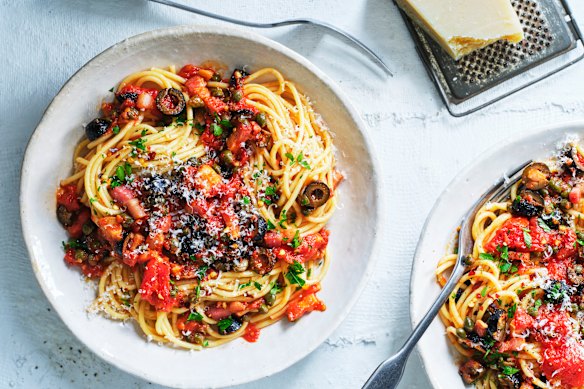
But we’ll get to that. Let’s discuss the dish itself, which has maintained a reputation as an unsophisticated if still much-loved Italian pasta, a mix of ingredients that aren’t often found together in local cuisine. Puttanesca is a tomato-based sugo which benefits greatly from the bold flavours of capers, black olives, garlic, anchovies and chilli flakes, creating a dish that is briny, spicy and packed with umami punch. Mixed through spaghetti, sugo alla puttanesca is a classic deserving of more respect.
First serve
Sign up for the Traveller Deals newsletter
Get exclusive travel deals delivered straight to your inbox. Sign up now.
Almost everyone agrees this dish was created in the 1950s, though it first appeared in gastronomic literature a decade later (there were similar dishes created in the 19th century, though none with these exact ingredients).
The Neapolitan bordellos story is a good one, but the more commonly agreed tale is that the dish was invented across the water on the island of Ischia. There, painter Eduardo Maria Colucci is believed to have created it as an alternative to Neapolitan seafood pasta. Colucci’s nephew, Ischian raconteur Sandro Petti, also claims to have come up with the idea around the same time after showing his friends he had nothing to cook and being told to make “puttanata qualsiasi”, or “any old crap”. The tweaking of the name, Petti says, was also his idea.
Order there
On the island of Ischia, visit Trattoria il Focolare, a restaurant as classic as they come. (trattoriailfocolare.it).
One more thing
One of the keys to puttanesca’s success as a home staple is that all the key ingredients – pasta, tomatoes, olives, capers, anchovies, chilli flakes – will keep in the cupboard for months, if not years, meaning you’re only ever about half an hour away from eating it.
 Ben Groundwater is a Sydney-based travel writer, columnist, broadcaster, author and occasional tour guide with more than 25 years’ experience in media, and a lifetime of experience traversing the globe. He specialises in food and wine – writing about it, as well as consuming it – and at any given moment in time Ben is probably thinking about either ramen in Tokyo, pintxos in San Sebastian, or carbonara in Rome. Follow him on Instagram @bengroundwaterConnect via email.
From our partners
Disclaimer : This story is auto aggregated by a computer programme and has not been created or edited by DOWNTHENEWS. Publisher: www.smh.com.au