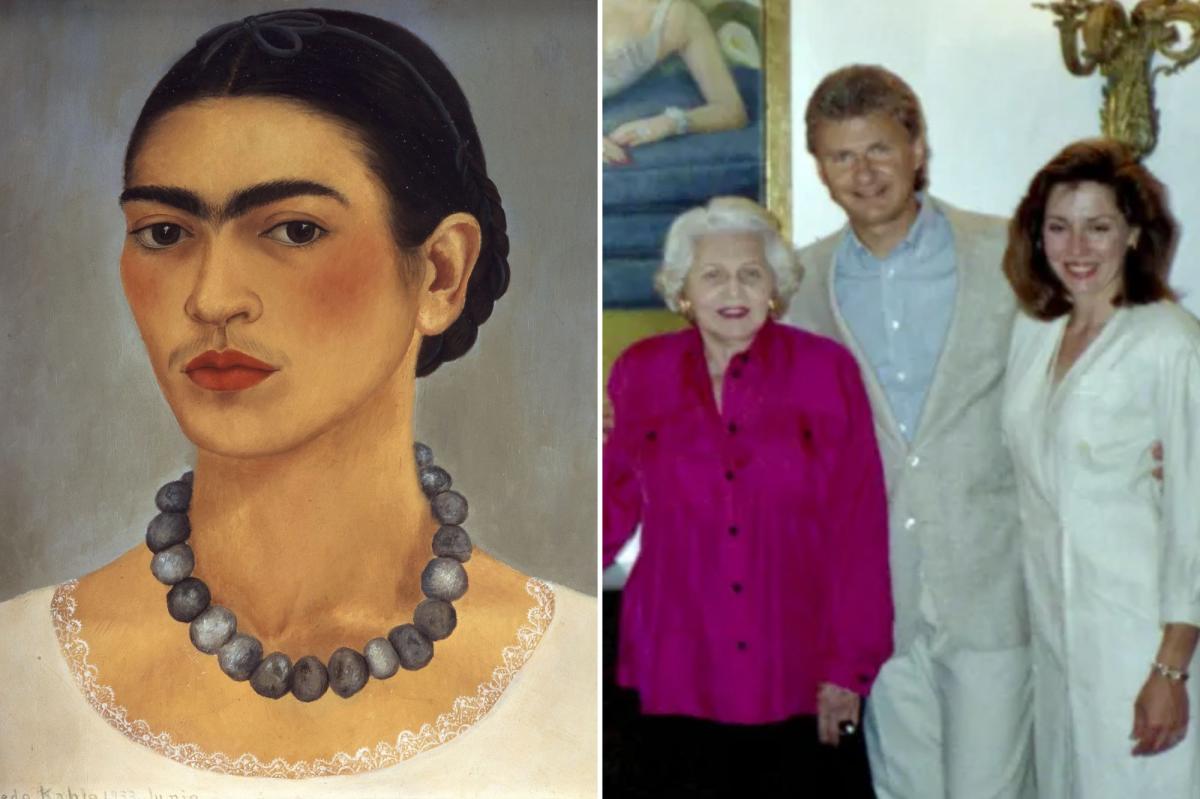
The art world is outraged over one of the most prominent collections of Mexican artwork leaving the country for Spain.
The Gelman Collection of Mexican art includes 96 works by Frida Kahlo, her husband Diego Rivera, Rufino Tamayo, and many others, once owned by Natasha Gelman, who relocated to Mexico from Europe to escape World War II.
It has recently emerged that the collection was quietly sold in 2023 by its custodian, 85-year-old New York City art curator Robert Littman.
The works were acquired by the Monterrey-based Zambrano family, part owners of cement company CEMEX, who used the collection — estimated to be worth $350 million — as collateral to secure a $150 million loan from Banco Santander, a Spanish bank.
The financial institution then took charge of the art, rechristened it the Gelman-Santander Collection and will ship it to Spain later this month for an inaugural exhibition at the bank’s new museum in its namesake city.
Critics point the finger at Littman for selling the works. He was named custodian in Gelman’s will, which she signed in 1993, five years before her death.
A copy of the Spanish-language document seen by The Post stipulates that the collection by Mexican artists be kept together and deposited in a museum for the public to enjoy.
Littman has long proved a controversial character and spent 10 years in court fighting claims he had exerted undue influence over Gelman to gain control of her collection.
In a scenario reminiscent of movies like “Saltburn” or “I Care a Lot,” Littman had made his way into Gelman’s life and eventually took advantage of her diminished mental faculties, her US-based family charged in court papers, claims Littman denied.
“She had Alzheimers so she could not decide anything,” Jerry Jung, 79, a cousin, told The Post. “She didn’t have testamentary capacity, and it started in 1992.”
By February 1992, Mary Chambers, a nurse who took care of her, said in an affidavit that Gelman couldn’t remember “names, events, appointments, or even her … knee surgery less than 11 months earlier,” The Post reported in 1999.
The last time Jung and his wife Alice saw Gelman she had difficulty recognizing them and wondered aloud why she was at an exhibit in San Francisco of her own collection in 1996, accompanied by Littman, the couple told The Post.
Jung, one of few surviving relatives of Gelman, and his wife brought legal action against Littman — an expert on Mexican art — in the US, Europe and Mexico in the early aughts.
In court papers, the Jungs claimed Littman and others conspired to defraud Gelman, after she “had become mentally incompetent in the last years of her life,” in order to “obtain control over Mrs. Gelman’s substantial assets and divert them to [Defendants’] personal use and benefit.”
Littman’s lawyers — paid for by the New York-based Vergel Foundation, which he set up to control the art after Gelman’s death, according to its publicly filed accounts — argued she was of sound mind when she signed.
The Jungs also argued Gelman made changes to a Liechtenstein trust in 1992 in which he was named, increasing Littman’s share from one percent of assets to 31%. He also claimed her will gave him the right to Gelman’s properties in Mexico.
Neither Littman or his attorney, John Koegel, returned The Post’s requests for comment.
The Jungs’ three lawsuits were complicated by the estate being spread across multiple trusts and jurisdictions, but the eventual rulings mostly ended in Littman’s favor that he was the rightful heir.
In New York, after years of court wrangling, the parties jointly discontinued the case and a judge ruled each party was liable for certain costs, with the Jungs ordered to pay almost $500,000.
In addition to the paintings, Natasha Gelman had a large collection of Pre-Columbian artifacts that were displayed prominently in her Park Avenue apartment, according to the Jungs, who live in Westchester.
“What happened to that collection?” asked Jung. “Bob Littman always had his eye on that collection, and we don’t know where it ended up.”
They also questioned what happened to Gelman’s luxurious home in Cuernavaca, near Mexico City and her “large” jewelry collection, which included diamonds and emeralds.
Littman’s Vergel Foundation was set up “to promote awareness and understanding of the works of twentieth century Mexican artists.”
But in recent years, the nonprofit has been doling out cash to New York University where Littman ran the Grey Art Gallery for decades. In 2024, Littman’s foundation gave the school $85,000, according to the group’s latest federal filings. In the same year, the foundation paid Littman’s husband $100,000 as Director and Littman himself $75,000, filings show.
In previous years, some of the foundation’s biggest expenses included more than $500,000 in fees to Mexican law firms during the legal challenges that the foundation faced from the Jungs.
The foundation also pays for the home in Cuernavaca, which the Jungs say is the same place they holidayed at.
“Mr. Littman has shown throughout the course of his career and life that he is a despicable human,” said Mexico City-based historian Francisco Berzunza. “He took advantage of someone who was old and frail and lonely. My question is how can Santander be associated with something like this?”
Over the last several weeks, Mexican art experts have called upon the government of Claudia Sheinbaum to prevent the works leaving Mexico permanently. More than 400 artists, curators and historians have signed an open letter to authorities calling for greater transparency in the government’s decision to allow the paintings to leave Mexico.
Littman had previously offered to sell the works to the Mexican government around 2000, according to a report in the New York Times.
According to a leading art critic, there are only seven works by Kahlo in Mexican museums. The artist painted a total of 150 works in her lifetime, she said. The Gelman Collection included what are considered two of Kahlo’s masterpieces — “Diego on My Mind” and “Self Portrait with Necklace.”
It also included a glamorous portrait of Gelman in a white gown surrounded by calla lilies, painted by Rivera in 1943.
After weeks of protests from Mexico’s art community, the Fundación Banco Santander in Spain said that the Gelman collection will return to Mexico in 2028, according to a press statement.
A spokesman for the bank told The Post that they will abide by Mexican legislation “regarding the care and oversight of the works included in the collection, particularly those that are subject to special protection due to their status as artistic monuments.”
Gelman, a Czech emigre, had fled to Mexico City to escape the Second World War in 1941. Alongside her film producer husband, who was also a refugee, she amassed a nearly billion dollar collection of both Mexican and European art.
The couple is best known in the US for the Jacques and Natasha Gelman Collection of European Art at the Metropolitan Museum of Art. The collection is made up of 81 paintings, drawings and bronzes, including works by Picasso and Matisse. It was bequeathed to the museum after Jacques Gelman’s death in 1986.
Disclaimer : This story is auto aggregated by a computer programme and has not been created or edited by DOWNTHENEWS. Publisher: nypost.com