As fuel prices soar and airspace closes, airlines are cutting flights and often passing increased costs on to passengers. We look at the main carriers operating in and out of Germany and the measures each one is taking.
If it feels harder and pricier to fly to and from Germany than it did just a few months ago, that’s because it is.
Since the US/Israeli attack on Iran in late February, airlines serving Germany have been quietly but decisively reshaping their networks.
Thousands of flights have disappeared from schedules, familiar routes no longer exist, and ticket prices – even on “budget” airlines – have climbed sharply.
The trigger for this disruption is not a lack of demand, but a sudden surge in costs. Jet fuel prices have more than doubled since the conflict began, driven in large part by instability around the Strait of Hormuz, through which around 20 percent of the world’s oil passes.
Instead of grounding entire fleets, airlines have broadly taken a more selective approach. Short‑haul routes are being cut or merged, passengers are increasingly being funnelled through major hubs, and ticket prices are rising because of new surcharges or higher base fares.
Individual airlines are also choosing to take markedly different measures, often because of how well “hedged” they are.
Fuel hedging is a strategy whereby airlines pre-purchase kerosene months in advance. Lufthansa, for example, reportedly ‘hedged’ over 80 percent of their 2026 fuel requirements at lower pre-war prices.
Other, smaller carriers like SunExpress and Pegasus are more exposed, which explains why they have been among the first to introduce so-called “conflict surcharges”.
Below, we look at the airlines responsible for the majority of flights in and out of Germany, how they’re responding to the crisis – and what this means in practical terms for travellers.
Lufthansa
As Germany’s dominant airline group, Lufthansa’s decisions shape the entire market. Since April, Lufthansa has announced the single largest cut so far: the removal of 20,000 short‑haul flights from its summer schedule, running through October 2026.
Most of these cancellations stem from the closure of Lufthansa CityLine, its regional subsidiary. Around 120 flights a day have already been axed, mainly from Frankfurt and Munich, with some routes – such as Frankfurt to Stavanger and parts of Poland – disappearing entirely.
READ ALSO: Lufthansa cuts 20,000 flights as fuel crisis bites in Germany
Lufthansa is also suspending nearly all flights to the Middle East until late October, with only limited resumptions planned. While the airline has so far avoided adding an explicit fuel surcharge, prices on many routes have still risen sharply.
On some domestic routes, Lufthansa has replaced flights entirely with rail connections, most notably Frankfurt–Stuttgart, where passengers are now funnelled onto Lufthansa Express Rail services.
Eurowings
Eurowings, Lufthansa’s low‑cost arm, is heavily affected by the same fuel pressures. The airline has suspended multiple routes to the Middle East and the eastern Mediterranean until at least October, reports the ADAC (Germany’s largest motoring organisation).
Rather than cancelling large numbers of flights outright, Eurowings has redirected aircraft away from higher‑risk eastern routes towards western European and North African destinations.
For passengers, this is likely to mean fewer direct options to some destinations and higher prices for the remaining seats, especially during peak travel periods such as school holidays.
Condor
Holiday airline Condor has confirmed flight cancellations, despite being in relatively strong financial health following a profitable year.
Long‑haul routes to Abu Dhabi, Dubai, Tel Aviv, Beirut and Cairo have been removed from the schedule, delaying Condor’s planned expansion towards Asia until at least winter, according to Die Welt.
READ ALSO: Cancellations and fuel surcharges – What air travellers in Germany should know
Fuel costs already account for around 25 percent of Condor’s revenue, and executives have warned that routes which are no longer profitable at today’s fuel prices are being cut.
Ticket prices are rising as a direct result, even though Condor says it does not currently expect a physical shortage of jet fuel.
Discover Airlines
Discover, Lufthansa’s long‑haul leisure brand, has avoided the Middle East entirely since the conflict escalated.
Flights to traditional Gulf stopover hubs have been cut, while capacity has been shifted towards North America and the Caribbean, where routes are unaffected by Middle Eastern airspace closures.
For passengers, the most noticeable impact is price. Tickets to long‑haul leisure destinations that previously depended on Middle Eastern routings are now reported to be around 22 percent more expensive than last year.
SunExpress Deutschland
SunExpress operates many of the busiest Turkey–Germany holiday routes and is particularly exposed to disruption.
From May 1st, the airline introduced a €10 “conflict fuel surcharge” per flight segment on all Europe–Turkey routes.
Flights continue to Antalya and Izmir, but heavy congestion in Turkish airspace is causing longer flight times, knock‑on delays and more late‑night arrivals.
Travellers should also expect fewer last‑minute bargains, as tighter scheduling leaves almost no spare capacity.
READ ALSO: Four international night trains from Germany to try in 2026
TUIfly
TUIfly has shifted large parts of its fleet away from the eastern Mediterranean towards Spain, the Canary Islands and Cape Verde.
The wider TUI Group has pledged not to apply fuel surcharges to existing bookings, but this only applies to package holiday guests who have already paid.
Prices for new bookings are steadily rising – rapidly in the case of flight-only bookings.
Ryanair
Europe’s largest low‑cost airline has warned it may cut up to 10 percent of summer flights if fuel prices remain high.
While Ryanair has so far avoided introducing a specific fuel surcharge, it has warned that fares from Germany this summer are likely to be €20–€40 higher than last year.
READ ALSO: Do you need travel insurance for the EU if you live in Germany?
At the same time, the airline has announced deeper cuts in Berlin. From the start of the winter schedule on October 24th, Ryanair plans to halve the number of flights it operates to and from Berlin and remove all seven aircraft currently based at Berlin‑Brandenburg Airport.
Ryanair says the decision is driven by rising costs at Berlin airport and Germany’s aviation tax regime, rather than pressures brought about by rising fuel costs.
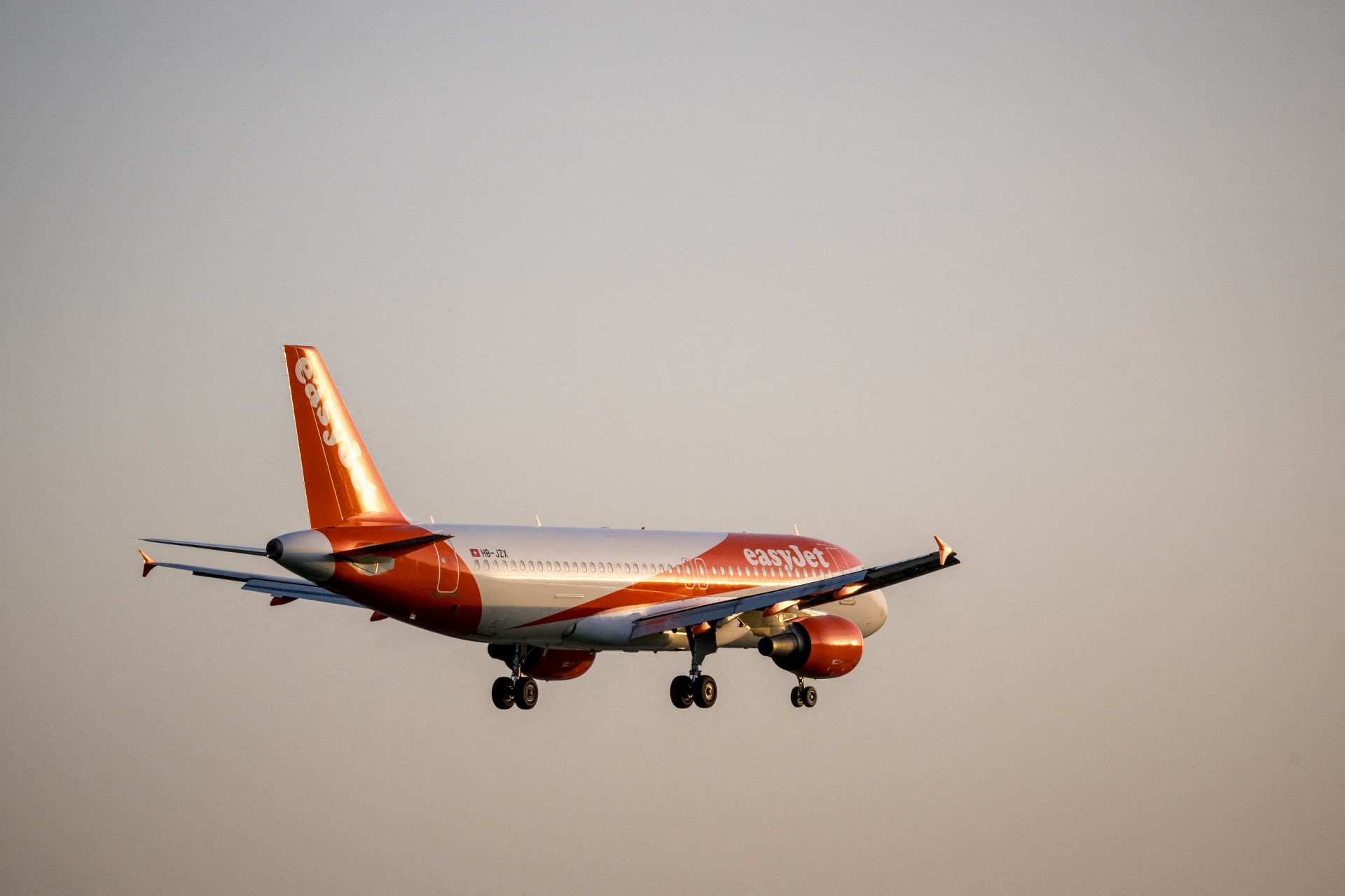
A EasyJet plane pictured before landing. Photo by Fabrice COFFRINI / AFP
EasyJet
EasyJet has so far avoided widespread cancellations but has begun shifting aircraft towards safer western routes.
Like TUI, it has pledged not to add surcharges to existing bookings, though it has warned that prices for future travel will continue to rise as fuel hedges expire.
Turkish Airlines
Turkish Airlines has emerged as a key alternative hub for travel between Europe and Asia, but the pressure on its network is growing.
Flights to five Iranian cities are suspended by law, forcing the airline to redeploy aircraft onto longer Asian routes.
This has already had knock‑on effects in Germany. From May 2nd, Turkish Airlines ended direct flights between Leipzig/Halle and Istanbul, citing the geopolitical situation and rising jet fuel costs.
For passengers still connecting via Istanbul, this is likely to mean busier flights and fewer spare seats, as disruption at Gulf hubs pushes more long‑haul traffic through Turkey.
Pegasus Airlines
Pegasus, Turkey’s largest low‑cost carrier, is particularly exposed to the conflict zone. Around 15 percent of its network is thought to be affected by higher‑risk eastern Mediterranean operations.
To offset rising fuel costs, Pegasus has introduced fuel surcharges of €10–€15 on routes departing from Germany to Turkey and the eastern Mediterranean.
For passengers, this means higher final ticket prices even where base fares appear low.
READ ALSO: New direct trains from Germany to Copenhagen to launch this spring
Wizz Air
While many airlines are cutting routes and shrinking schedules, Wizz Air is taking a markedly different approach.
In March, the Hungarian low‑cost carrier launched 10 new direct flights from various German cities to Bratislava, Târgu Mureș, Tuzla, Cluj-Napoca, Podgorica, and Chișinău.
The airline says it is deliberately avoiding capacity cuts and has instead announced plans to use the current crisis as an opportunity to grow.
Over the past two years Wizz Air had already closed its Abu Dhabi base, a move that significantly reduced its Middle Eastern footprint.
Current plans to operate more extensively in Israel are officially still in place but remain on hold due to the war. Egypt has been identified as another growth market.
Disclaimer : This story is auto aggregated by a computer programme and has not been created or edited by DOWNTHENEWS. Publisher: thelocal.de