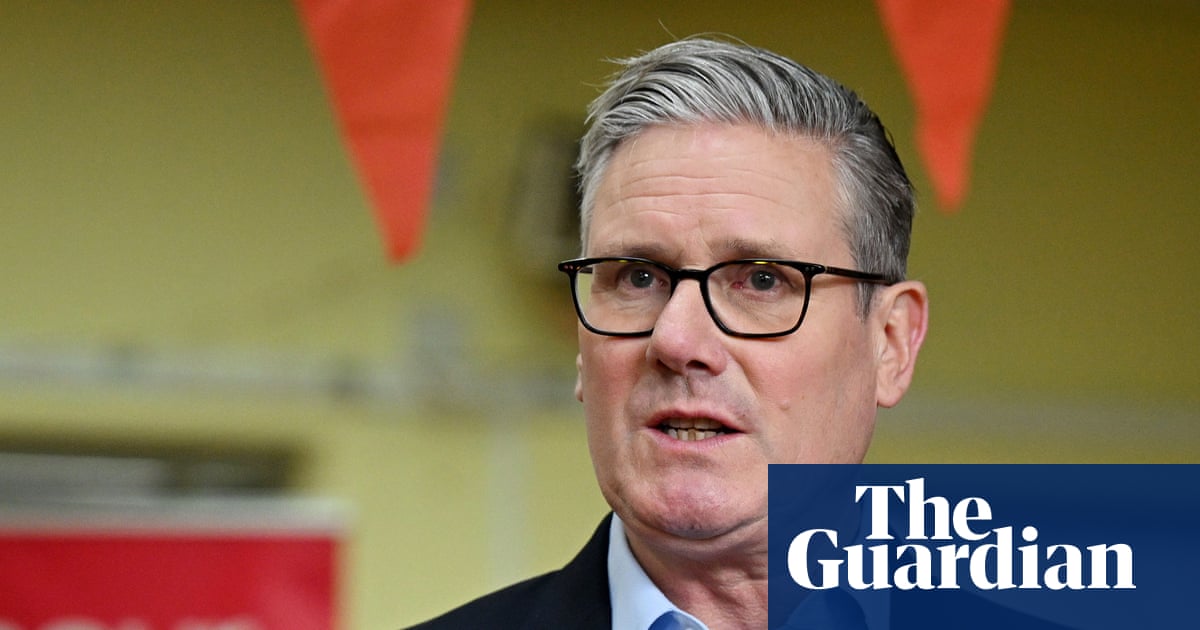
Keir Starmer has vowed to fight on as prime minister despite early results in local elections that show his party suffering heavy losses, many at the hands of Nigel Farage’s Reform UK.
Starmer struck a defiant note on Friday morning in the face of calls from some of his MPs to quit, insisting he remained as determined as ever to deliver the promises on which he was elected less than two years ago.
With Labour having lost control of councils in its heartlands across northern England and the Midlands, the prime minister was facing calls to resign from Labour MPs, including the former shadow chancellor John McDonnell and the Hartlepool MP, Jonathan Brash.
Reform’s successes meanwhile look set to confirm its place as England’s most popular party and underline the decline of the two-party domination of British politics.
Starmer admitted on Friday morning the results were looking bad for his party. “The results are tough, they are very tough, and there’s no sugarcoating it,” he said.
“We have lost brilliant Labour representatives across the country, these are people who put so much into their communities, so much into our party. And that hurts, and it should hurt, and I take responsibility.”
But he added: “I accept that [the results] reflect voters don’t feel that their lives have changed enough or quickly enough, and that’s been going on for a long time. We were elected to deal with that, and I’m not going to walk away from that responsibility and plunge the country into chaos.”
By Friday morning, Labour had lost about half the council seats it was contesting, losing control of councils in Hartlepool, Tameside, Redditch and Tamworth.
Some of the biggest losses came in the “red wall” former industrial seats that held the key to the Tories’ election win in 2019, and to an extent Labour’s victory in 2024.
The party was proving more resilient in London, however, where it retained control in Ealing, and Hammersmith and Fulham, as well as holding off a strong Liberal Democrat challenge in Merton. However, it lost control of Wandsworth and also Westminster.
The results sparked another round of criticism for the embattled prime minister, whose approval ratings are some of the worst for any in history.
Brash told the Guardian on Thursday night: “I think the very best thing the prime minister could do now is address the nation tomorrow and set out a timetable for his departure. We can then have an orderly transition, one that, by the way, ensures the full breadth of talent within the Labour party is able to stand, should it want to.”
McDonnell said: “The party needs to consider why we are in this situation … the leadership question has inevitably to be on the agenda.”
So far, the cabinet has remained loyal to Starmer.
David Lammy, the deputy prime minister, said overnight: “You don’t change the pilot during a flight.” John Healey, the defence secretary, said on Friday morning: “I think he can still deliver, he can still turn it round … The last thing I think people want to see is the potential chaos of a leadership election.”
Other prominent Labour figures, however, were more circumspect in their comments.
Richard Parker, the West Midlands mayor, called on Friday for “a reset and a refocus” for the government. “If we do that, I’m confident we can, we can respond in really positive and constructive way to the results that we’ve seen overnight,” he added.
Reform leaders, meanwhile, were jubilant, having won 327 seats in early counting and taken control of their first ever London council in Havering.
Speaking to reporters from Havering on Friday morning, Farage said: “It’s a big, big day, not just for our party, but for a complete reshaping of British politics in every way.”
Like Labour, the Conservatives are also headed for heavy losses, confirming the splintering of the British electorate. Also like Labour, the opposition party was proving stronger in London, winning back Westminster council from Labour and holding off Reform in Bexley.
Farage admitted results in the capital were not as strong for his party as elsewhere. “London goes a bit against the trend in that the Conservatives and Labour have held up in some of the other boroughs. But I think overall, what’s happened is a truly historic shift in British politics,” he said.
The Green party said it was expecting historic successes, though counting in many of its main targets did not start until Friday morning. Scotland and Wales will begin reporting results in their devolved elections later on Friday.
Starmer will attempt to recapture the political momentum with a speech on Monday setting out more of his policy agenda for the next few years, and the king’s speech on Wednesday, which will detail the laws Labour plans to pass in the next year.
Both events are expected to include details of how Labour plans to move closer to the EU in the coming years, something the party hopes will help win back progressive voters.
Disclaimer : This story is auto aggregated by a computer programme and has not been created or edited by DOWNTHENEWS. Publisher: theguardian.com