Berlin pulls in millions of visitors each year, but new figures and growing complaints raise an awkward question: Is the German capital loosing its draw as a travel destination?
For decades, Germany’s capital built its reputation on a mix of culture, nightlife and “poor but sexy” charm.
But recent figures suggest the picture may be changing. Official statistics show that visitor numbers are falling, not rising.
At the same time, concerns are growing around the city’s rubbish problem, transport chaos, reduced flight connections and the slow erosion of Berlin’s cultural edge.
So is Berlin really becoming harder to reach, tougher to enjoy and less exciting to visit?
What the numbers say
Berlin reached its tourism peak in 2019, with around 34 million overnight stays that year. By 2025, the figure had fallen to 29.4 million overnight stays, a drop of almost 15 percent compared with the pre‑pandemic high.
READ ALSO: 12 Berlin travel hacks to make your trip unforgettable
Although tourism recovered after COVID‑19 and briefly reached a post‑pandemic high in 2024, the momentum did not last.
In 2025, visitor numbers slipped again, with 12.4 million guests, down 2.7 percent on the year before.
Early figures for January and February 2026 showed another small but noticeable decline compared with the same period in 2025, suggesting that Berlin’s may see tourism continue to slow down this year.
Crucially, the evidence suggests that Berlin’s slowdown is not simply a post‑pandemic hangover. In contrast to the capital, cities such as Munich and Hamburg have already reached – or exceeded – their 2019 tourism levels.
Why are fewer visitors coming?
This data‑driven picture comes with a wave of negative reports over the first months of 2026.
One recurring theme is the state of the city itself: In a recent article for Euronews, local tour guide Reinhold Steinle says visitors are often “shocked by the pollution” and increasingly frustrated by transport problems such as train cancellations and overcrowded buses.
A reader op-ed recently published by Tagesspiegel described Berlin as the “dirtiest metropolis in Europe” and expressed disbelief that tourists still came at all, given the amount of rubbish, dog waste and bulky refuse on the streets.
Another theme is a palpable sense of cultural decline, particularly in the city’s famous nightlife scenes. According to the Clubcommission Berlin, around half of the city’s clubs are threatened with closure – squeezed by rising costs and conflicts over noise with new neighbours.
READ ALSO: Berlin fights against ‘club death’ as historic venues close
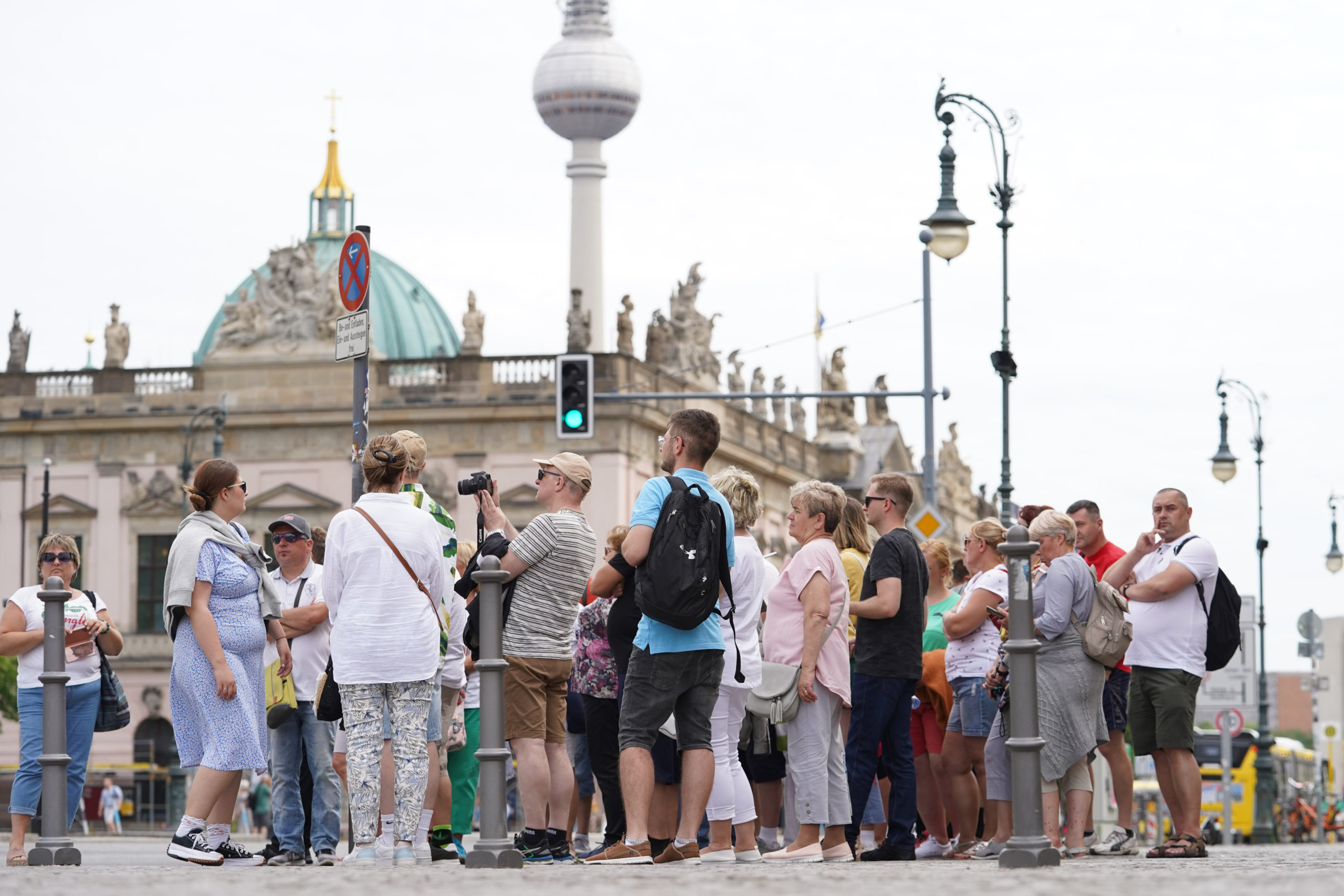
Tourists outside the German Historical Museum in Berlin. Photo: picture alliance/dpa | Jörg Carstensen
And, not to be overlooked, transport to and from the city may have gotten a bit trickier for international visitors as flights have been cut or re-routed.
Visit Berlin CEO Burkhard Kieker has criticised both the federal government and Lufthansa, noting that the national carrier flies mostly from western hubs like Frankfurt and Munich. Around 200 long-haul flights take off every day in the western states, he said, compared to just five in the eastern Germany.
Meanwhile budget airlines, and in particular Ryanair, have reduced services to and from Berlin.
The city’s declining tourism is also a bad sign for the local hospitality industry. Around 70 hotels have closed in Berlin over the past five years, according to Die Zeit.
A feature by Die Zeit on the topic suggests that Berlin has outgrown the “poor but sexy” era without replacing it with a clear new identity. Therefore, the argument goes, tourists are now charged near‑premium prices while they find decaying shopping streets, empty hotels and fading glamour.
Who is pushing back – and how
Not everyone agrees that Berlin is losing its appeal. The strongest challenge to the downbeat narrative comes from officials and tourism bodies.
At a press conference in February, Berlin’s former Mayor and current Senator for Economic Affairs, Franziska Giffey, insisted that with almost 30 million overnight stays and over 12 million guests, the city’s appeal remains “undiminished”.
Similarly, visitBerlin CEO Burkhard Kieker argues that the dip in 2025 reflects structural and cyclical factors rather than decline.
READ ALSO: Are these the best seven parks in Berlin?
He pointed out that major trade fairs such as ILA and InnoTrans only take place in even‑numbered years, meaning 2026 is expected to be stronger.
Kieker also highlighted growing visitor numbers from China, India and Turkey, even as traditional markets such as the UK and the Netherlands shrink.
What do you think? Is Berlin really at risk of losing its tourist appeal, or is he picture more complicated? Feel free to share your thoughts in the comments below.
Disclaimer : This story is auto aggregated by a computer programme and has not been created or edited by DOWNTHENEWS. Publisher: thelocal.de