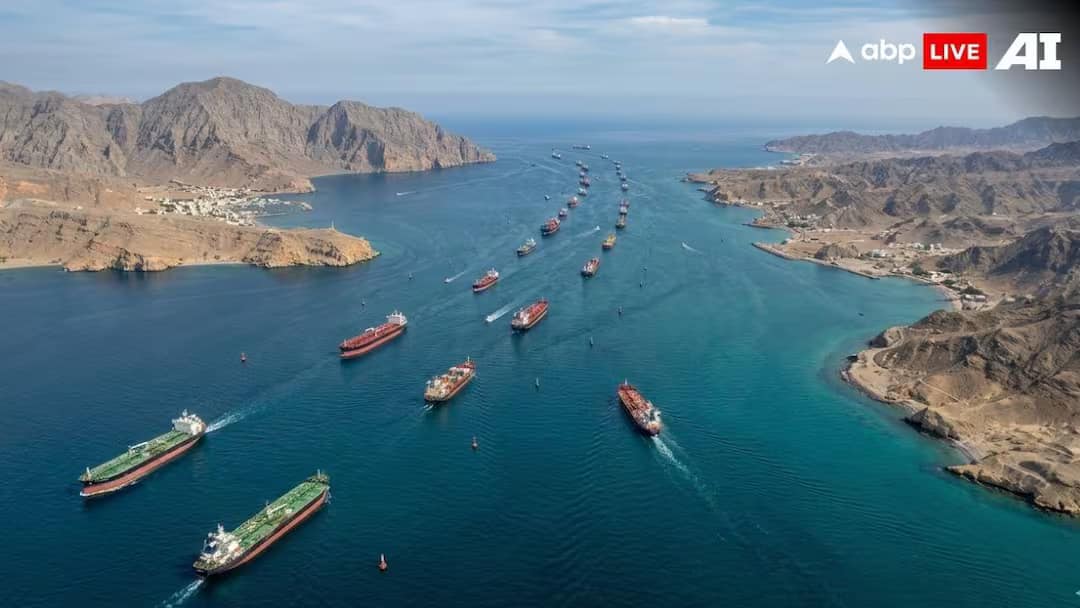
- Nearly 360 loaded cargo vessels are stranded in the Strait of Hormuz.
- Evacuation capacity is limited, potentially causing weeks of global shipping delays.
- The trapped ships carry diverse cargo, impacting energy, chemicals, and food.
A growing maritime traffic jam inside the Strait of Hormuz is emerging as one of the biggest threats to global energy and commodity supply chains, with nearly 360 loaded cargo vessels currently stranded inside the Gulf.
Even under what shipping analysts describe as a “best-case” emergency evacuation scenario, only around 40 ships a day can safely exit the strategic waterway, a pace that could leave the global shipping system clogged for weeks.
The World’s Most Critical Energy Chokepoint
The Strait of Hormuz may appear as a narrow strip of water on the map, but its importance to the global economy is enormous.
Nearly one-fifth of the world’s oil and gas trade passes through the corridor, making any disruption in the region an immediate concern for energy markets, governments and shipping companies.
The latest crisis comes amid escalating tensions in West Asia and fears of a prolonged conflict disrupting shipping routes, oil supplies and industrial trade flows.
A Backlog Bigger Than the Exit Route
Shipping intelligence firm Kpler said around 360 laden commodity vessels are currently stuck in the Gulf region, while evacuation capacity remains heavily constrained, reported The Financial Express.
“Based on a 40-vessel-per-day ‘best case’ scenario, Kpler intelligence reveals that clearing the current backlog of around 360 laden commodity cargo ships will be a race against logistical bottlenecks and the limits of an untested Omani route,” the consultancy said.
The bottleneck has intensified despite US-backed efforts to facilitate the evacuation of commercial vessels trapped in the region.
However, analysts say physical limitations of the Strait itself make any rapid clearance highly unlikely.
Also Read : Gold Vs Stock Markets: Why Fear Drives Investors Towards The Yellow Metal
Why the Numbers Matter
Historical shipping data shows the Strait has never been designed to handle a sudden one-way evacuation of this scale.
Between January 2017 and February 2026, average laden vessel transit through Hormuz stood at around 41.3 ships per day.
Even after the initial escalation on February 28, only 38 loaded vessels exited the Gulf despite heightened urgency across shipping markets.
“This number is close to the pre-war average, suggesting that even with a high sense of urgency, the daily exit number is unlikely to exceed this threshold,” Kpler noted.
The highest daily vessel movement ever recorded through Hormuz was 62 ships on June 9, 2025, while the lowest dropped to just 18 vessels on February 5, 2021.
Not Just Oil Tankers
While crude oil dominates headlines, the stranded fleet represents a much wider slice of global trade.
Dry bulk cargoes currently account for the largest share of trapped vessels at 34 per cent, higher than their normal share of transit traffic.
Clean petroleum products, chemicals and biofuel shipments make up another 24 per cent of the backlog, while crude and condensate carriers account for 22 per cent.
The trapped fleet also includes LNG, LPG, ammonia and petrochemical cargoes, sectors that are deeply linked to power generation, fertilisers and industrial manufacturing.
The disruption has already fuelled volatility in oil prices, freight charges and marine insurance premiums as traders assess the possibility of prolonged supply disruptions.
India Watches Closely as Ships Begin Exiting
India, one of the world’s largest energy importers, is closely monitoring the situation.
On Thursday, Indian officials said diplomatic engagement with Iran had enabled some movement of Indian vessels stranded in the region.
“We have had forward movement as a result of our diplomatic engagement and conversations with the Iranians. So far, 13 Indian ships have exited the Strait of Hormuz. 11 ships continue to be in the Persian Gulf, and we continue to be in touch with the Iranian authorities so that the remaining ships can also cross the Strait of Hormuz and reach their destination in India,” a senior shipping ministry official said.
The development offers partial relief, although concerns remain over the pace of evacuations and the possibility of renewed disruptions.
Also Read : CNG Prices Hiked Alongside Petrol, Diesel Rates, Check City-Wise Fuel Prices
The Ripple Effect on Global Markets
Industry executives warn that even if military support enables safer movement through the Strait, the broader shipping ecosystem may continue facing disruptions for weeks.
Cargo rescheduling, vessel rerouting, higher insurance costs and congestion at ports are expected to keep pressure on commodity and energy markets.
The longer the backlog persists, the greater the risk of supply chain disruptions spreading into sectors beyond oil and gas, including fertilisers, chemicals, manufacturing and food logistics.
Before You Go
BREAKING NOW: Indore fire tragedy as EV short circuit triggers deadly explosions
Disclaimer : This story is auto aggregated by a computer programme and has not been created or edited by DOWNTHENEWS. Publisher: abplive.com