The supreme court decision that effectively gutted the Voting Rights Act (VRA) “was red meat to the Republican legislators of the south” the US House representative Bennie Thompson said.
Conservative lawmakers in Mississippi, where Thompson is both the state’s lone Black and only Democratic congressional representative, have used the opportunity to explicitly target him, threatening to redraw the second congressional district, that he represents.
Federal protections, those initially stipulated by the VRA, prevented states from “bad behavior”, or methods that they previously used to suppress voters – such as, Thompson noted, instances in which Black voters were asked how many bubbles were in a bar of soap. With the supreme court’s new interpretation of section 2 in Louisiana v Callais, Thompson said that lawmakers could “create an opportunity for people to not be represented or vote for the candidate of their choice”.
“Mischief could creep back in, just given the hostility associated with what you’re hearing from state legislators and state elected officials,” he said.
It is a hostility Thompson knows well.
On Wednesday, Andy Gipson, the state’s agriculture commissioner, who is running for governor as a Republican, made a lengthy Facebook post calling for the state to redraw lines to hurt Thompson’s electoral chances. Shad White, the state’s auditor and likely Republican gubernatorial candidate, has extensively posted on social media about Thompson and called for his district, which White said was “gerrymandered”, to be redrawn.
Since Thompson was elected in 1993, his district has been drawn by majority Republican legislators. The last time it was redrawn, lawmakers included four additional counties, rural Adams, Amite, Wilkinson and Franklin counties, which had never been in the second congressional district, despite Thompson suggesting that the GOP legislators include the rest of Hinds and Madison county, both of which Thompson already partially represents.
Today, the state’s second congressional district is nearly 300 miles long, with no public transportation. To be able to quickly reach all parts of his district requires Thompson to fly north into Memphis, Tennessee, or west, into Baton Rouge, Louisiana.
“Whatever the perceived gerrymandering that Republican elected officials are saying, they have to take credit for it,” Thompson said.
Mississippi once had a large number of Black elected officials, more than 100 across state and local levels. But that was in the 19th century during Reconstruction, before Jim Crow, when white legislators enacted the “Mississippi Plan”, which introduced efforts to suppress Black voters, like poll taxes, crimes that had felony disenfranchisement and literacy tests.
Outside of the legal disenfranchisement, Black Mississippians experienced violent voter intimidation. By 1964, only about 6.7% of eligible Black Mississippians were registered to vote. The passage of the VRA, in 1965, changed that and, in 1967, Robert G Clark Jr was elected as the state’s first Black representative since Reconstruction.
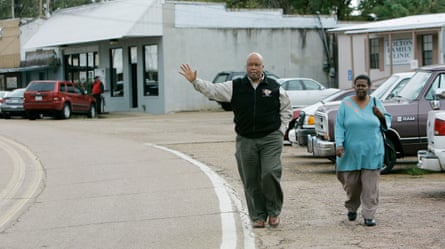
“In that 60-year span of time, proportionally, we have more Black elected officials in Mississippi than any other state,” Thompson told the Guardian, referencing political gains following the act. “That’s also because, percentage-wise, we have more Black people in Mississippi.”
Now, Mississippi is about 38% Black, the state with the largest Black population. Much of that population is represented in Thompson’s district.
“The Voting Rights Act helped level the playing field for elected officials,” Thompson said. “Looking at the speed in which governors are calling special sessions, you can surmise that the motive is less than genuine with respect to representing all people.”
Immediately following the Louisiana v Callais decision, governors and other elected officials in Florida, Tennessee, Alabama, Mississippi and elsewhere across the south began calling for special sessions to redraw predominantly Black districts. Many of them have been successful.
Republicans in Tennessee eliminated the state’s one Black congressional district last week. In Florida, Governor Ron DeSantis signed a new map shortly after the supreme court decision came down. Alabama’s Republican majority already has maps waiting, if the state is allowed to use them.
Mississippi was poised to make an entry into the redistricting fray – Governor Tate Reeves called a special session to address the state’s supreme court districts – until Reeves rescinded his order on Wednesday. Instead, he said that he expected the state’s lawmakers to address redistricting at a later date.
“It is not a question of if, it’s a question of when,” Reeves said of redrawing the state’s congressional map with a focus on Thompson’s district, while referring to Thompson’s tenure as a “reign of terror”.
Even before Reeves made his comments, Thompson anticipated that they were coming, and suggested what Reeves and other Republican lawmakers’ actions might mean for Black voters.
“By and large, every state that’s rushing in the south to [redraw districts], the majority of their legislative delegations are Republican,” he said. “They have publicly stated that this is their moment to change it. I think given those statements, you can assume that Black representation going forward will be on the decline.”
‘A catalyst for change’
Thompson, 78, was born almost two decades before the passage of the VRA. When his father died in 1964, he did so without being able to vote. The VRA, which provided a provision for people to be federally registered, is what allowed him to cast his first ballot since the local city clerk wouldn’t register Black people.
“My mom and daddy worked, paid taxes, but their son couldn’t get the same education as a white child in this town,” he said. “But because of the Voting Rights Act, that child who had that separate and unequal education became the mayor of the town. The Voting Rights Act was an opportunity for the local citizens to vote for the candidate of their choice.”
Much of the ire Thompson has drawn from Republicans focuses on his having chaired the January 6 committee, which investigated Trump supporters’ 6 January 2021 attack on the US Capitol, and his decidedly liberal voting record.
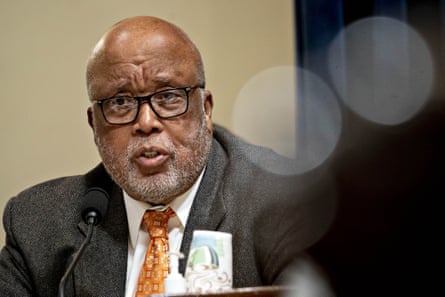
“Because I believe in diversity, equity and inclusion, as a matter of fact, I’m perceived as not Mississippian enough to represent Mississippi and Washington … Every socioeconomic indicator that Mississippi [ranks last], I voted to get us off the bottom. But to some of the people who have the authority to do redistricting, that’s a problem,” he said. “The good thing about running for public office is it gives people a choice. When you give people a choice and don’t take that right away from them, they’ll vote in their best interest.”
Ultimately, Thompson said that the fight for a representative democracy would continue. Southern states are facing legal challenges to their redrawn maps and voting rights coalitions are working across southern states to mobilize voters.
“This is our moment to organize, strategize and execute. We have to make sure we have all of the information that we can pull together,” he said. “This dastardly decision by the US supreme court can serve as a catalyst for change. I want to be a part of it, because I know we’re a better country than this. I’m disappointed when I see state officials in Mississippi trying to go back to the dark days of Jim Crow. We plan to resist with every fiber in our body to demonstrate our opposition.”
Disclaimer : This story is auto aggregated by a computer programme and has not been created or edited by DOWNTHENEWS. Publisher: theguardian.com