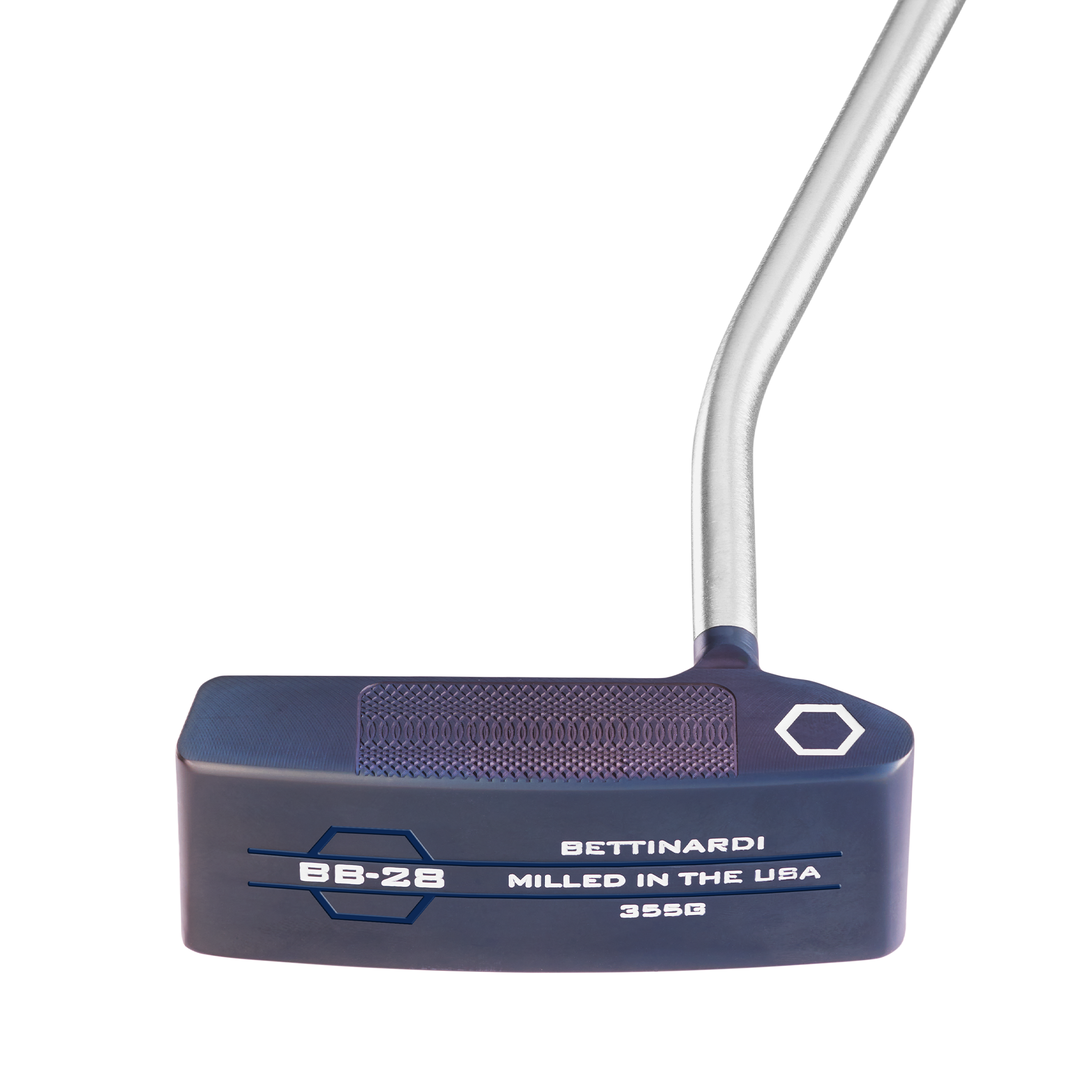
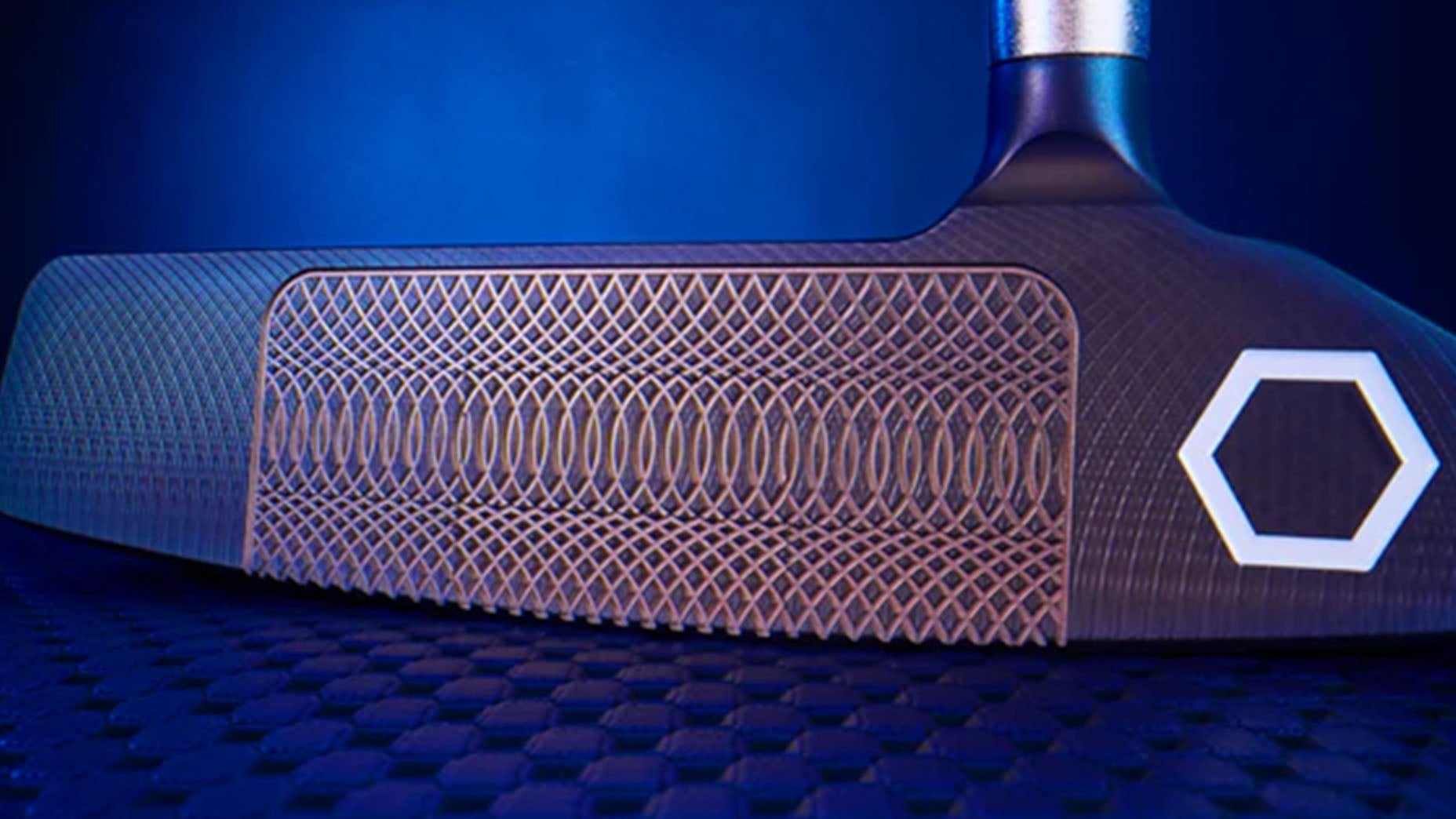
With the release of Bettinardi’s BB family of putters, Bettinardi unveiled its new Variable Depth Flymill face technology that creates nine different milling zones on the face to support off-center strikes. The heel and toe have a bit more support to keep up speed and start lines, and the top and bottom of the face are milled to ensure a nice forward roll even if you aren’t controlling your dynamic loft well.
But the real question is — does it actually help you on the golf course? That’s what I decided to find out.
Short putts
We headed out to The Crosby Club just outside of San Diego to test out the Bettinardi BB. I chose the BB28 because I love a face-balanced blade shape, and the wider platform looks great behind the ball. Starting off with some quick 12-foot putts, things felt great. You can definitely feel the difference when you hit the putter off-center, but the support the milling provides worked well. The main thing I noticed was start-line control. One of the biggest problems you can have with a putter is off-center hits (toe to heel) kicking your ball offline on short putts. If it’s a birdie putt or a second putt from a long lag, you want to make sure these putts have the best opportunity to end up in the hole, and the BB with the VDF milling definitely kept things on track. Speed isn’t really an issue at this distance, so making sure that the putter is helping stabilize your start lines is key.
You’ll also see that at the end of the video below, I did some “cleanup” work with a bunch of lag putts we hit, and the benefits became clear. I know that I don’t deliver the putter’s loft consistently on every strike, and this is where the high and low milling spots on the face help out. Every putt still had a great forward roll that kept its line and got hole high. I was hitting putts so far off-center it was actually laughable but ended up cleaning up 7 out of the 8 putts left on the green.
Mid-range putts
As we moved back to about 25 feet, speed became much more critical. Making sure that putts were getting to the hole, especially having to climb a hill, was crucial. I recently learned a really cool speed fact from PGA Tour putting guru Stephen Sweeney. He said that a putt that misses low (not enough speed) is going to be negatively impacted more than 30% of a putt (too much speed) that misses on the high side. So in the case of our mid-range, uphill, breaking putt at The Crosby, speed was absolutely critical. No amount of tech is ever going to allow a milled object to roll the exact same speed everywhere on the face, but what we can do is make the bad ones as close to good as possible.
Off the toe is usually the slowest part of the putter, and I was impressed by the support the VDF face gave to these off-center strikes. Again, if you watch the video, I wasn’t consistently delivering the putter either, and never did a ball skip or jump off the face. The milling pattern was reacting to my inconsistent strike and providing a clean roll. Is it going to turn bad putts into putts that go into the hole? No. But it certainly helped eliminate some embarrassing three-putts.
From long range, speed starts to become less of a factor. Since you know you have to hit the putt hard anyhow, putts coming up short isn’t really going to be a big factor. However, how the putt starts to initially roll will have an impact on the ball getting to the hole. So while it’s not about speed necessarily, we’re still worried about the ball rolling all the way to the hole. This also happens to be my personal putting nightmare: lag putts.
What we need to focus on is how the ball starts its initial roll, making sure it provides clean and efficient topspin while creating a nice grouping that can be a two-putt. Through eight putts I ended up with a grouping of putts I was so confident in I ended up hitting them all off-center again just to prove the point, and 7 of the 8 final putts ended up going in the hole for a two-putt from about 65 feet. For me? That’s close to a miracle.
A close-up look at the nine milling windows on the new 2026 Bettinardi BB family of putters.
Bettinardi Golf
Milling technology is hard
Technology and milling in putters doesn’t usually go together. The entire purpose of a milled putter is to feel milled. It’s not meant to provide tons of roll technology. Milled putters, like Bettinardi’s BB series, are meant to look beautiful, sound proper and provide feedback. It’s only been recently that companies have started to implement roll technology into their milling offerings. The tricky part is making sure that these milling technologies don’t change the more firm feel that players are searching for with a milled putter offering.
I think Bettinardi has done a really good job here of staying true to its milled in the U.S. heritage, and they provided milled-putter fans with an offering that truly helps the ball roll a bit more cleanly, particularly if you’re a player who often misses up and down on the face (like myself).
<figure class="youtube-facade" data-content="
“>
Disclaimer : This story is auto aggregated by a computer programme and has not been created or edited by DOWNTHENEWS. Publisher: golf.com