
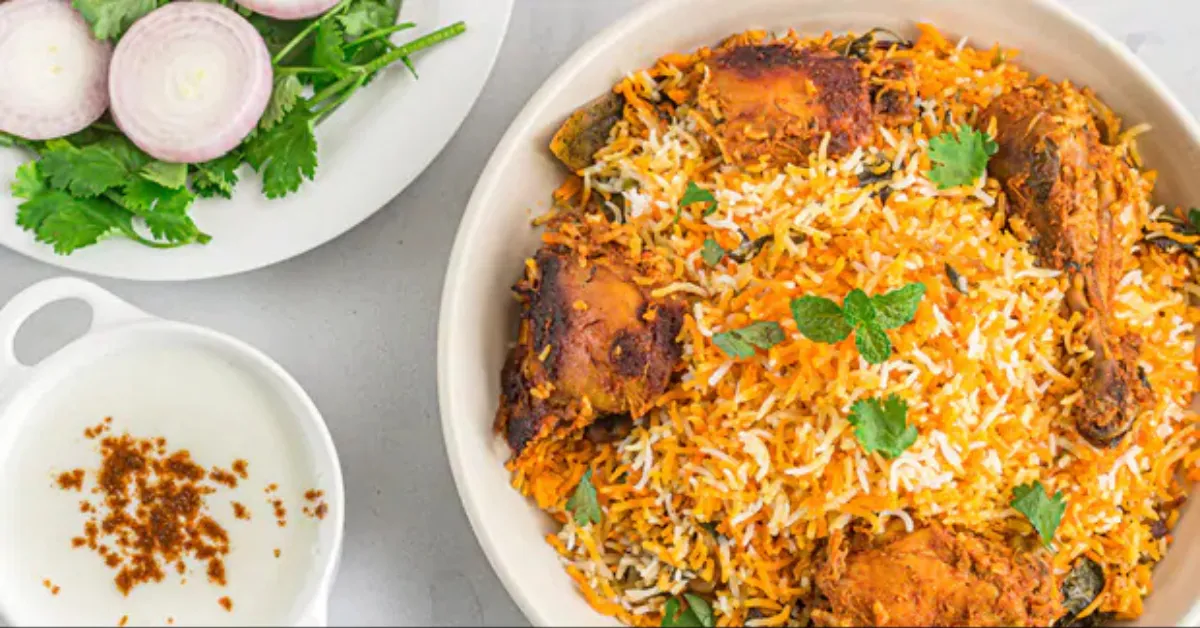
The first time I ate biryani in Bengaluru, I knew what was missing before the plate even arrived.
There was no potato.
The same thing happened in Delhi.
Last year, during a reporting trip, I sat inside the much-talked-about Karim’s near Jama Masjid and waited for the familiar absence. The meat was good, so I did not complain. The spices were louder than thebiryani I had grown up eating in Kolkata, and, as expected, the potato was missing.
For someone raised in Kolkata, biryani without potato feels incomplete. You notice it immediately.
Growing up, my college was near Nakhoda Masjid and Esplanade, where every second conversation somehow drifted towards biryaniplans. Before that, my school was close to India Restaurant. So,biryaniwas never a rare indulgence. It was a big part of the city’s food memory.
And so, when people outside West Bengal dismiss the potato as a “cheap filler”, Kolkatans tend to react with unusual defensiveness.
For us, the potato is part of the emotional architecture of the dish.
And strangely enough, history suggests we may have been told the wrong story about it all along.
The exile who brought Lucknow to Kolkata
In 1856, Wajid Ali Shah, the last Nawab of Awadh, was dethroned by the British and exiled to Calcutta (now Kolkata). He settled in Metiabruz along the Hooghly, carrying with him musicians, dancers, poets, hakims (traditional physicians) and, crucially, royal cooks trained in the Awadhi dum pukht (slow-cooking in a sealed pot) tradition.
Slowly, Metiabruz became a transplanted Lucknow.
The biryani those cooks prepared was delicate, restrained and fragrant.
Unlike the fiery Hyderabadi version, Awadhibiryanirelied on slow-cooked yakhni(meat stock), subtle spices, saffron and perfume-likeittar(fragrant essence). Rice, meat and potatoes were layered inside sealedhandis(large cooking pots) and cooked over low heat for hours.
That much is widely known. The more debated part of the story begins with the potato.
For years, many of us grew up hearing the same explanation: the Nawab had lost his kingdom, money was tight, and his cooks began adding potatoes because meat was expensive.
It is a neat story. It has colonial decline, kitchen improvisation and survival through substitution.
But history seems to complicate it. The timeline does not fully support the idea that the potato entered Kolkata biryanisimply as a cheaper replacement for meat. To understand why, it helps to look at what the potato meant in Indian kitchens at the time.
How the potato became part of the biryanistory
By the mid-19th century, potatoes were still relatively new in many Indian kitchens. They had been introduced earlier by European traders and were cultivated more actively under the British. But they had not yet become the cheap, everyday staple we think of today.
That changes the way we understand the Kolkata biryanistory.
The popular explanation says the potato was added because Nawab Wajid Ali Shah had lost his kingdom, money was tight, and meat had become expensive. But if potatoes were still new and somewhat unfamiliar, adding them to a royal dish may have signalled novelty rather than shortage.
Historians and writers have challenged the idea that the potato was simply a “poor man’s substitute”. One explanation is that the potato was valued because it was still seen as a relatively new ingredient in Indian kitchens, shaped by colonial-era food habits and changing cultivation patterns.
There was also a larger food history behind it. Some food historians also point to older meat-rice traditions in which potatoes appeared in pulao (a rice dish cooked with spices, meat or vegetables) and other meat-rice preparations. So the idea of pairing potatoes with rice and meat was not as unusual as it may seem today.
Over time, as potatoes became cheaper and more common, Bengal inherited a different story: that the potato in biryani represented decline, poverty and compromise.
But Kolkata did something else with it.
It made the potato essential.
/filters:format(webp)/english-betterindia/media/media_files/2026/05/21/biriyani-2-2026-05-21-20-06-39.png)
A well-made biryanipotato is not a filler. It absorbs stock, marrow, saffron and rendered fat until the inside tastes richer than the meat beside it. It carries the flavour of the whole handi (large cooking pot) in one soft, golden piece.
That is why the potato in Kolkatabiryani is rarely treated like an extra. It is waited for, saved, argued over and, in many homes, claimed before anyone else can reach it.
Every Bengali family has at least one person who silently hopes nobody else at the table wants the potato.
In my family, it is usually me.
A city held together by biryani
Today, Kolkata’sbiryanimap stretches far beyond Metiabruz.
There are the old institutions: Aminia, Shiraz Golden Restaurant, Royal Indian Hotel, Zeeshan and Arsalan. Then there are the neighbourhood shops with flickering signboards and giant aluminium vessels that begin emptying by noon.
Some serve double mutton specials, some swear bykacchi biryani (biryanimade by cooking marinated raw meat and rice together), while others lean on sweeter notes or more pepper.
Even festivals in Kolkata seem organised around biryani logistics. Durga Puja means queues outside Arsalan at midnight. Eid means giant takeaway packets balanced on scooters. Christmas after Park Street lights somehow ends with biryani too.
That is what outsiders often miss. Kolkatabiryaniis a migration history served on a plate.
And for many of us who leave the city, the potato becomes a strange emotional marker.
You realise it only after moving away. The meat and the rice may make the famous. But for many of us, the potato is what made it ours.
Sources:
‘The Kolkata Biryani: Culture, Identity, and Politics’: By Somrita Ganguly
‘The curious case of potato in Kolkata biryani and how the British fed us a lie’: By Kabir Singh Bhandari, Published on 21 April, 2020
Disclaimer : This story is auto aggregated by a computer programme and has not been created or edited by DOWNTHENEWS. Publisher: thebetterindia.com



