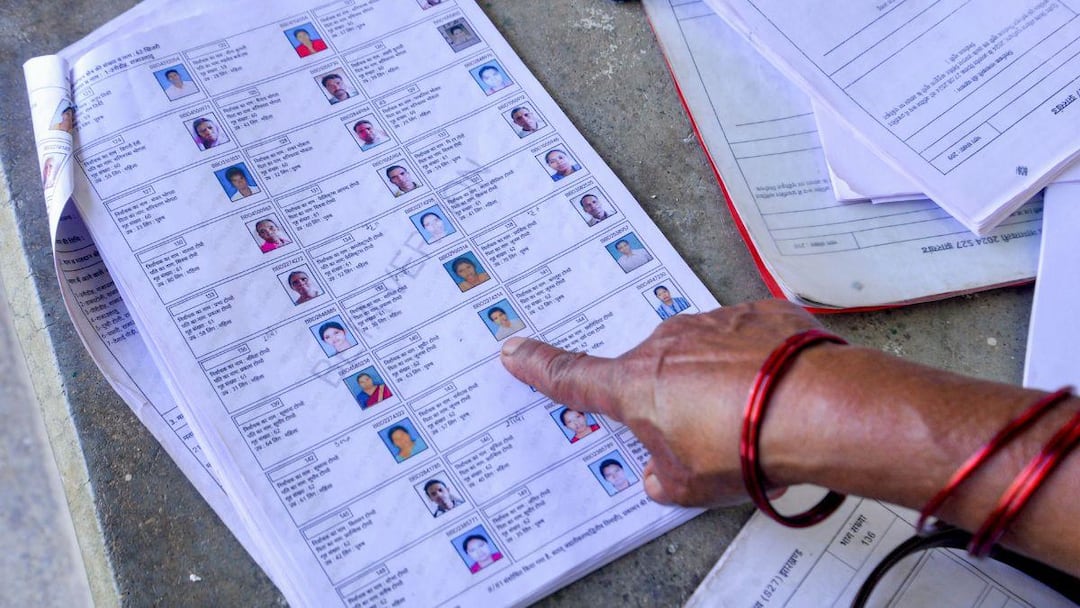
- Supreme Court upholds Bihar’s special voter roll revision process.
- Court affirms Election Commission’s authority for intensive revisions.
- Concerns over procedure don’t invalidate the entire revision.
- Process aligns with Constitution and Representation of People Act.
The Supreme Court on Wednesday upheld the Election Commission’s Special Intensive Revision (SIR) of electoral rolls in Bihar, ruling that the exercise was constitutional and within the powers granted to the poll body under the Representation of the People (RP) Act, 1950.
Chief Justice of India (CJI) said the petitions challenging the voter roll revision were filed during the ongoing SIR process in Bihar. After hearing arguments from both sides, the court identified two key questions for consideration, whether the Election Commission had the authority to conduct a Special Intensive Revision and whether those powers had been exercised properly.
The bench held that Section 21(3) of the RP Act, 1950, clearly empowers the Election Commission to undertake a Special Intensive Revision of electoral rolls.
Court Rejects Demand to Scrap Entire SIR Process
The Supreme Court said concerns raised over the procedure adopted during the revision exercise could not be grounds to declare the entire SIR process illegal.
The bench underlined the importance of conducting free and fair elections and acknowledged that questions had been raised over whether there was a valid reason to carry out the revision exercise at this stage.
However, the court said it was satisfied that the measures taken during the SIR were necessary and proportionate to the requirements of the exercise.
ALSO READ | Siddaramaiah To Get Rajya Sabha Seat? Speculations Rife Amid Karnataka Power Change Buzz
SC Dismisses Arguments on Burden of Proof
Petitioners had argued that the revision process unfairly shifted the burden onto voters to prove their eligibility. The court, however, rejected that contention.
The bench observed that even if a person was no longer residing at their earlier address, they would still remain linked to previous records or past SIR exercises through their own or their family’s details.
The Supreme Court also said deletion of names during the revision process could not automatically be termed contrary to rules if it followed the established procedure.
Election Commission’s Role Clarified
The court noted that the Election Commission had prepared its document list based on considerations of reliability and said the process could not be described as arbitrary.
It further rejected claims that the objective of the SIR exercise was to exclude voters from electoral rolls.
The bench clarified that if documents submitted by an applicant appeared doubtful or insufficient, the Election Commission had the authority to refuse inclusion in the voter list. However, it stressed that this did not amount to the poll body determining an individual’s citizenship status.
ALSO READ | Rift In Sunetra Pawar’s NCP? Chhagan Bhujbal Clashes With Senior Leader
SIR Found Consistent With Constitution and RP Act
In its final observations, the Supreme Court concluded that the Special Intensive Revision exercise met the requirements of both the Constitution and the RP Act.
The court said that given the scale and complexity of such an exercise, the Election Commission must have the authority to frame rules and procedures necessary for implementation.
At the same time, the bench clarified that while the Election Commission does not decide citizenship issues, it may refer cases involving doubtful individuals to the central government for further action.
Before You Go
Breaking News: Mumbai Eid Sacrifice Dispute Escalates in Ghatkopar Amid Tight Police Security
Disclaimer : This story is auto aggregated by a computer programme and has not been created or edited by DOWNTHENEWS. Publisher: abplive.com