
The Illinois House of Representatives passed a bill on Wednesday requiring frontier AI labs like OpenAI, Anthropic, and Google DeepMind to have their safety practices audited by a third-party. If signed into law, AI safety experts tell WIRED it would be the nation’s leading check on the power of major AI companies.
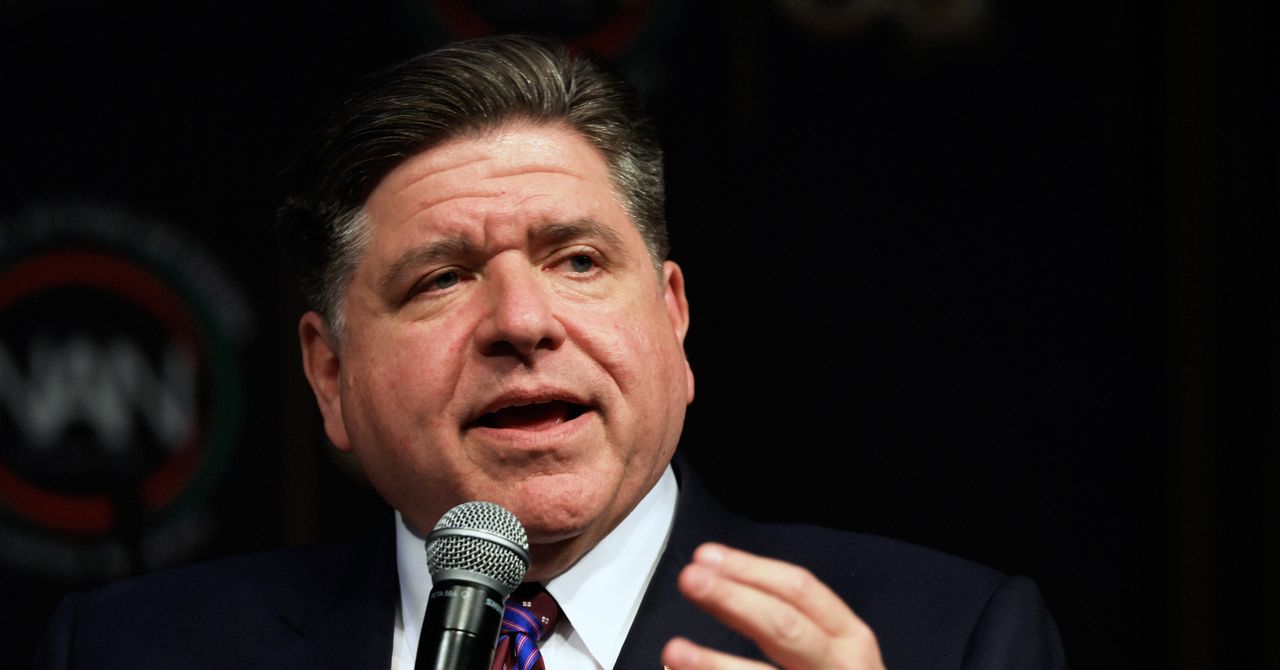
The bill, SB 315, now heads to governor JB Pritzker’s desk. In a post on social media Wednesday, Pritzker said he plans to sign the bill, citing a need to hold Big Tech accountable.
Since Congress has yet to pass any meaningful AI safety legislation, state lawmakers have happily stepped up in recent years to promote bills that show their constituents they’re keeping Silicon Valley in check. As AI tools become increasingly popular, and the companies behind them race towards massive IPOs, polls show that American voters are looking for more AI regulation.
As a result, safety advocates and tech companies have zeroed in on state legislatures as the primary battleground to hash out how these laws should look. OpenAI’s chief of global affairs, Chris Lehane, told WIRED last week that the company’s AI policy is now oriented around passing a series of similar state laws.
California and New York currently have the strongest AI safety laws, requiring tech companies to provide information about model guardrails and publish reports on safety incidents as they occur. Illinois’ bill goes a step further, requiring independent auditors to verify that an AI lab is adhering to its own safety standards. Previously, no independent body was required to keep an AI lab accountable to its own safety claims.
“We’re in a situation where the AI companies grade their own homework,” says Scott Wisor, policy director at Secure AI Project, a nonprofit that supported SB 315. “Should SB 315 become law, Illinois would require an independent auditor to check whether the AI labs in fact adhere to their safety commitments.”
| Got a Tip? |
|---|
| Are you a current or former government employee who wants to talk about what’s happening? We’d like to hear from you. Using a nonwork phone or computer, contact the reporter securely on Signal at mzeff.88. |
Wisor says it’s broadly expected that, under SB 315, AI labs could use the Big Four accounting and auditing firms—Deloitte, EY, KPMG, and PwC—to audit their safety practices. He also says it’s possible that AI labs could tap members of the AI Evaluator Forum—a coalition of smaller research organizations including METR, Transluce, and AVERI—to assess adherence to safety standards.
Illinois state representative Daniel Didech, a sponsor of SB 315, tells WIRED that state legislatures are playing an important role by shaping America’s AI policy and acting as a testing ground for any federal laws that might come in the future. “Laws like this create a world where it’s more likely for the federal government to pass something,” Didech says.
Corporate Interests
Illinois has emerged as a major arena in the ongoing fight over state AI laws. OpenAI previously supported a bill in Illinois that would let AI labs dodge liability if their models caused catastrophic harm. However, Lehane has since said the company’s blanket support for the bill was an oversight, and it never supported the liability shield in the bill. More recently, OpenAI endorsed SB 315.
“The Illinois General Assembly has shown real bipartisan leadership in advancing SB 315 and developing a thoughtful framework for frontier AI safety. As AI systems become more capable, clear expectations around safety, transparency, incident reporting, and accountability matter,” says Lehane in a statement to WIRED.
Anthropic claims it was the first AI lab to support SB 315, and is grateful to the lawmakers who introduced it. Cesar Fernandez, the head of US state and local government relations at Anthropic, tells WIRED in a statement that SB 315 will help “establish a baseline that every leading AI developer is expected to meet.”
However, other Silicon Valley trade groups have pushed back against the legislation. Chamber of Progress—a trade group that lists Google, Apple, Amazon, and Andreessen Horowitz as partners—sent a letter to Illinois lawmakers on Wednesday morning asking them to oppose SB 315. The group’s founder and CEO, Adam Kovacevich, tells WIRED that Illinois’ AI bill “would force companies to expose sensitive systems to untested auditors in a regulatory regime that’s all liability and no standards.”
During his second term, president Donald Trump has signed several executive orders to unwind AI regulations imposed by the Biden administration and state legislatures, citing a need to avoid “patchwork” regulations that could hinder the United States in its race against China. Last week, President Trump canceled the planned signing of an executive order, saying he didn’t want to do anything that could dull America’s competitive edge.
Disclaimer : This story is auto aggregated by a computer programme and has not been created or edited by DOWNTHENEWS. Publisher: wired.com



