
OSAKA –
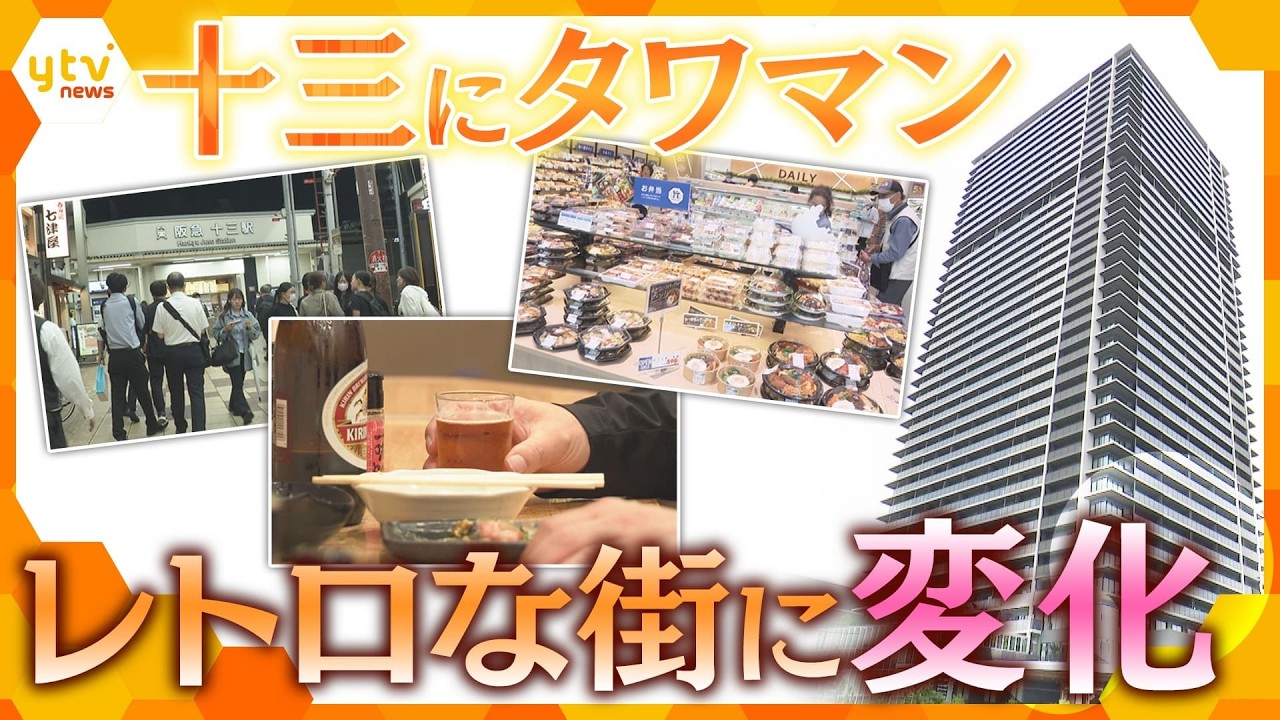
A major transformation is underway in Osaka’s Juso district, where the area’s first large-scale tower condominium has opened in a neighborhood long known for its retro downtown atmosphere and entertainment district. While the development is bringing new conveniences and attracting new residents, concerns are also emerging over rising rents and the future character of the community.
Located across the Yodo River from Umeda, Juso has long been known for its Showa-era charm, lined with casual izakaya pubs, bars and entertainment venues. The district’s convenient location near Hankyu Juso Station has made it a popular place to live despite its aging streetscape.
Walking through the traditional shopping arcade east of the station and continuing for several minutes, visitors are suddenly confronted by a striking new landmark. Rising above the low-rise neighborhood is the area’s first giant tower condominium, a dramatic contrast to the surrounding downtown scenery.
The project was developed by Hankyu Hanshin Properties and took approximately six years to complete. The 39-story building stands 143 meters tall, making it by far the tallest structure in the area. Units are sold under a fixed-term land lease system, with average prices around 80 million yen.
Residents began moving into the building on May 17th, and about 60 percent of the units are already occupied.
Many local residents welcome the development.
“I think it’s a positive thing for the town,” one resident said. “A building like this brings more people, and if activity increases, it should benefit the area.”
Others believe the neighborhood’s atmosphere will inevitably change.
Longtime residents, however, have voiced concerns about rising living costs.
“My rent has already gone up,” one resident said. “I’ve also heard talk about redevelopment around the station. I’d hate to see people suddenly forced out because of higher costs.”
The tower’s impact extends beyond housing. On the first floor, an Aeon Food Style supermarket has opened, filling a gap in an area that had shopping streets but lacked a large modern grocery store.
Parents living nearby say the new store is particularly welcome.
“There weren’t many supermarkets convenient for stopping by after picking up children from daycare,” one resident said. “Having a large store with a bakery is really helpful.”
The second floor houses a relocated public library. The spacious facility offers a wide selection of books and picture books, creating a family-friendly environment where parents and children can enjoy reading together.
Residents say the addition of facilities aimed at families is changing perceptions of Juso.
“I never really thought of Juso as a place for raising children,” one new resident said. “But with facilities like this, it feels like it could become a much easier place to live. I’d be happy if it continues developing in that direction.”
Urban planning experts point to Juso’s strategic location as a major factor behind the redevelopment.
The district already enjoys excellent transport connections and sits close to central Osaka. Future infrastructure projects are expected to further increase its importance. Plans are also being discussed to improve links between Juso, Shin-Osaka and other major transportation corridors.
At the same time, Osaka is advancing construction of the Naniwasuji Line, a major railway project connecting the northern and southern parts of the city. Once completed, passengers are expected to be able to travel from Shin-Osaka Station to Kansai International Airport without transfers through cooperation between multiple railway operators.
Railway companies are also considering the construction of a new station in Juso, with additional redevelopment planned around the station area.
Experts emphasize the importance of preserving Juso’s unique identity while embracing modernization.
“It is already a district with a very strong character,” one expert said. “The challenge will be finding the right balance between redevelopment and preserving what makes the area special. That balance is what will determine whether it remains a place that feels uniquely Osaka.”
As young families move into a neighborhood still rich with Showa-era nostalgia, Juso is entering a new chapter. Whether the district can successfully combine its historic character with modern urban development will be closely watched in the years ahead.
Source: YOMIURI
Disclaimer : This story is auto aggregated by a computer programme and has not been created or edited by DOWNTHENEWS. Publisher: newsonjapan.com







