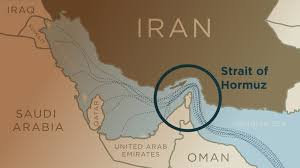
Three converging shocks since 2020 have unsettled the assumptions on which East Asian security has rested for a generation. The Covid-19 pandemic, the war in Ukraine and now the US-Israel-Iran conflict, which has effectively closed the Strait of Hormuz to most commercial shipping — a chokepoint through which around 20 million barrels of oil per day normally flows, with nearly 90 per cent destined for Asian markets. The implications for East Asia are direct: China, India, Japan and South Korea together took the bulk of Gulf crude, and Asian consumers are already absorbing fuel shortages and price shocks while Washington focuses on a US Navy escort mission, Operation Project Freedom, conducted primarily for its own strategic ends.
These shocks coincide with rising unilateralism in US trade and sanctions policy, intensifying US-China competition, and a thickening web of unresolved territorial and maritime disputes all across East Asia.
Taken together, they argue for a region-led process in which the East Asian nations accept primary responsibility for their own strategic and economic security. The Helsinki precedent of 1975 offers a politically usable, if imperfect, template.
The Conference on Security and Cooperation in Europe (CSCE) had opened in Helsinki in July 1973 and concluded with a summit in Helsinki in August 1975, when 35 heads of state and government — every European country except Albania, plus the United States and Canada — signed the Helsinki Final Act.
The Final Act was politically rather than legally binding, and was structured around three “baskets”: (i) a security dimension containing ten principles on sovereignty, territorial integrity, peaceful settlement of disputes, non-intervention and human rights; (ii) cooperation in economics, S&T and the environment; and (iii) humanitarian cooperation.
Two features matter for East Asia. First, Helsinki did not resolve the Cold War confrontation; it only regulated it. By codifying the inviolability of borders while obliging states to settle disputes peacefully, it offered each bloc enough of what it wanted to sign. Second, the process — periodic follow-up meetings in Belgrade, Madrid and Vienna — turned a single document into a durable habit of dialogue that ultimately produced the “Organization for Security & Cooperation in Europe”.
A similar “Conference on Security & Cooperation in East Asia” (CSCEA) need not begin with the hardest questions. Several functional areas are candidates for early agreement, where the interests of most nations broadly converge:
*Energy security and crude oil and gas imports: Closure of the Strait of Hormuz demonstrated that East Asian states are jointly exposed to disruptions over which they have little political voice.
Coordinated strategic stockpile drawdowns, joint chartering of insurance and shipping capacity, swap arrangements, and shared outreach to Gulf producers are natural starting points.
*Climate change and disaster management — The 2011 Fukushima episode produced an emergency notification mechanism among China, Japan and South Korea that can be widened.
*Regulation of artificial intelligence: Building on the Hiroshima AI Process, the Seoul AI Summit and India’s AI Impact Summit in 2026, regional standards on safety, model evaluation and cross-border data flows would reduce costs.
*Cybersecurity: Confidence-building measures on critical infrastructure, financial systems and undersea cables could be pursued.
*Free and open sea lines of communication: Codifying behaviour at sea consistent with UNCLOS, including incident-prevention protocols could be devised.
Any East Asian Helsinki must confront a dense map of unresolved claims. The principal live disputes include the Senkaku/Diaoyu Islands, South China Sea features in the Spratly and Paracel groups, Dokdo/Takeshima, Northern Territories/Southern Kuriles, the China-India boundary, the Korean Peninsula maritime boundaries and the wider question of denuclearisation, and Cross-Strait questions concerning Taiwan.
An aspirational political outcome — modelled on Helsinki Basket I — would be a 20-year freeze on all bilateral territorial and maritime disputes, with all parties undertaking to maintain a strict status quo: no new construction on disputed features, no changes in administration, no use or threat of force, and standardised incident-prevention procedures. Such a freeze would not prejudice eventual settlement, exactly as the 1975 acceptance of European borders did not prevent later peaceful change.
The US extended deterrence underpins the security of Japan, South Korea, the Philippines, and increasingly Australia. Any architecture perceived as supplanting Washington will struggle to win their support. Also, several disputes — notably the Senkaku/Diaoyu, India-China border and parts of the South China Sea – are at present moving in the wrong direction, with grey-zone incidents intensifying. Also, Asean may feel that its “centrality” is being questioned. These sentiments would need to be overcome.
A way forward: Possible Track 1.5 Initiative: The seven largest East Asian economies — China, Japan, India, South Korea, Indonesia, Singapore and Vietnam — between them account for the bulk of regional GDP, energy demand and naval power. The China-Japan-South Korea trilateral, dormant from 2019 to 2024, was revived at the 2024 Seoul summit. India is a “strategic partner” of all these six countries and has close interaction with them both at policy and think tank levels.
A pragmatic beginning could be for the seven governments to commission a Track 1.5 process, anchored by leading think tanks to draft a framework “Final Act” over 12-18 months in consultations with Asean and other important countries of East Asia.
The Hormuz closure has crystallized what the pandemic and Ukraine had already suggested: East Asia’s prosperity rests on sea lanes, energy flows and rules that its own states will increasingly need to defend together. Another compelling sentiment is that Asians should be responsible for their own security.
The CSCEA, modelled on Helsinki 1975 but adapted to Asian realities, offers a politically realistic vehicle. It would not solve every dispute — Helsinki did not — but it would, as Helsinki did, change the terms on which they are managed.
The writer is a retired Indian diplomat and a former ambassador to South Korea
Disclaimer : This story is auto aggregated by a computer programme and has not been created or edited by DOWNTHENEWS. Publisher: deccanchronicle.com