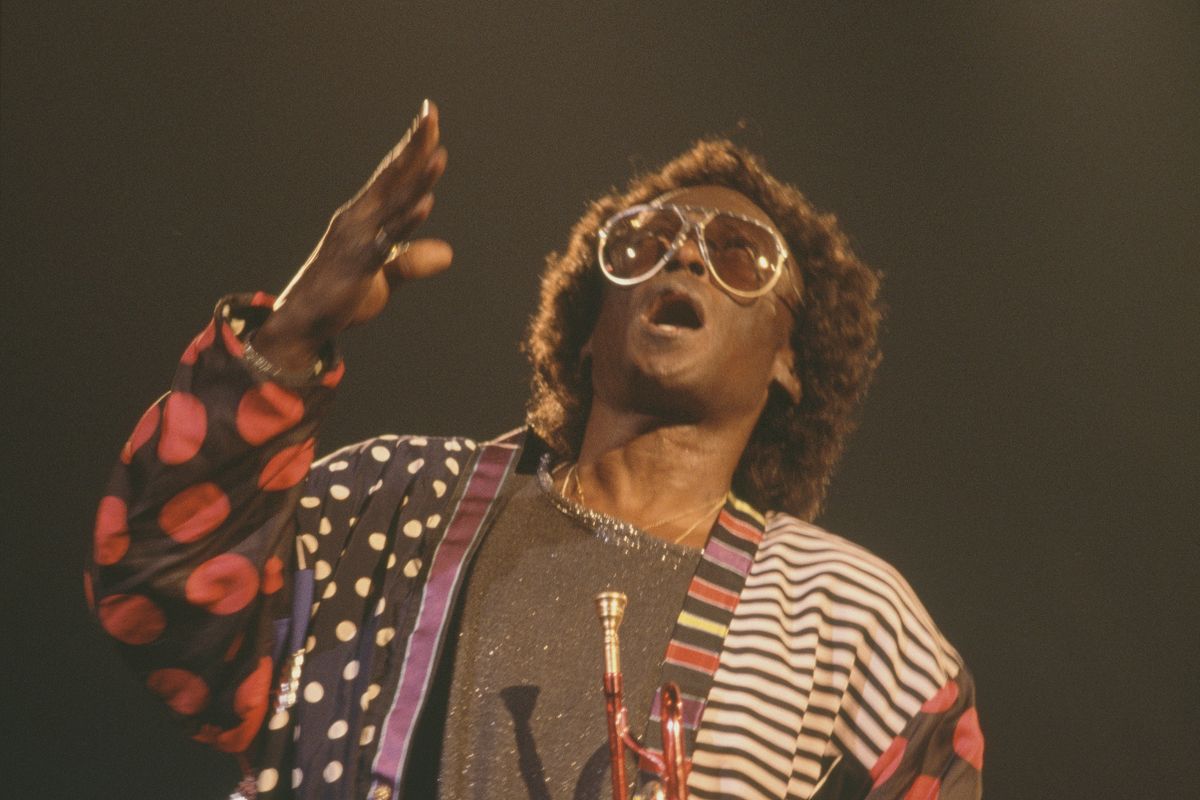
Miles Davis was one of the most important figures of the 20th century, a master of reinvention who changed the face of music many times over. And he is once again in the spotlight
He’s been called one of the most important figures of the 20th century, a master of reinvention who changed the face of music many times over. Now the impact and legacy of jazz trumpeter and band leader Miles Davis is once again in the spotlight. To mark a century since his birth there have been worldwide tributes to the icon including a major retrospective on the BBC.
But the musician, who would famously turn his back on his audience as he played, was marked by volatility and addiction as well as genius. Music journalist Kate Molleson explains: “Miles Davis remains massively relevant here in 2026; he’s the story of the evolution of Black music in America. He was constantly evolving and always pushing himself to be part of something new – from Prince to Stevie Wonder and Jimmi Hendrix – and his influence can still be heard today. He was radical and progressive with an unquenchable thirst for new styles. I am a huge fan of his music. As a man though? He was a gnarly character. It’s often really hard to like him.”
Miles Dewey Davis was born in 1926 in Illinois, USA, to an affluent family. His father was a dentist and his mother a music teacher. He got his first trumpet as a birthday gift and began taking lessons, saying, in his 1989 autobiography: “By the age of 12, music had become the most important thing in my life”.
By his teens, he was entering competitions and performing in local bands. But his big break came in 1944, when the Billy Eckstine Orchestra – complete with jazz legends Charlie Parker and Dizzy Gillespie – visited St Louis, where his family was now based.
The band was a trumpeter down, so invited Miles – who had his instrument with him – to join them on stage. His career was born. By now a dad with one daughter, he moved to New York in 1944 to study at the famous Julliard School of Music, but often skipped classes, preferring to hang out in clubs and learn from the likes of Parker and Gillespie.
US music critic, author and jazz historian Nat Chenin says Miles later compared watching his heroes to being a child, reaching out to a white hot flame on the stove, saying: “He recalled feeling the intensity of the heat – it shot through his body.” But Kate, who presents Composer of the Week on Radio 3, says Miles didn’t necessarily like the word jazz. She says: “Not because he was against it, but he didn’t want to be pigeonholed or confined to one style just because he was Black or played certain instruments.”
Success came swiftly and he toured extensively with his own band, opening for Count Basie, performing with Billie Holiday and signing a record deal. But success also brought exposure to drugs and he spiralled into heroin use, and the degradation that went with it. Kate explains: “He was still in his twenties but this is a very dark period. He would pawn his belongings and play on borrowed trumpets. We can’t skirt over any of this. It’s worth saying there is a much bigger conversation to be had about why heroin was so prevalent in the jazz community in the 1940s and 50s; it was an easy target – that has a lot to do with the socioeconomic conditions of that community.”
Kate is also clear how Miles’ experience of racism informed both his work and his personality. She explains: ”There’s no question that racism was something that shaped his identity and his way of seeing the world. He would be stopped as he drove along because he was a Black man behind the wheel of an expensive car.
“He would be asked by workmen at his house – an impressive multi-story home in Manhattan – who owned the property because in their eyes it couldn’t possibly be a Black guy. And then there was the time he was arrested when he was helping a white woman into a cab – that was suspect. The irony was it was outside a jazz club he was playing at – his name was literally in lights above his head.”
Miles himself later recalled the taxi incident “changed my whole life and whole attitude again, made me feel bitter and cynical again.” By the mid ‘50s Miles had cleaned up his act – although drug use would continue to impact his life for years to come. He’d refined his personal sound and began to attract critical praise. The Miles Davis Quintet was formed.
In 1959 he released what many consider his greatest album, and a definitive jazz masterpiece, Kind of Blue. And by the 1960s he was a mega-watt star, counting Richard Burton and Elizabeth Taylor as friends. He continued to shape and re-shape both his look and his sound. Says Kate: “Fashion was a big deal for Miles. It was not just about looking good, it was a statement of identity and artistic freedom. He had ditched the European-style suit he associated with a bygone, slick jazz image in favour of loose, expressive garments – dashikis, leather vests, bell bottoms, velvet robes, massive shades.”
His double album, Bitches Brew, threw jazz into the mainstream, incorporating heavy rock, funk, and African rhythms, but it also divided audiences and critics. Explains Kate: “Some saw him as a traitor, arguing he had turned his back on the sophisticated art of jazz to chase the money and the fame. Others totally got it. For younger listeners who were into Jimi Hendrix or Sly Stone, Bitches Brew was one of the first jazz records that actually spoke their language.”
Miles famously began not talking to his audiences, often turning his back on them. Kate says: “It may have been because he wanted to hear the band better, but equally it may have been a kind of a statement, ‘I’m not here to be your entertainer. I’m here because I’m taking it really seriously.’ You couldn’t ask for requests, his greatest hits. That was because he was determined to always move forward and never go back.”
But disaster was around the corner. For five years between 1975 and 1980. Miles quit the scene, spiralling into cocaine and alcohol addiction, prompting a hiatus from music. He stopped going out, his house became filthy and he later recalled: “Sex and drugs took the place music had occupied in my life.”
But Miles had more to give and gradually made a comeback. He established a new band and from 1985 was collaborating with the likes of Prince and Scritti Politti. He even had a small part in the Bill Murray Christmas comedy Scrooged. Called ‘the Picasso of Jazz’ by French Culture Minister, Jack Lang, he had by this time garnered multiple awards, but his body was breaking down. His final live performance was at the Hollywood Bowl in 1991.
Married three times and a father of four, he died aged 65 in September that year, from the combined effects of a stroke, pneumonia and respiratory failure. He was buried near to the grave of Duke Ellington, with one of his trumpets. Now, In the centenary year of his birth, his legacy remains with artists like Kendrick Lamar, Radiohead and John Legend – all crediting him as a key influence.
And Kate has some advice for anyone wanting to know more about his work, saying: “You can come at jazz the same way you can come at any kind of music. Just start with one album and progress from there. For Miles Davis, I’d say listen to his big hitter, Kind of Blue. Think of jazz like football – you don’t have to know everything about the rules of the game to enjoy the thrill of the experience.”
*BBC Radio 3’s Composer of the Week Series titled “Miles 100” is currently available on BBC Sounds BBC Radio 3 – Composer of the Week, Miles Davis 100
Disclaimer : This story is auto aggregated by a computer programme and has not been created or edited by DOWNTHENEWS. Publisher: mirror.co.uk