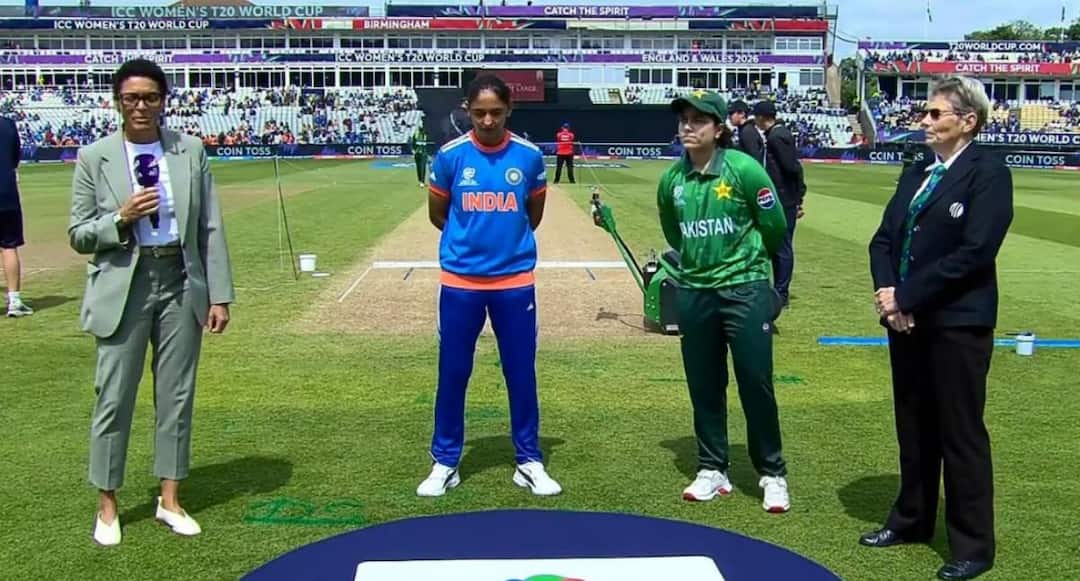
The high-voltage opening clash between India and Pakistan at the ICC Women’s T20 World Cup 2026 at Lord’s featured intense sporting drama, but it was a pre-meditated off-field protocol that caught the attention of global onlookers. Continuing a strict diplomatic stance that has now been enforced for over nine months, the Indian women’s cricket team abstained from traditional pre- and post-match handshakes with the Pakistani contingent.
The decision underscores a unified, top-down policy mandated by the Board of Control for Cricket in India (BCCI), ensuring that athletic interactions remain strictly confined to the sport itself.
Also Read | Luxury Living! Shreyas Iyer’s Mumbai Rent Could Buy A Premium Car
A Nine-Month Diplomatic Precedent
This non-contact protocol is not a sudden development. The structural policy was originally introduced by the BCCI during a men’s senior multi-nation tournament last year, amidst heightened political and cross-border tensions between the neighboring nations. Since its inception, the directive has been seamlessly executed across every single cricketing platform where the two countries cross paths.
From senior men’s ICC events and Under-19 World Cups to regional developmental tournaments, Indian squads have systematically replaced the conventional handshake with the traditional, culturally rooted ‘Namaste’ gesture. The Women’s T20 World Cup opener in London proved that the board has no intention of relaxing this mandate.
Following the Captain’s Orders
The visual execution of the policy at Lord’s perfectly mirrored the pre-match sentiments of Indian captain Harmanpreet Kaur. During the traditional captain’s press conference on the eve of the match, Kaur was explicitly questioned by journalists regarding the team’s planned stance on matchday pleasantries.
The veteran skipper chose to draw a distinct line between political narratives and sporting focus, delivering a masterclass in media diplomacy:
“Well, I think we are here for cricket, and we only talk about cricket. Except for cricket, we don’t talk about anything, and I don’t even think about anything except cricket.”
By substituting physical handshakes with polite nods and dignified post-match acknowledgments, the Indian team successfully respected the board’s geopolitical boundaries without displaying any overt hostility or unsportsmanlike behavior on the world stage.
Broader Impact on Bilateral Cricket
The continuation of the no-handshake policy serves as a stark reminder of the frozen bilateral cricketing relations between the two Asian giants. With the BCCI maintaining a firm stance against traveling to Pakistan for multi-nation tournaments, and bilateral series completely off the table for the foreseeable future, ICC events remain the solitary battleground for these historic rivals.
Before You Go
Pakistan In Turmoil: India Celebrates, Pakistan Reacts in Anger After Crushing Defeat
Disclaimer : This story is auto aggregated by a computer programme and has not been created or edited by DOWNTHENEWS. Publisher: abplive.com