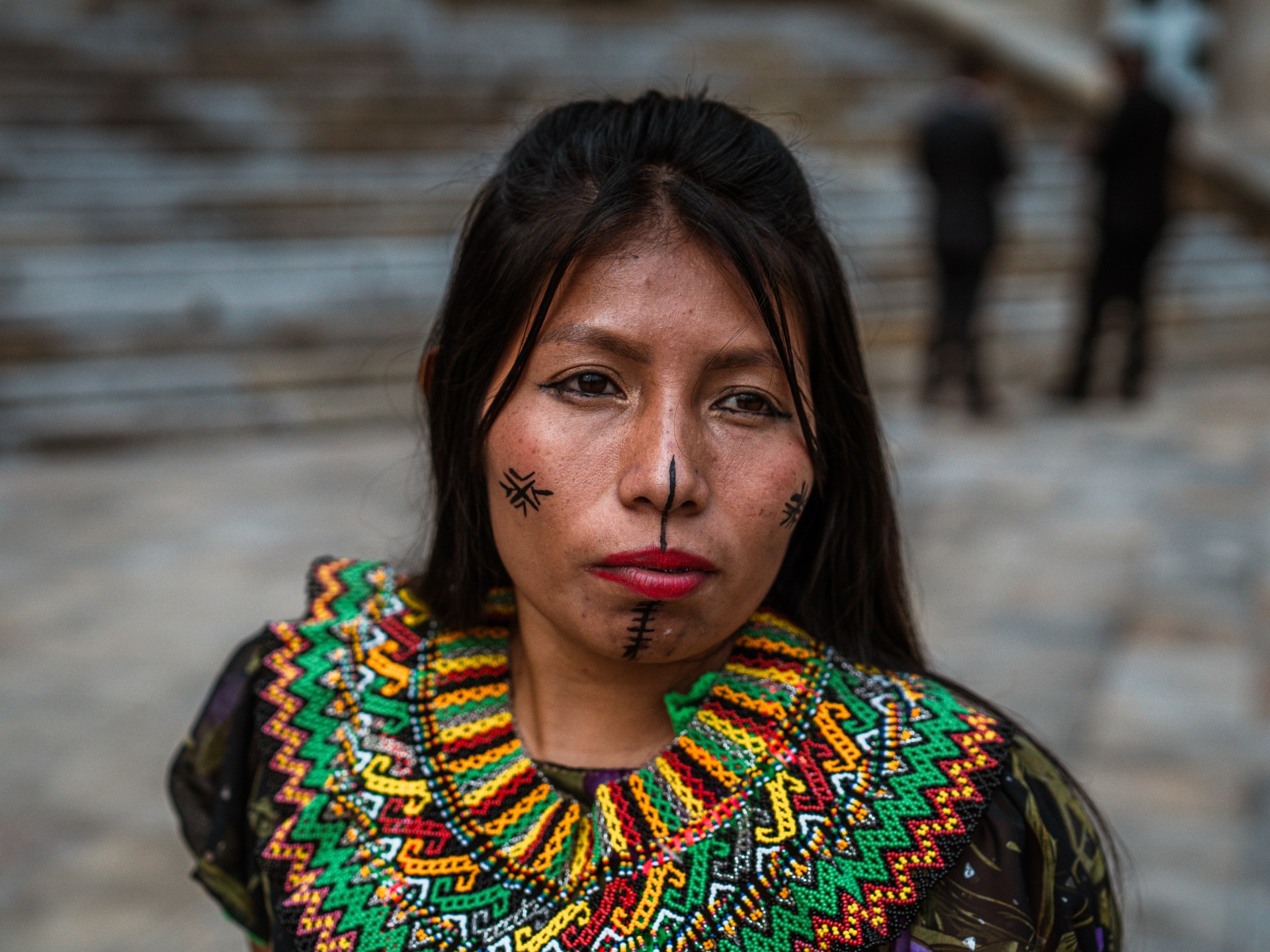
‘An enormous undercount’
Quiragama knows firsthand how difficult it can be to track instances of female genital mutilation. Her community in Choco is one of the places where the practice is still happens.
“Previously, many girls died,” Quiragama told Al Jazeera. “But their mothers never said they died because of this. They said it was from illness.”
One Choco territory, Alto Andagueda, recorded two cases last month, she added. But Quiragama learned that one of the girls was not given any medical treatment after the procedure, because her family feared child welfare services might intervene to take the child away.
Such fears and taboos have left the practice shrouded in secrecy, relegated to some of the most remote parts of Colombia.
As a result, legislators believe the government’s statistics drastically underestimate the scale of the problem.
Between January 2024 and March 2026, 98 instances of female genital mutilation were recorded in the country. Of those cases, 70 percent were under the age of one.
“We have, of course, an enormous undercount,” said Representative Carolina Giraldo, one of the authors of the new bill.
She pointed to a lack of coordination between the government institutions responsible for tracking cases. “The country’s recording system for this issue is quite precarious.”
Embera women report that community stigma also contributes to under-reporting.
“I knew of many girls who had it done,” said Sebastiana Pepe Batesa, an Embera midwife from Choco. “But they used to say it was a secret; it could not be told to anyone.”
Pepe Batesa has never carried out female genital mutilation herself. She and Quiragama, one of her daughters, have become leading figures in the fight to end the practice.
Both women say they have witnessed the pain of female genital mutilation. Pepe Batesa explained that one of her children was subjected to the procedure as a baby, resulting in devastating physical consequences.
“Her body was very pale,” Pepe Batesa recalled. “Sometimes she would sleep for days, and afterwards she would be very cold.”
While her child survived, many women experience lasting pain for the rest of their lives after undergoing female genital mutilation. It can also contribute to conditions including cysts, sexual dysfunction, urinary incontinence and psychological trauma.
Disclaimer : This story is auto aggregated by a computer programme and has not been created or edited by DOWNTHENEWS. Publisher: aljazeera.com