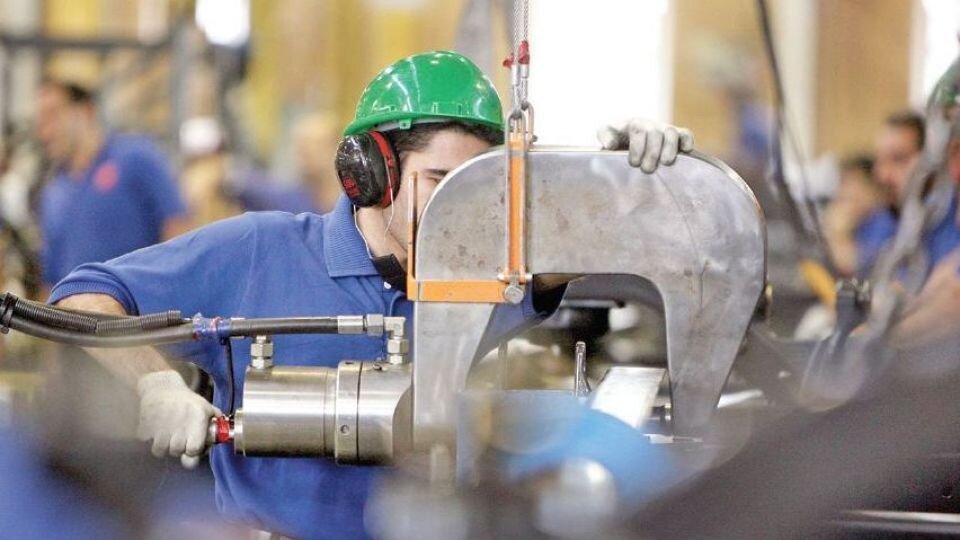
TEHRAN- The third imposed war and the U.S. military attack on Iran served as a serious test of the country’s economic resilience. Despite damage to certain infrastructures, a maritime blockade, and the continuation of sanctions pressure, the wheels of production and the supply of essential goods did not stop turning. The experience once again demonstrated a crucial reality: in today’s world, security is not built solely behind defense systems, it is also produced in factories.
The recent imposed war was not merely a military confrontation; it was a test of Iran’s real economic capacity under simultaneous security, sanctions-related, and psychological pressures. Many foreign analysts, particularly decision-makers in the White House, believed that if critical infrastructure, supply routes, and segments of Iran’s economic network came under pressure, the country’s economy would suffer severe disruption. What actually occurred, however, painted a different picture.
Despite attacks on certain infrastructure, external pressures, and ongoing sanctions, Iran’s production sector did not come to a halt, the market for essential goods did not collapse, and the economy did not descend into bankruptcy. This experience highlighted an important reality once again: in modern warfare, every defense capability relies on an economy that can continue producing, supplying, and sustaining itself even under the most difficult circumstances.
Today’s wars are no longer like the conventional conflicts of the past. If military outcomes were once determined solely on battlefields, behind trenches, or in the skies, the equation has changed. In modern conflicts, factories, refineries, ports, transportation networks, financial systems, and supply chains have become part of the battlefield as well.
For years, military and economic experts have emphasized a key principle: a country without a resilient economy will suffer attrition in any prolonged confrontation, even if it possesses significant military power. Recent regional developments once again put this proposition to the test in Iran. The central question was whether Iran’s economy—after years of sanctions, banking restrictions, trade limitations, and attacks on some infrastructure, could withstand a major shock. At least in the recent experience, the answer was clear. Like any economy, Iran faced pressure and incurred costs, but it did not collapse. This may be the most important economic lesson of the recent war.
War cannot be sustained by military equipment alone
Modern conflicts are not fought solely with missiles and military hardware. Any prolonged military operation requires continuous economic support. Armies cannot move without fuel. Industries cannot operate without energy. Societies cannot endure without food, medicine, and essential goods.
This reality has given rise to a concept that has gained increasing global attention: defense economics. Simply put, defense economics refers to an economic system capable of maintaining its core functions during crises, wars, or external pressures. It is not merely about military budgets; it encompasses production capacity, supply networks, storage, transportation, and overall economic stability. The recent war demonstrated that Iran possesses greater resilience in this area than many had assumed.
Sanctions forced economy to adapt
There is no doubt that years of sanctions have imposed significant costs on Iran’s economy—from banking restrictions and difficulties importing equipment to reduced foreign investment and pressure on external trade. Yet sanctions also delivered an important message: the greater the dependence, the greater the vulnerability.
As access to many foreign markets and suppliers became restricted, portions of Iran’s industrial sector were compelled to pursue a different path, greater reliance on domestic capabilities. While this transition was neither quick nor cost-free, it gradually created capacities whose benefits are visible today. Much of Iran’s current strength in industries such as pharmaceuticals, petrochemicals, steel production, technical equipment manufacturing, and even certain advanced technologies emerged from this necessity.
Attacks on infrastructure: The real test
One of the most common strategies in modern warfare is targeting an opponent’s economic infrastructure. The logic is straightforward: if rapid military superiority cannot be achieved, economic systems become targets. Power plants, energy facilities, transmission lines, industrial centers, warehouses, logistics hubs, ports, and supply routes are therefore considered highly sensitive assets.
In the recent conflict, some of Iran’s critical infrastructure came under attack. Many outside observers expected these pressures to trigger severe domestic disruptions, including shortages of goods, energy crises, or production shutdowns. Fortunately, this did not occur. There were certainly costs, pressures, and temporary disruptions, but what did not happen was the collapse of the economic system.
Why didn’t Iran’s economy collapse?
This question has become a central topic in many analyses. Several factors help explain the outcome.
First, Iran’s economy had already endured numerous shocks over the years, including severe sanctions, currency volatility, and trade restrictions. These experiences encouraged the development of adaptive mechanisms.
Second, unlike some regional economies, Iran is not merely a consumer economy. It possesses substantial industrial foundations and maintains domestic production capacity in key sectors, including energy, steel, cement, petrochemicals, pharmaceuticals, and food production.
Third, despite significant pressures, the country’s domestic distribution network continued to function. Together, these factors prevented the shock from developing into a structural collapse.
Domestic production as a strategic asset
During times of crisis, public attention often focuses on military developments. Yet one of the unsung heroes of any crisis is the production sector. Every factory that continues operating under pressure contributes to national security. Every production line that remains active, every shipment that reaches the market, and every essential commodity that avoids shortage strengthens the country’s resilience.
The recent conflict once again demonstrated that domestic production is no longer merely an economic growth issue—it is a component of national power. A country unable to meet its basic needs from within during a crisis risks turning external dependence into its greatest vulnerability. In this test, Iran showed that it possesses significant capacity for endurance in many key sectors.
From pharmaceuticals to steel: Strategic industries under pressure
Not all industries carry equal importance during wartime. Certain sectors are directly linked to national stability. Iran’s strategic industries include oil and gas, refining and petrochemicals, electricity generation, steel, cement, pharmaceuticals, food production, transportation, and telecommunications.
Recent events underscored the importance of maintaining stability in these sectors. In pharmaceuticals, the value of domestic production became more apparent than ever. In energy, the connection between network stability and national security was clearly demonstrated. In steel and petrochemicals, uninterrupted production played a major role in sustaining economic activity. These examples show that defense economics is not merely a theoretical concept—it takes shape within factories and industrial facilities.
Role of private sector
Another lesson highlighted by the recent war was the importance of the private sector. The government alone cannot bear the entire burden of a defense-oriented economy. A vast network of manufacturers, industrial contractors, transportation companies, technology firms, and small and medium-sized enterprises contributes to economic resilience.
The more agile and capable this network becomes, the stronger the economy will be during times of crisis. For this reason, many experts argue that strengthening private-sector participation in strategic industries should become a national priority.
Security is also manufactured in factories
Perhaps the most important conclusion from recent developments is that security and economics are inseparable. Defense power is not built solely in military bases. A significant portion of it is created in factories, industrial centers, ports, refineries, and logistics networks.
The recent war showed that despite years of sanctions and restrictions, Iran has developed a structure capable of withstanding major shocks without rapidly collapsing. This does not mean that the economy is free from challenges. Significant issues remain, including investment shortages, productivity concerns, and the need for infrastructure modernization. Nevertheless, the experience delivered a clear message: a country capable of keeping its production wheels turning even under the harshest conditions enjoys a strategic advantage.
Modern wars are not merely tests of military strength; they are also tests of economic capacity. In such circumstances, what keeps a nation standing is not only military equipment, but an economy capable of producing, maintaining supply chains, and meeting the essential needs of society. Iran entered this test after years of sanctions and external pressure. Many expected the first major shock to bring the economy to its knees. Instead, events demonstrated that despite its vulnerabilities, Iran’s economy possesses considerable resilience.
The lesson for the future is clear: sustainable defense power cannot exist without a strong economy. The more a nation invests in production, technology, industry, and strategic infrastructure, the greater its national resilience will become. In today’s world, security is not built only behind defense systems—security is also produced in factories.
EF/MA
Disclaimer : This story is auto aggregated by a computer programme and has not been created or edited by DOWNTHENEWS. Publisher: tehrantimes.com