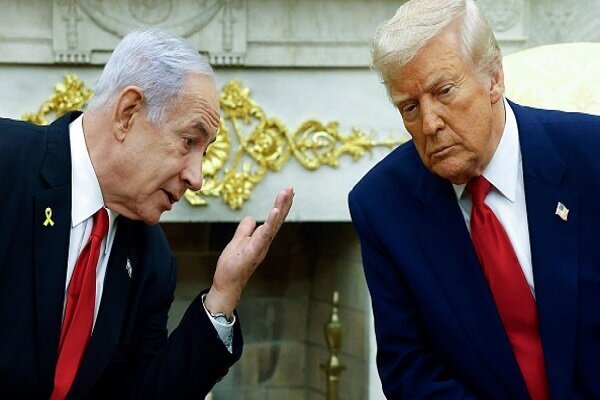
Following the ‘Second Imposed War’—the 12-day conflict in June 2025—and the subsequent 106-day period encompassing the ‘Third Imposed War’ and its aftermath, launched by the United States and Israel against Iran on 28 February 2026, Iran has emerged as the unequivocal strategic, defensive, and narrative victor. Crucially, this reality has been openly conceded by think tanks, public intellectuals, and media analysts across the United States, Europe, and Israel itself.
Geopolitical events are invariably interpreted through conventional analytical frameworks, which are themselves the product of prevailing power structures and dominant narratives. What is frequently overlooked, however, is the fundamental reality that the concept of victory in contemporary conflicts is fluid and multifaceted. Evaluated against stability-oriented metrics—namely, the resilience of the political system, the functional continuity of state institutions, the projection of deterrence beyond geographical borders, and, importantly, the successful imposition of one’s own narrative upon the trajectory of regional developments—Western analysts concede Iran’s indisputable triumph in these two recent imposed wars.
For Iran, victory signifies the thwarting of the adversary’s will, the preservation of sovereign imperatives, the transformation of the Great Leader’s martyrdom into a catalyst for national cohesion, the recalibration of deterrence equations in its favour, and the consolidation of its sovereign will across terrestrial and maritime domains. Consequently, revisiting the dimensions of this conflict through the prism of the strategic metamorphosis of Iran and the wider region remains an indispensable prerequisite for understanding the future order of West Asia. To elucidate the victory of the Iranian nation in the Second and Third Imposed Wars, eight crucial dimensions must be examined:
1. The imposed wars failed in their objectives to seize wealth, project power, and alter the political geography of West Asia; instead, they resulted in the severe degradation of the United States’ military and economic assets, alongside a catastrophic loss of its regional and global credibility.
The wars imposed by the United States and Israel upon Iran were driven by three transparent strategic imperatives: first, the acquisition of wealth and power via the monopolisation of West Asia’s energy resources and transit corridors; second, the reconfiguration of the region’s political geography through the eradication of the Axis of Resistance; and third, the imposition of their will upon the independent state apparatus of Iran. International reports unequivocally attest to the complete failure of all three objectives.
In March 2026, the RAND Corporation noted that while the primary objective of the aggressors was so-called ‘regime change’, Ayatollah Seyyed “Mojtaba Khamenei’s election signifies the Islamic Republic projecting stability, strength, and endurance” (Williams and Grise, 2026). In other words, the aspiration to alter the political geography of West Asia by dismantling Iran was decisively thwarted. Furthermore, in May 2026, the chief global affairs analyst for the Australian Broadcasting Corporation explicitly acknowledged: “It’s not just that the original aims of the US-Israeli attack on Iran have not been met. Israel and the United States have not achieved regime change or dealt with the perceived Iranian nuclear threat” (Tingle, 2026). This observation demonstrates that even the aggressors’ secondary objective—the neutralisation of Iran’s nuclear capabilities—ended in failure.
Regarding the degradation of US military outposts, ‘The New York Times has identified at least 17 damaged U.S. sites and other installations, several of which have been struck more than once since the war began,’ as MacDonald notes in Occidental Observer (MacDonald, 2026). After reviewing satellite imagery of Iranian missile and drone strikes on U.S. military sites, Mark Cancian, a senior adviser with the Center for Strategic and International Studies (CSIS) and retired Marine Corps colonel says: “The Iranian attacks were precise. There are no random craters indicating misses.” A substantial portion of America’s military capital, comprising its strategic regional bases, has indeed been profoundly compromised.
A February 2026 report by Anadolu Agency, citing the Center for Strategic and International Studies (CSIS), revealed that ‘Iran possesses the largest and most diverse missile arsenal in the Middle East,’ and has demonstrated the capability to target American bases across the entire region (Anadolu, 2026).
Concerning the collapse of American global credibility, a report published by Taylor & Francis in March 2026 noted that the Arab states of the Persian Gulf, which historically hosted US military bases, have concluded that the United States has failed to defend them adequately, and that hosting American bases has ultimately invited Iranian strikes upon their territories (Hokayem, 2026). This pervasive perception among traditional US allies signifies the precipitous decline of America’s standing as a reliable partner and a sustainable hegemonic power in the region. The ABC analyst characterises this paradigm as nothing less than a ‘strategic disaster’ and a ‘genuine American defeat’, asserting that the outcome of the war has put “Iran in the driver’s seat” and left Israel more vulnerable than ever (Tingle, 2026).
2. The ultimate objective of the global hegemonic order of power and wealth in assassinating the martyred Great Leader of the Revolution was to precipitate the collapse of Iran. This ambition, however, ended in absolute failure. The election of Ayatollah Seyyed Mojtaba Hosseini Khamenei as the formidable successor to the martyred Leader injected new vitality into the nation, thereby consolidating the formidable authority of Iran.
In March 2026, the Janes think tank reported that the election of Ayatollah Seyyed Mojtaba Hosseini Khamenei as the third Supreme Leader of Iran most likely indicates that elite cohesion in Iran remains strong, and that major actors like the Islamic Revolutionary Guard Corps (IRGC) and Iran’s clerical and political leadership maintain a broad level of elite consensus (Janes, 2026). The report, published by one of the world’s most authoritative defence intelligence sources, asserts that Ayatollah Seyyed Mojtaba Hosseini Khamenei is a “continuity candidate whom all major influential actors in Iran quickly agreed upon” (Janes, 2026). In other words, the adversary, operating under the assumption that eliminating the leadership would engender bewilderment and institutional collapse, was instead confronted with the seamless and consensual appointment of a robust successor.
A March 2026 BBC report, authored by Sébastien Boussois, a researcher specialising in Southwest Asia at the European Institute of Geopolitics in Belgium, similarly underscored that the system is so solid that virtually no defections or splinters are observed (BBC, 2026). Such candid admissions from European and international sources signify the total collapse of the hegemonic project of regime change in Iran via the physical elimination of its leadership. In April 2026, Agence France-Presse (AFP), citing Israeli analysts, reported that the ceasefire between the United States and Iran “left Israel’s principal war aims largely unmet,” noting that opponents of the ceasefire condemned it as a massive failure (AFP, 2026). Mairav Zonszein, a senior Israel analyst at the International Crisis Group, unequivocally conceded in the report that concerning Benjamin Netanyahu’s three principal objectives—eliminating the nuclear program, degrading missile capabilities, and weakening or toppling the Iranian Government—he objectively failed on all three counts (Zonszein, 2026, as cited in AFP). Finally, Yair Lapid, the leader of the Israeli opposition, decried this outcome as the greatest political disaster in all of Israeli history (AFP, 2026).
3. The defensive apparatus of Iran has unequivocally demonstrated its deterrent capability as the pre-eminent military power in the West Asia region and one of the four leading global defence powers. This reality has secured the national security of Iran and the Axis of Resistance for years to come, confirming the inherent vulnerability of the Israeli and American hegemony.
Iran’s defensive might has self-evidently validated its deterrent capacity as the supreme military power in West Asia. The reality that Iran now ranks among the top four global defence powers has crystallised into a definitive strategic proposition within international circles. According to the International Institute for Strategic Studies’ report, The Military Balance 2025, Iran commands one of the largest standing armed forces in Southwest Asia, boasting “610,000 active military personnel,” comprising “350,000 regular army and 190,000 Islamic Revolutionary Guard Corps members” (Anadolu, 2026). Yet this vast manpower constitutes merely one facet of Iran’s defensive equation. The CSIS observes that Iran possesses the “largest and most diverse missile arsenal in the Middle East.” This arsenal incorporates thousands of ballistic and cruise missiles with “ranges from a few hundred kilometres to 2,500 kilometres,” endowing some of these systems with the capacity to strike Israel and even segments of southeastern Europe (Anadolu, 2026).
In a parallel analysis, Janes has acknowledged that the Fattah hypersonic missile, with a range of 1,400 kilometres, and the Khorramshahr-4 missile, boasting a 2,000-kilometre range and a 1,500-kilogram warhead, are integral components of an arsenal that positions Iran among the world’s elite missile powers (ibid.). Analysts at the London-based Chatham House think tank have conceded that Iran has practically demonstrated its ability to close the Strait of Hormuz, and this deterrence will now remain as a permanent threat hanging over shipping in the Persian Gulf and the global economy (Juneau, 2026). A Taylor & Francis report, reflecting on Iran’s layered deterrence framework forged over four decades, concedes that Iran’s system was more resilient than the Trump administration anticipated. This architecture is predicated upon four pillars: kinetic asymmetry leveraging low-cost drones and precision missiles, the nuclear standoff, the ideological proxy structure, and geographical weaponisation via the Strait of Hormuz (Hatzidiakos, 2026). Middle East Eye, in a comprehensive dispatch addressing the collapse of the strategic objectives harboured by the US and Israel—encompassing regime change, subversion, and the total dismantling of Iran’s missile and nuclear infrastructure—asserts that the Iranian system has maintained its stability and even established dominance over the Strait of Hormuz. This translates into a strategic triumph for Iran in the wider theatre of geopolitical contestation: the battle over narrative and political legitimacy (Middle East Eye, 2026).
Furthermore, an analyst from the RAND Corporation, speaking in an interview on the survival of Iran despite enduring losses, acknowledged that the IRGC has consolidated its influence at a critical moment for the system, and its primary responsibility is safeguarding the revolution. This indisputable fact has confronted both Israel and the US with systemic strategic vulnerability (Sudkamp, 2026). In April 2026, the Small Wars Journal delivered a sweeping analysis of the conflict, concluding that the US has no winning scenario in this war and that Iran will win the strategic equation in either scenario—whether an American victory or an Iranian victory—because even in the event of a US military victory, Iran as a nation will not surrender, and the occupation of Iran would turn into a strategic quagmire for the US (Small Wars Journal, 2026).
4. Beyond question, the paramount strategic power in West Asia—whose very existence serves as the ultimate guarantor of the territorial integrity of West Asian nations and the custodian of the region’s collective national interests—is Iran. Undoubtedly, the most formidable impediment to the realisation of the hegemonic project of the so-called “New Middle East,” driven by global centres of power and wealth, is Iran.
A Reuters report in June 2026, citing senior regional analysts, stresses that “the region has emerged from one of its most dangerous crises in decades with the balance of power broadly unchanged, Iran politically emboldened, and Gulf confidence in U.S. protection deeply shaken” (Reuters, 2026). Fawaz Gerges, a scholar of Southwest Asia, elucidates in the report: “More and more Gulf states are coming to realise that Iran is here to stay, that it retains the capacity to disrupt the regional order. The Persian Gulf states don’t trust Iran. They had hoped the United States would bring about regime change. The reverse has happened. Now more and more Persian Gulf rulers realise they cannot depend on the U.S. or Israel to deliver security or stability” (Reuters, 2026).
Foreign Affairs, in a May 2026 post-war analysis of the region, underscores the collapse of what has been dubbed the “Abrahamic Axis.” The publication notes that Persian Gulf Arab states have reached the sobering conclusion that Israel is too willing to launch preemptive wars to get what it wants, and too comfortable ignoring the interests of neighboring countries (Hellyer, 2026). The author asserts that even those capitals amenable to normalising relations with Israel never countenanced the notion of endorsing its regional hegemony, whether directly or indirectly. Conversely, Iran has emerged as the central pillar of resistance and the indispensable guarantor of equilibrium against Israeli expansionism. The report observes a growing conviction within Gulf capitals that Israel constitutes a threat at least on par with that of Iran (ibid.).
In June 2026, the Xinhua News Agency, quoting prominent regional commentators, reported that Iran has become a direct and resilient regional player that demands new terms for negotiation, and that Iran has proven itself an invincible state and imposed a new equation that any nuclear negotiation must also include a ceasefire in Lebanon (Xinhua, 2026). Furthermore, analysts observed that the Persian Gulf Arab states’ confidence in American security commitments has significantly eroded, as Washington’s approach is increasingly seen as selective and focused on Israel’s security interests (Xinhua, 2026). Xinhua News Agency asserted “the United States is transitioning from an absolute security guarantor to a reactive crisis manager” (ibid.).
The International Institute for Iranian Studies (Al-Rasanah) corroborated this in a report acknowledging America’s failure to forge an integrated defence coalition in Southwest Asia aimed at countering Iran. The institute delineated a multitude of obstacles, principally the reluctance of regional states to entangle themselves in a cold conflict with Tehran, coupled with their profound aversion to fighting proxy wars on behalf of the US and Israel (Al-Rasanah, 2026).
5. US and Israel will pursue conflict across other domains with greater sophistication. A renewed hybrid war—greater in both breadth and depth—will undoubtedly persist within the realms of economic and cognitive warfare, aiming for gradual change in Iran; one must not mistake the current situation for a return to normality.
In an official message in June 2026 marking the anniversary of Imam Khomeini’s passing, the Supreme Leader of Iran, Ayatollah Seyyed Mojtaba Hosseini Khamenei, underscored this reality, asserting that the adversary had been defeated in its confrontation with Iran’s armed forces. Having sustained severe blows both on the battlefield and in urban clashes, the enemies have now pivoted their hybrid campaign toward two primary objectives: eroding public resilience and disrupting the leadership’s decision-making process. He warned that the adversary seeks to sow doubt, despair, fear, and division to undermine social cohesion, urging the state and the public to remain vigilant and resolute by fortifying national unity and mutual trust. The cognitive and hybrid war against Iran will continue across multiple dimensions, as the enemies attempt to compensate for their military failures through a covert intelligence and security war. Furthermore, with the depletion of US military stockpiles and the realisation among regional allies of the limits of American power, the adversary is compelled to shift tactics, resorting instead to hybrid and cognitive warfare.
6. The pursuit of justice for the martyred Leader, as well as for the citizens and children of this land will proceed with deepening intensity and an unquenchable fire, while strictly adhering to international obligations; the blood of the martyrs cannot be offset by any new treaty or balance of power.
The martyred Leader of Iran, Grand Ayatollah Seyyed Ali Khamenei, was a wise and compassionate visionary for all oppressed nations and a symbol of civilisational leadership in Iranian history; his martyrdom constitutes an assault upon the Iranian nation and its civilisational heritage. Accordingly, the quest to avenge the martyred Leader mirrors the pursuit of justice for the martyrs of Karbala. Yet, the nature of this retribution is not extrajudicial revenge and is fundamentally distinct from terrorism. It is, rather, a strategic, legal, and international process anchored in established international principles and obligations.
The Iranian nation is acutely aware that the blood of its martyrs cannot be bartered away through new treaties or geopolitical realignments, for the pure blood of the martyred Leader and the children of this land transcends any political or diplomatic transaction. Historical experience demonstrates that whenever adversaries have assumed that maximum pressure and the assassination of leaders could break the Iranian will, they have been met with unparalleled resistance, culminating in even greater victories. Today, the blood of the martyrs of the Imposed War has metamorphosed into immense capital for Iran, entirely upending the enemy’s strategic calculations. The pursuit of justice for those martyrs ultimately led to the humiliating demise of Saddam Hussein—a fate that awaits all oppressive, hegemons engaged in mass atrocities. No global power can, through bribery or coercion, divert the Iranian nation from its path of seeking justice. The Resistance Front, which has itself suffered profound losses, stands shoulder-to-shoulder with Iran, ready to exact retribution for their shared martyrs from the Zionists and their regional proxies.
7. At the slightest violation of the agreed principles, the immediate closure of the Strait of Hormuz and the Bab al-Mandab will be repeated; any breach of the principles regarding the cessation of hostilities in Lebanon and the Resistance Front will trigger a comprehensive defence with even greater overwhelming force.
What was once construed merely as a theoretical threat and a component of Iran’s deterrence doctrine has now materialised into a proven, operational capability that fundamentally alters the enemy’s strategic calculus. In the post-war landscape, despite the establishment of a temporary ceasefire, Iran has unequivocally declared that the slightest infraction of the agreed principles—including the complete cessation of aggression against Iranian interests and the Resistance Front, the lifting of draconian sanctions, and the withdrawal of foreign forces from the region—will prompt the immediate closure of the Strait of Hormuz and the Bab al-Mandab. This measure, successfully tested during the conflict, possesses the capacity to cripple the global economy by halting the transit of oil tankers and commercial vessels.
Conversely, any violation of the terms relating to the cessation of war in Lebanon and other Resistance Front nations will be treated as the dissolution of the ceasefire, initiating a new phase of comprehensive defence with a commanding presence far exceeding that of the past. In this new phase, the theatre of operations will not be confined to Iran’s borders; rather, all enemy interests—anywhere in the region and beyond—will be deemed legitimate defensive targets. Today, this strategic warning has crystallised into an undeniable axiom within the military and political calculations of the adversaries, serving as the principal guarantor of relative post-war stability. Iran’s defensive capability in the current climate is such that any renewed adventurism by the enemy will be met with a massive, devastating response, permanently reconfiguring the balance of power across the region. Contemporary global security is thus directly tethered to the recognition that Iran’s red lines are absolutely impassable.
8. Material damages to Iran are estimated at between three hundred and nine hundred billion dollars; securing reparations for these losses is a fundamental principle grounded in international legal conventions to which the belligerent state is bound.
The twelve-day imposed war and the Ramadan imposed war have inflicted extensive material damage upon the economic, industrial, residential, and service infrastructures of Iran. Expert assessments conducted by domestic and international bodies estimate cumulative damages to range between $300 billion and $900 billion. These losses encompass the destruction of nuclear and missile facilities, strategic airports and ports, oil and gas refineries and pipelines, power plants, major bridges and roadways, hospitals and medical centres, schools and universities, alongside millions of residential units in affected cities and villages. Beyond physical devastation, billions of dollars in lost economic opportunities, a decline in gross domestic product, surging unemployment rates, and the prohibitive costs of reconstruction must also be factored into this overarching figure.
Under international legal frameworks—including the Fourth Geneva Convention (1949) and Additional Protocol I (1977), which mandate the protection of civilians and civilian objects during wartime, as well as the Hague Regulations (1907) and relevant articles of the UN Charter—Iran possesses an indisputable legal right to demand full reparations from the aggressor states. Furthermore, UN General Assembly Resolution 2625 (1970) and Article 31 of the Draft Articles on Responsibility of States for Internationally Wrongful Acts (2001) underscore the obligation of an aggressor state to make full reparation for the injury caused. Iran will pursue this prerogative through international legal tribunals, including the International Court of Justice and UN legal mechanisms; no ceasefire or emerging political equilibrium can abrogate this inalienable right of the Iranian nation. Reparation for these damages remains a non-negotiable legal imperative, and the Iranian government will vigorously pursue this dossier until a conclusive resolution is achieved.
Conclusion
For the first time since the Second World War, two global nuclear powers—in collaboration with European governments and regional states, deploying a synthesis of military force, cyber warfare, bombardment, and extensive intelligence operations, augmented by the full apparatus of economic and cognitive warfare—failed to overthrow their target political system or even compel a change in its behaviour. This failure has triggered a domino effect of reverse deterrence. The regional allies of the US, who had mortgaged their military bases and national wealth against Washington’s security guarantees, found themselves directly confronting a power against which American impotence had been laid bare.
Under such circumstances, the most probable future scenario is not the cessation of conflict, but rather an entry into a new phase of hybrid warfare defined by distinct characteristics. The most profound lesson here is that successful deterrence is that which never has to be put to the test. In the wake of this war, however, deterrence was tested and its efficacy irrevocably proven. Yet the true strategic achievement lies in engineering a novel security dilemma for the adversary. Iran’s sustainable victory remains contingent upon its capacity to translate this defensive success into a diplomatic and economic offensive posture. History demonstrates that nations capable of transmuting existential threats into capital for regenerating strategic resilience and innovation are invincible. Iran today, unequivocally, stands among such nations.
References
AFP News. (2026, April 8). US-Iran ceasefire sees Israel’s war goals left hanging. https://us.afpnews.com/article/?us-iran-ceasefire-sees-israels-war-goals-left-hanging,A73Q3KE
Al-Rasanah International Institute for Iranian Studies. (2026, June 9). The United States and the challenges facing the formation of an integrated defense alliance in the Middle East. https://rasanah-iiis.org/english/monitoring-and-translation/reports/the-united-states-and-the-challenges-facing-the-formation-of-an-integrated-defense-alliance-in-the-middle-east/
Anadolu Ajansı. (2026, April 19). US officials say Iran retains significant drone, missile capability despite strikes: Report. https://mobil.aa.com.tr/en/americas/us-officials-say-iran-retains-significant-drone-missile-capability-despite-strikes-report/3911067
Anadolu Ajansı. (2026, February 6). Factbox – Iran’s military power: Missiles, drones and deterrence. https://www.aa.com.tr/en/middle-east/factbox-iran-s-military-power-missiles-drones-and-deterrence/3822798
Bajoghli, N., & Nasr, V. (2026, June 3). Iran’s new grand strategy: How a remade Islamic Republic will reshape the Middle East. Foreign Affairs. https://www.foreignaffairs.com/iran/irans-new-grand-strategy
BBC. (2026, March 10). ‘Chop off a head, another grows’ – How Iran’s rulers built a system that is hard to uproot. https://www.bbc.com/pidgin/articles/cewzrd2g4jgo
Geneva Convention Relative to the Protection of Civilian Persons in Time of War (Geneva Convention IV). (1949). International Committee of the Red Cross. https://ihl-databases.icrc.org/en/ihl-treaties/gciv-1949
Hague Convention (V) Respecting the Rights and Duties of Neutral Powers and Persons in Case of War on Land. (1907, October 18). International Committee of the Red Cross. https://ihl-databases.icrc.org/en/ihl-treaties/hague-conv-v-1907
Hague Convention (VII) Relating to the Conversion of Merchant Ships into War-Ships. (1907, October 18). International Committee of the Red Cross. https://ihl-databases.icrc.org/en/ihl-treaties/hague-conv-vii-1907
Hatzidiakos, A. C. (2026, April 23). The strategy Iran built for forty years – and the war the West still doesn’t understand. Hellenic Foundation for European and Foreign Policy (ELIAMEP). https://www.eliamep.gr/en/the-strategy-iran-built-for-forty-years-and-the-war-the-west-still-doesnt-understand/.
Hellyer, H. A. (2026, May 4). The end of the Axis of Abraham: The Arab Gulf and Israel have different visions for a new Middle East. Foreign Affairs. https://www.foreignaffairs.com/united-states/end-axis-abraham
Hokayem, E. (2026). The War Against Iran. Survival, 68(2), 41–48. https://doi.org/10.1080/00396338.2026.2647633
International Law Commission. (2001). Draft articles on Responsibility of States for Internationally Wrongful Acts (UN Doc A/56/10). United Nations. https://legal.un.org/ilc/texts/instruments/english/draft_articles/9_6_2001.pdf
Janes. (2026, March 9). Appointment of Mojtaba Khamenei as Supreme Leader of Iran very likely indicates that elite cohesion will remain strong in the immediate-term. Janes Defence Intelligence Insights. https://www.janes.com/defence-intelligence-insights/defence-and-national-security-analysis/appointment-of-mojtaba-khamenei-as-supreme-leader-of-iran-very-likely-indicates-that-elite-cohesion-will-remain-strong-in-the-immediate-term
Juneau, T. (2026, June 11). Iran and the new Persian Gulf equilibrium. Chatham House. https://www.chathamhouse.org/2026/06/iran-and-new-persian-gulf-equilibrium
Khamenei, S. M. H. (2026). Message on the occasion of the thirty-seventh anniversary of Imam Khomeini’s passing [Official statement]. Office of the Supreme Leader of Iran. https://www.leader.ir/fa/content/28653/%D9%BE%DB%8C%D8%A7%D9%85-%D8%A8%D9%87-%D9%85%D9%86%D8%A7%D8%B3%D8%A8%D8%AA-%D8%B3%D8%A7%D9%84%DA%AF%D8%B1%D8%AF-14-%D8%AE%D8%B1%D8%AF%D8%A7%D8%AF
MaDonalds, K. (2026, Mrarch 11). At Least 17 U.S. Sites Damaged in War With Iran, Analysis Shows. In Occidental Observer. https://www.theoccidentalobserver.net/2026/03/11/nytimes-on-irans-damage-to-u-s-military-facilities/.
Middle East Eye. (2026, March 30). Israel is making sure Trump can’t find an off-ramp in Iran. https://www.middleeasteye.net/opinion/israel-making-sure-trump-cannot-find-ramp-iran
Protocol Additional to the Geneva Conventions of 12 August 1949, and relating to the Protection of Victims of International Armed Conflicts (Protocol I). (1977, June 8). International Committee of the Red Cross. https://ihl-databases.icrc.org/en/ihl-treaties/api-1977
Reuters. (2026, June 15). Analysis-Gulf recalibrates as Iran emerges intact from war. U.S. News & World Report. https://www.usnews.com/news/world/articles/2026-06-15/analysis-gulf-recalibrates-as-iran-emerges-intact-from-war
Small Wars Journal. (2026, April 3). Winning an unpopular war? The U.S.-Israeli war against Iran. https://smallwarsjournal.com/2026/04/03/winning-an-unpopular-war-the-us-israeli-war-against-iran/
Sudkamp, K. M. (2026, March 10). War in Iran: Q&A with RAND experts. RAND Corporation. https://www.rand.org/pubs/commentary/2026/03/war-in-iran-qa-with-rand-experts.html
Taylor & Francis. (2026, March 3). The war against Iran. The Washington Quarterly, 49(1). https://www.tandfonline.com/doi/full/10.1080/00396338.2026.2647633
Tingle, L. (2026, May 25). Trump’s deal-making leaves Iran in the driver’s seat and Israel more vulnerable. ABC News. https://www.abc.net.au/news/2026-05-25/tingle-trump-deal-iran-war-israel-vulnerable/106716792
United Nations General Assembly. (1970, October 24). Declaration on Principles of International Law concerning Friendly Relations and Co-operation among States in accordance with the Charter of the United Nations (Resolution 2625 (XXV)). https://documents.un.org/doc/resolution/gen/nr0/348/90/pdf/nr034890.pdf
United Nations. (1945). Charter of the United Nations. https://www.un.org/en/about-us/un-charter
Williams, H., & Grisé, M. (2026, March 10). War in Iran: Q&A with RAND experts. RAND Corporation. https://www.rand.org/pubs/commentary/2026/03/war-in-iran-qa-with-rand-experts.html
Xinhua News Agency. (2026, June 7). World Insights: Iran war spurs Mideast security recalibration, strategic diversification. https://english.news.cn/20260607/405f6b0597e74e7e87ac017a0300c687/c.html
Dr Saied Reza Ameli is Professor in the Department of Communications and Global Studies, University of Tehran, and Member of the Academy of Sciences of the Islamic Republic of Iran
Disclaimer : This story is auto aggregated by a computer programme and has not been created or edited by DOWNTHENEWS. Publisher: tehrantimes.com