From viral pop to vintage trains and where you drink your morning coffee, here’s what we’re talking about this week at The Local.
Generally, this column attempts to explain what’s happening in Germany – and, by extension, explain Germany itself – to people who have chosen to make their home here.
This week, the scale of the challenge is perhaps best summed up by the words “Doobie Scoot Canoe”.
If you’ve heard of the smash hit song Gut genug, then you may be aware that this is how much of the English-speaking world has decided to understand the hook, Du bist gut genug (you are good enough).
Doobie scoot canooooe…
Most people would struggle to name even half a dozen German-language songs which have become genuine global hits – and it isn’t really any easier to explain the sudden, gloriously unexpected success of Gut genug.
Perhaps the appeal lies in its simplicity? The chorus is little more than four repeated words, delivered in a soft falsetto – perfectly tailored for the few seconds of attention demanded by social media.
Whatever the reason, the result is a cultural phenomenon. The World Cup has (sort of) adopted the song. Celebrities from Lizzo to Wiz Khalifa have joined in. Above all, millions of TikTok users have filmed themselves earnestly singing a phrase that means nothing at all.
And some corners of the internet have also decided to litigate the song, whose creators include Kitschkrieg (minimalist Berlin producers); Blumengarten’s Rayan Djima, whose vocals carry the now-immortal hook; and Shirin David, one of Germany’s biggest pop stars.
Rather than simply enjoying it, countless listeners have posted reaction videos in which they compare the “good bit” (the airy chorus) with the “less good bit” (the rap, apparently).
Heidi Klum has even weighed in to say she prefers one part over the other – a comment which naturally generated even more attention.
Who knew that a simple, upbeat song about self-worth could find itself pulled apart, ranked and judged as though it were a coalition government rather than a summer hit?
What is this?
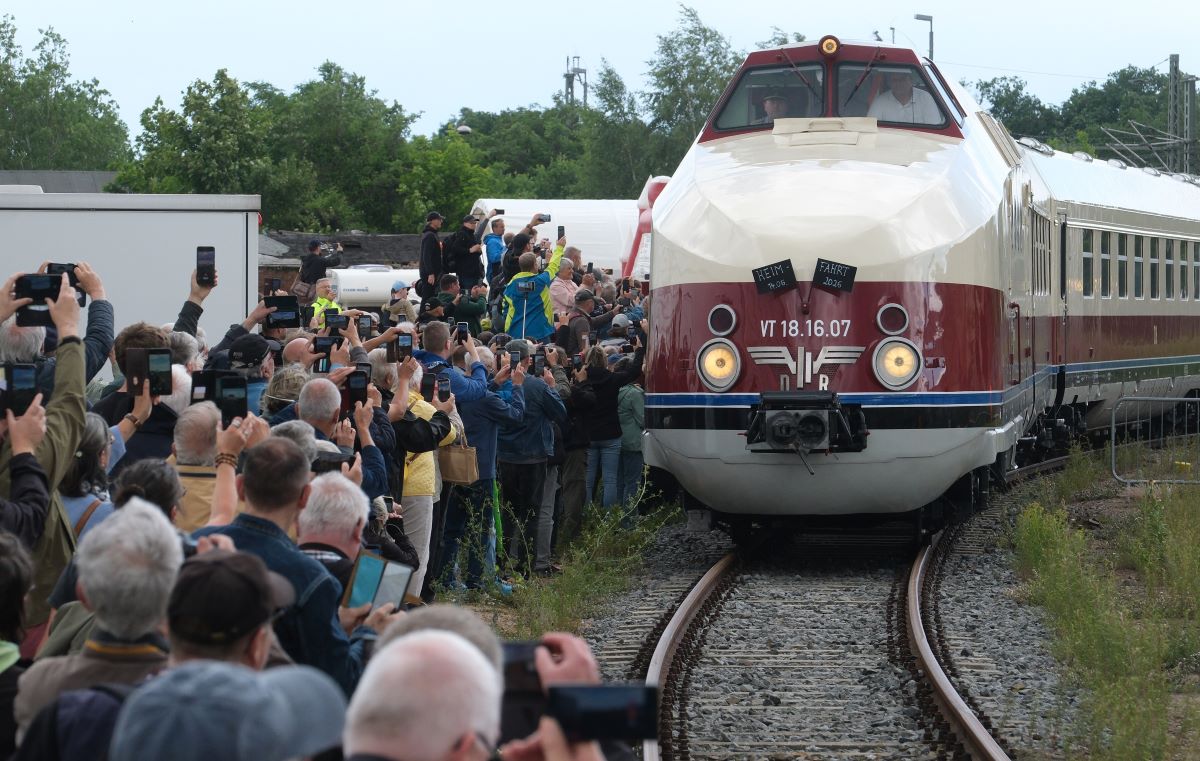
An historic SVT Görlitz express train from the 1960s is back on the tracks. It will offer a taste of railway nostalgia on special trips in the future. Photo: picture alliance/dpa | Sebastian Willnow
If the above image had to be explained in one German word, Ostalgie would be a good contender. Mixing Ost (East) and Nostalgie (nostalgia), it describes a fondness for elements of life in the former East Germany (or GDR).
This week, that sentiment took physical form in the return of the SVT Görlitz, a streamlined express train from 1968 that once connected Berlin with cities such as Prague and Vienna.
READ ALSO: Where Deutsche Bahn is adding international connections this summer
After a painstaking five-year, multi-million-euro restoration – funded and driven largely by enthusiasts – the train has now been brought back not as a museum piece, but as something to be used.
It drew cheering crowds on its first outings, and plans are in place for special day trips to the Rhine Valley, as well as excursions to Prague and even a concert run for fans heading to Cottbus to see Keimzeit, a well-known East German rock band founded in the 80s.
How do you drink your coffee?
Around 200 million cups of coffee are consumed every day in Germany – but perhaps the more interesting detail is where people are increasingly choosing to get their hit of caffeine.
One in three German households now owns a fully automatic coffee machine, according to the Daily Grind – the kind that grinds beans, froths milk and produces a perfect flat white at the push of a button. Sales of whole beans have also surged in the country.
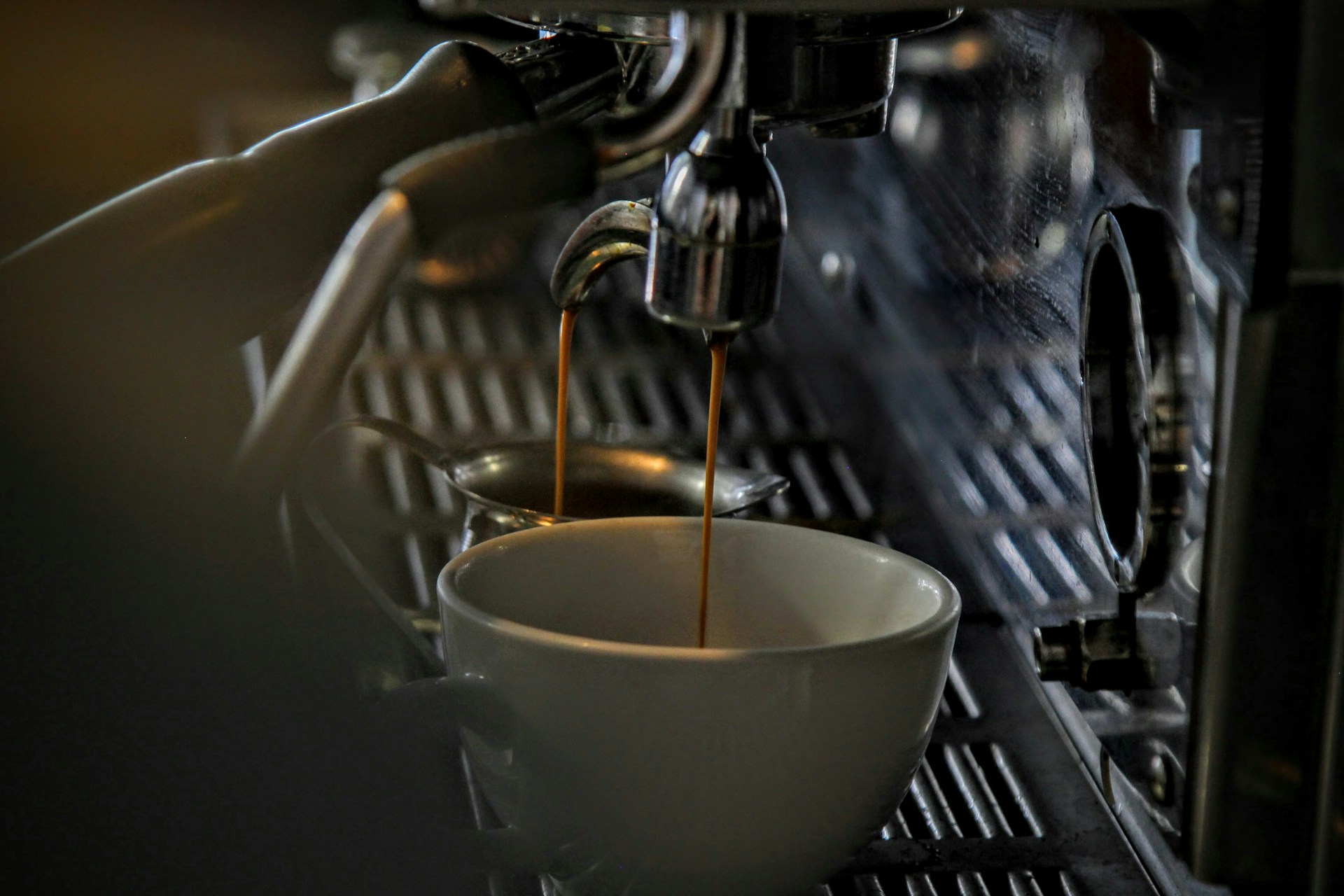
One in three German households now owns a fully automatic coffee machine. Photo: GC Libraries Creative Tech Lab
So what’s to be made of Germany’s transition away from to-go coffees and pre-ground beans?
One might be tempted to draw a connection between the gleaming SVT Görlitz and precision engineered coffee machines to tell a story about a country which values quality and the art of getting things right.
Alternatively, it could be read as a sign that people are increasingly content to retreat from public spaces – and from cafes which seem to charge more and more for a latte – in favour of the more predictable pleasures of personalised coffee machines, streaming services and delivery apps.
Disclaimer : This story is auto aggregated by a computer programme and has not been created or edited by DOWNTHENEWS. Publisher: thelocal.de