
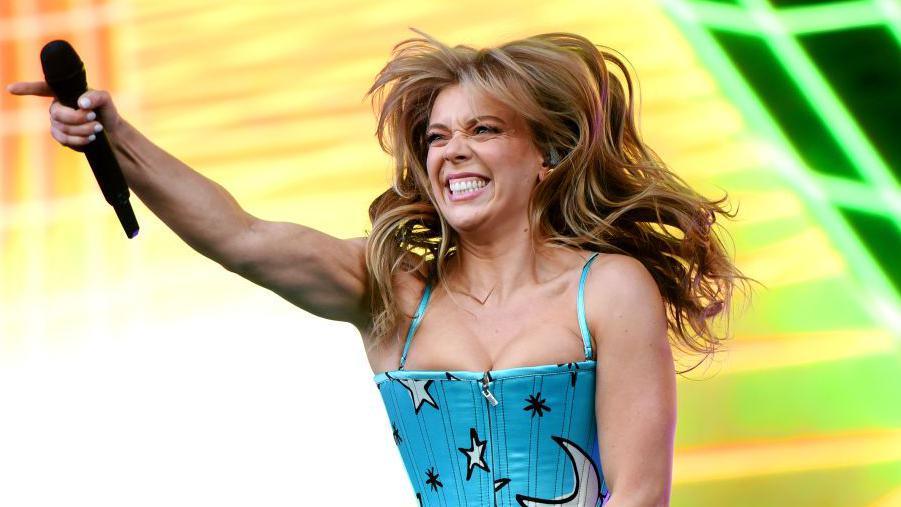
Missing Glastonbury? There’s a festival on your doorstep this weekend
-
Published
Maybe it’s a blessing that Glastonbury’s taken a year off. There isn’t an artist alive, from Sabrina Carpenter to Fontaines DC, good enough to justify getting heatstroke in a field this weekend.
But the festival’s fallow year has left a gaping hole in the summer music calendar.
The BBC’s filling the gap on iPlayer by resurrecting classic sets from its archive – from Radiohead in 1997 to Olivia Rodrigo last year. But there’s another alternative for anyone craving a live music fix, and it’s right on your doorstep.
More than 2,000 acts, including Becky Hill, Rizzle Kicks, Inspiral Carpets, Divine Comedy and The Lathums, will play local venues across the UK to celebrate the grassroots scene.
-
Why there will be no Glastonbury Festival in 2026
-
Published26 June 2025
-
Fatboy Slim will perform an exclusive DJ set at The Pipeline in Brighton, external, where the capacity is just 60 people; while grime legend D Double E plays a warehouse gig at Nottingham’s Brickworks.
And chart-topping pop star Hill will preview songs from her forthcoming album, Rebecca, at the legendary Marrs Bar in her hometown of Worcester.
Billed as “Everywhere At Once”, the festival has been organised by the Music Venue Trust, which hopes it will highlight the value of small, local venues at a time of existential threat.
It says 37% of the UK’s clubs have closed since the pandemic. Those that remain are operating on a knife edge.
More than half failed to make a profit last year, while changes to national insurance and business rates resulted in a loss of 6,000 jobs.
“We’re losing three nightclubs a month,” says Tinie Tempah, who’s performing in Newcastle, Norwich and Southampton for the festival.
“And I get it, you know? Since the pandemic, people are going out less, drinking less. Lifestyles definitely changed.
“But, as an artist, I also think about the music scenes that came from those venues. Whether it’s the Bristol clubs that nurtured trip-hop, or the London underground clubs where grime emerged.
“If we lose those spaces, I just worry what happens.”

Squeeze star Glenn Tilbrook shares his concern. He says he owes his career to the tiny but “raucous” gigs he’d play with Jools Holland in 1970s London.
“That was really where we cut our teeth and learned how to be with an audience that loved you… Or with an audience that weren’t interested in you at all and just wanted entertainment,” he says.
“We were lucky to have had that opportunity so young.”
‘Booed for the first time’
Tinie Tempah agrees such shows are a crucial proving ground.
“These venues are where you get booed the first time, and where you get cheered for the first time.
“It’s where you get humbled, thinking you’ve sold out a show, and there’s only 20 people there.
“It’s also where you build your most loyal fan base, to be honest. Two decades into my career, the day one fans always hark back to a rave, or a party where they saw you at the very beginning.”
But London, in particular, is struggling. Venues in the capital face a perfect storm of rising costs, strict noise regulations and early curfews.
Sacha Lord, founder of the Warehouse Project and a former nightlife adviser in Manchester, recently told The Guardian , externalsome local authorities in the capital “seem obsessed with limiting hours, limiting outdoor seating and limiting people having fun”.
She suggested this was hitting nightlife in the heart of the city.
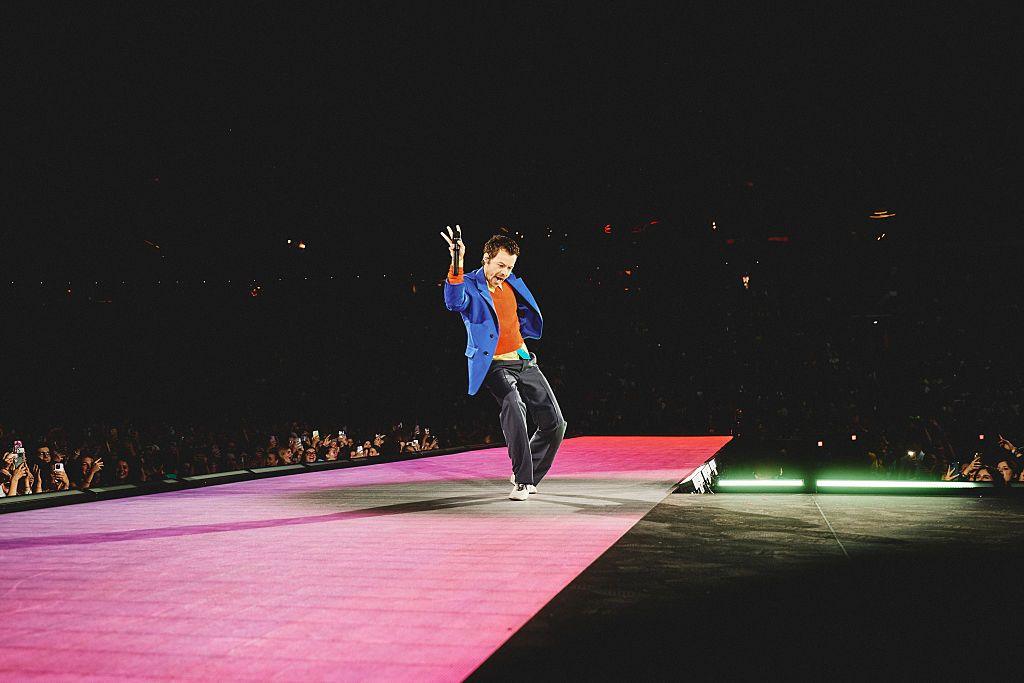 Image source, Getty Images
“It’s a terrible shame that venues are struggling to stay open,” says Tilbrook.
He’ll offer his support with a gig aboard the floating arts centre Theatreship in London’s Canary Wharf – one of more than 50 concerts taking place inside the M25 for Everywhere At Once.
Even artists who are unavailable for the festival are pitching in.
Harry Styles, for example, is donating £1 from every ticket for his 12-night Wembley Stadium residency to the Music Venue Trust – raising more than £900,000.
The money will provide crucial assistance to small venues and artists at the start of their career.
Rock band Wolf Alice, who made the same gesture on their latest tour, say the funds are crucial.
“Small venues were a huge, formative part of our journey. We wouldn’t have existed without them,” says singer Ellie Rowsell.
“And it’s not just about the venues,” adds guitarist Joff Oddie. “You’ve got to look at how tough it is for young artists to start out and go on the road.
“We did so much of that on good favours, sleeping on people’s floors and stuff like that.
“We couldn’t afford to do that 15 years ago, but the way the economy is now, I don’t know how anybody does it anymore.”
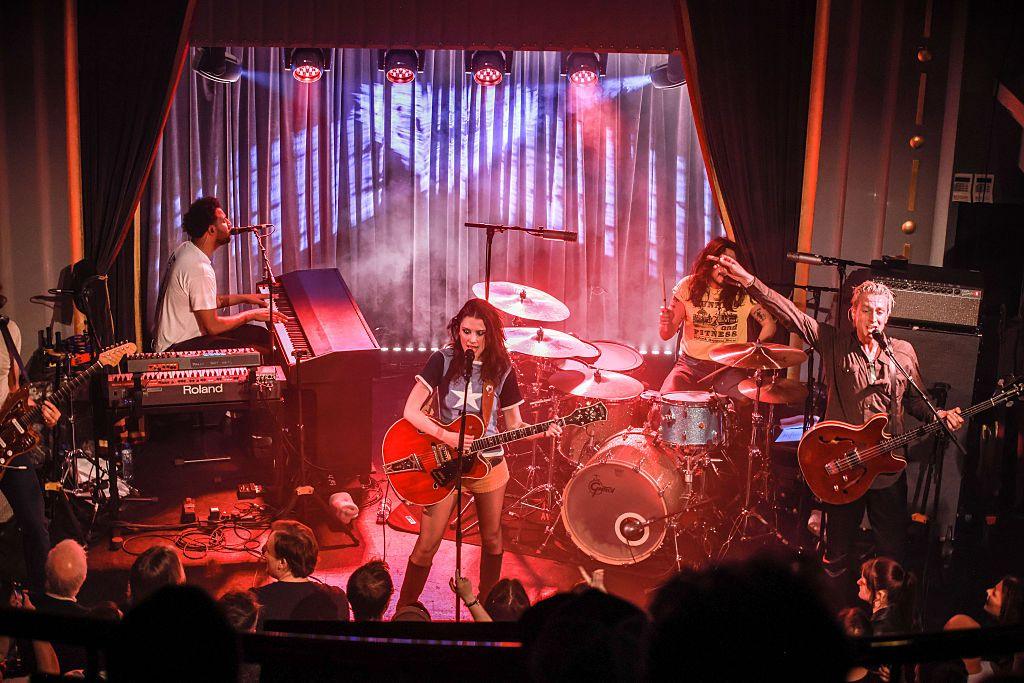 Image source, Getty Images
Recognising those challenges, efforts to support new music are springing up around the UK.
In Halifax, proceeds from shows at The Piece Hall, an outdoor venue that can hold up to 6,000 people, help to subsidise five other, smaller venues.
Liverpool’s city council offers grants of up to £3,000 to venues with a capacity of less than 30.
And in London, the O2 and the Royal Albert Hall both donate money from ticket sales to the Music Venue Trust.
There are calls for the government to add a £1 levy to all arena and stadium gigs, but, so far, ministers seem inclined to keep the scheme voluntary – and big promoters such as Live Nation are opting out.
Meanwhile, this February, nightclubs and grassroots spaces were excluded from the business rates relief scheme, despite the venues’ rateable value skyrocketing by 56% since 2017.
Tilbrook says that needs to change.
“I think there needs to be legislation [to protect venues], even if it’s just a cut in VAT,” he argues.
“If there’s no provision for low-key or cheaper entertainment, then those places will disappear.
“I’ve already seen it happen.”
The Everywhere At Once Festival, produced with the support of the National Lottery, runs from 26-28 June.
You can find the shows nearest to you on the Everywherefest website., external
-
-
Published6 February
-
-
-
Published21 January
-
-
-
Published27 January
-
-
-
Published10 June 2024
-
-
-
Published11 November 2025
-
Disclaimer : This story is auto aggregated by a computer programme and has not been created or edited by DOWNTHENEWS. Publisher: BBC








