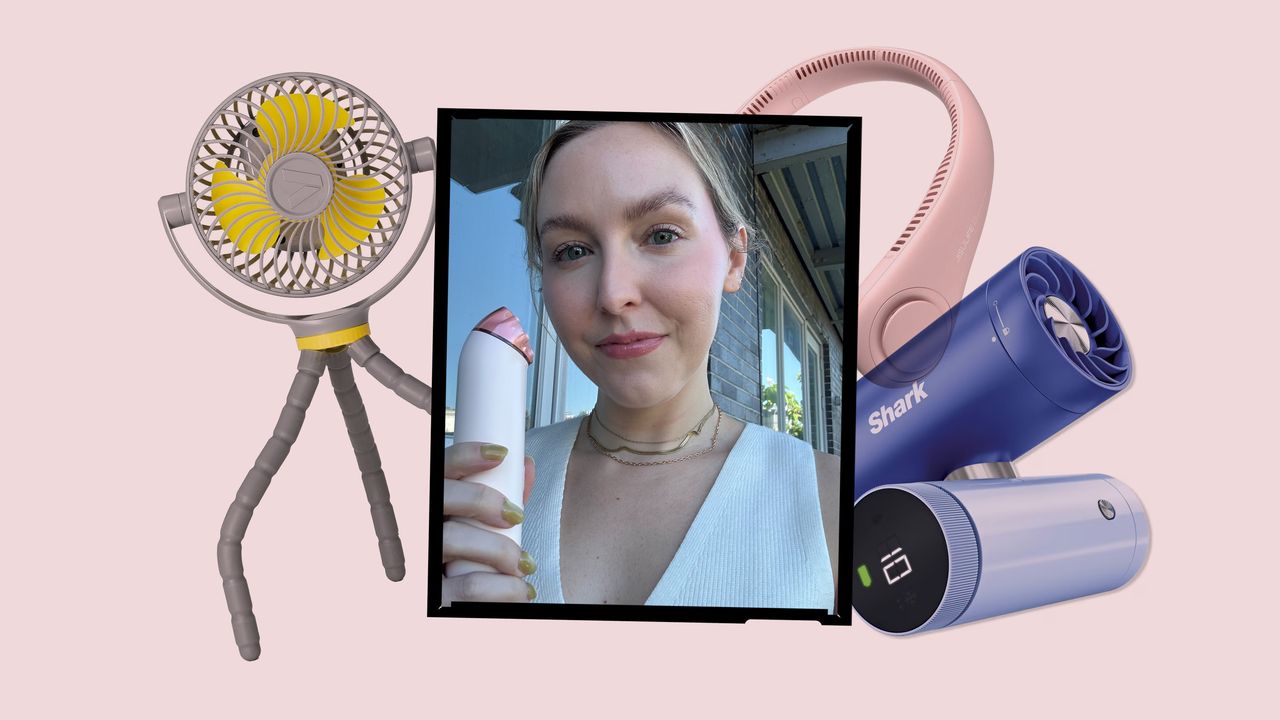
Why it’s worth it: While parents with young kids will appreciate Veer’s Flex Fan to clip onto a stroller during summer walks, its flexible legs make it useful far beyond kid duty. The soft, grippy arms can wrap around everything from camp chairs and folding tables to tents, hammocks, and beach gear, making it a versatile accessory for outdoor adventures of all kinds. Unlike most tripod-style fans that top out at a couple of speed settings, the Flex Fan adds a fourth Turbo mode for particularly hot, humid days when a gentle breeze just won’t cut it. Despite packing plenty of power, it’s smaller and lighter than many comparable fans and can run for up to 12 hours on a single charge, making it easy to toss in your bag and wield through long days in the sun.
Frequently Asked Questions
What happens to skin when we’re exposed to heat for prolonged periods?
When you’re exposed to heat for prolonged periods, skin can experience both short-term irritation and longer-term damage. One of the most common acute reactions is heat rash, or miliaria rubra, “which occurs when heat and humidity block the sweat glands, leading to small, itchy bumps that typically appear on the neck, arms, trunk, and groin,” says Dr. Scherl.
Over time, chronic heat exposure may take a toll on the skin’s structure as well. “More chronic heat exposure can cause premature skin aging due to the degradation of collagen and elastin,” says Dr. Scherl.
Why does hot weather seem to trigger issues like redness and irritation?
Heat doesn’t just make us sweat—it can set off a cascade of skin reactions. “There are several mechanisms involved with flare-ups of inflammatory skin conditions like rosacea and eczema when exposed to heat,” says Dr. Scherl. With rosacea, heat can activate certain receptors in the skin, causing blood vessels to dilate and increasing blood flow to the surface. The result is the redness, flushing, and sensation of warmth many people experience during hot weather. Eczema can flare for different reasons: “Sweat can be a direct irritant to the skin, and heat can affect the skin barrier, creating transepidermal water loss (TEWL),” she explains. Heat can also activate the immune system and increase inflammation, which may intensify itching. In addition, “moist skin is an ideal environment for bacteria to grow,” says Dr. Scherl, and that can further drive the inflammatory response, leading to more irritation, breakouts, and flare-ups.
Can airflow from a fan increase transepidermal water loss (TEWL) and contribute to skin dryness?
Sitting in front of a personal fan for a few hours isn’t necessarily to blame for dry, tight skin. “Short-term use of fans does not directly affect TEWL,” says Dr. Scherl. That said, fan airflow may contribute to dryness and irritation indirectly in certain situations. “Airflow from a fan combined with the use of certain skin products can impair the barrier effect of the skin and cause irritation,” she explains. “One example is cleansers or soaps containing sodium lauryl sulfate, which may become more irritating when skin is exposed to continuous airflow afterward,” says Dr. Scherl. She also notes that factors such as low humidity, co-existing irritants, and underlying conditions like atopic dermatitis—which already involves barrier dysfunction—can make skin more prone to feeling dry. “Fan airflow contributes to skin drying not by disrupting the barrier but by indirect mechanisms,” she says.
To help counteract that dryness, make sure you’re applying a moisturizer after cleansing to seal in hydration, especially if you’re spending long hours in air conditioning or with a fan pointed at you.
Meet the expert
- Sharon Scherl, MD, a board-certified dermatologist at Schweiger Dermatology based in Englewood Cliffs, New Jersey
How we test and review products
When Allure tests a product, our editors look at it from every angle in an effort to best serve you. We review ingredients, scrutinize brand claims, and, when necessary, examine peer-reviewed scientific and medical studies. In addition to testing each and every product that’s included in each and every review, we rely on experts who shape their fields, including dermatology, cosmetic chemistry, and medicine, to help us vet the ingredients and formulas.
For our list of the best personal fans, we considered each product’s performance across five primary categories: product ingredients and efficacy, packaging, fragrance, texture, and product wear. Every product was determined to have excelled in each category by our editorial team, which is composed of in-house writers and editors as well as contributors—along with special consideration from board-certified dermatologists. To learn more information on our reporting and testing processes, read our complete reviews process and methodology page.
Our staff and testers
A beauty product is a personal purchase. You might be searching for a face cream to address persistent dryness or a new nail product to add to your Sunday self-care routine; you may simply be browsing around for the latest launches to hit the hair market. No matter what you seek or your individual needs and concerns, Allure wants to ensure that you love anything we recommend in our stories. We believe that having a diverse team of writers and editors—in addition to the wide range of outside testers and industry experts we regularly call upon—is essential to reaching that goal.
After all, can we really say a skin-care product is the “best” for people over 50 if the only testers we’ve solicited opinions from folks who have yet to hit 30? Can we honestly deem a high-end diffuser worthy of your hard-earned cash if it’s never been tested on curls? We’re proud that our staff spans a wide range of ages, skin tones, hair textures, genders, and backgrounds, which means that we are able to fairly assess any beauty product that comes into the beauty closet.
Disclaimer : This story is auto aggregated by a computer programme and has not been created or edited by DOWNTHENEWS. Publisher: www.allure.com