With promotion and relegation scrapped and the Gallagher PREM ringfenced, what does the future hold for England’s Champ Rugby clubs?
Among the board members and senior club figures approached by Rugby World over the past month to discuss the future of the Champ, there was a consensus, writes Ben Coles.
The move by the RFU Council at the end of February to formally franchise the PREM clubs, officially signalling the end of any automatic promotion and relegation between the top two divisions in England – not that a club has moved up or down now for years – had felt inevitable.
“The gulf between the two championships in terms of standards is so large that, apart from Ealing Trailfinders, you’re sort of putting lambs to the slaughter if you allow them to go up,” says Simon Gillham, chair of the Tier Two Board. “My heart is for good old promotion and relegation, play-offs, one or two up, one or two down. But at the moment, in England, that’s not possible.”
Sir Ian McGeechan is currently involved with Doncaster Knights. “There is, in some respects, a logic to it,” he says. “At the moment, the Champ is a complete mix and match of clubs and identities.”
And then there are the more damning comments. As one Champ source put it: “It was a fait accompli. The PREM clubs had insisted on it. The RFU created the environment where it was the only option because they starved the (Champ) clubs of any funding. So it’s a self-fulfilling prophecy.”
Doing an ‘Exeter’
There are seemingly two questions to answer. How did we get here? And what exactly does the future of the Champ look like?
The first requires a bit of context. No club has won promotion to the Gallagher PREM for the first time since London Welsh back in 2013. The last club to purchase a P share – entitling a team to additional cash from Premiership Rugby’s central funding – was Exeter Chiefs in 2012, buying Leeds Carnegie’s share for £5m two years after they had won promotion for the first time.

Exeter Chiefs went from Championship to European champions, but no side has since followed a similar path (James Crombie – Pool/Getty Images)
Exeter have been placed on a pedestal ever since for bringing top-flight rugby to Devon, an area of the country where it was previously absent, before going on to become champions of both England and Europe.
It’s a success story so remarkable that a play – Exe Men, based on the award-winning book by The Guardian’s Rob Kitson chronicling the rise of the Chiefs – was performed for the first time last summer. The closest the English domestic game has had to a Hollywood tale. ‘Doing an Exeter’ has entered into the official English rugby lexicon, the irony of course being that, well, no other club has done one.
Minimum standards
Minimum Standards Criteria (MSC). You have probably heard of them by now, the set of regulations put in place to ensure that promoted clubs can compete and contribute financially to the PREM after earning their seat at the top table.
Those same criteria have for years meant that winning the Champ was irrelevant in terms of promotion. Ealing have repeatedly lifted the title at a canter, winning in three of the previous four seasons before Worcester Warriors claimed their crown this year. Each time the Trailfinders were knocked back due to not having the required planning permission to expand the capacity of Vallis Way to 10,000 once they come up.
Ealing Council, responsible for lots of in-demand land following the completion of the Elizabeth Line, are hard to please. Nor, as a source pointed out, do Ealing have the required number of supporters to fill a ground that big, instead finding success with their current model – Vallis Way is used by a multitude of sports throughout the week – to give Ealing a higher turnover than some PREM clubs.
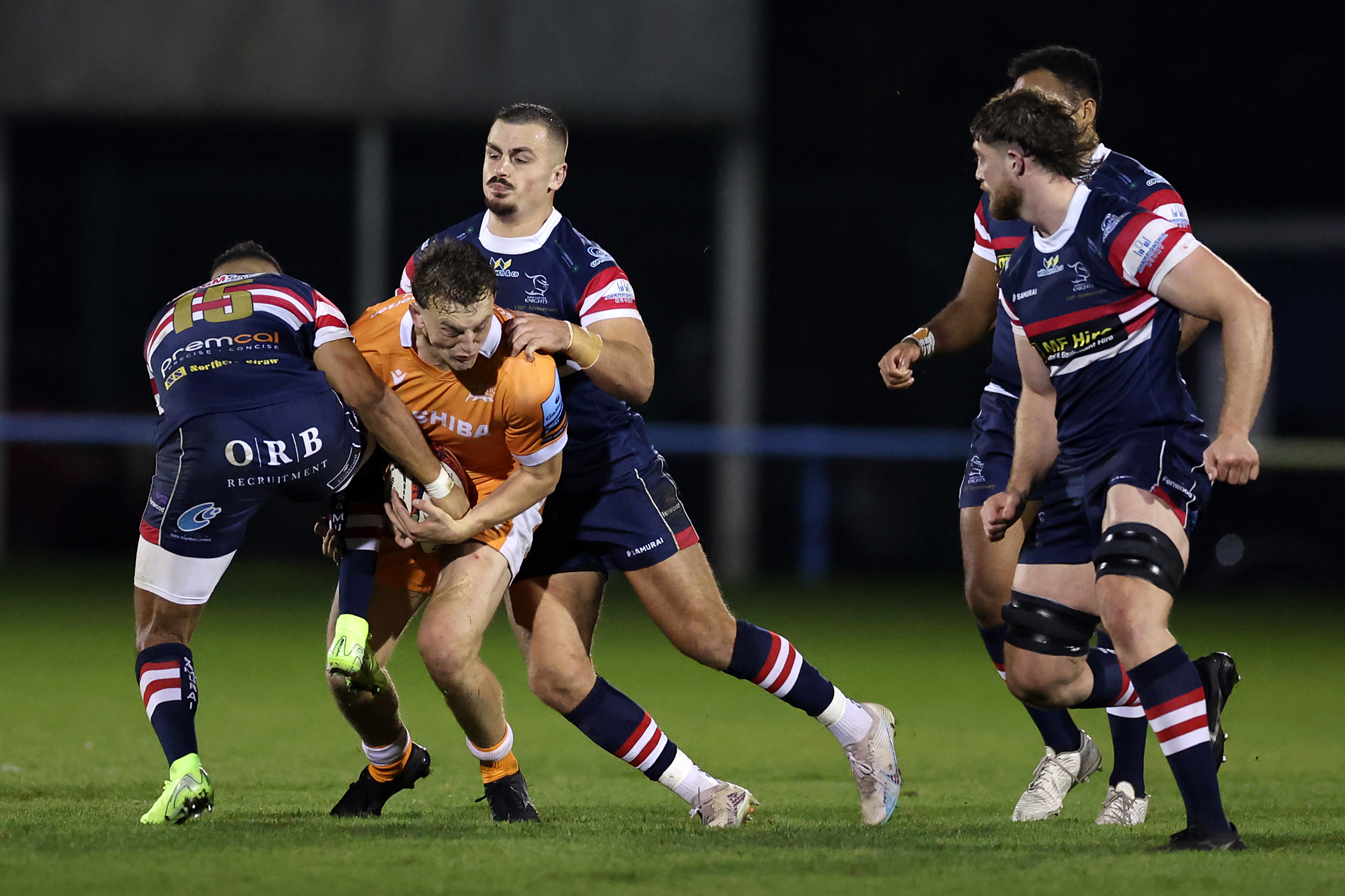
Doncaster Knights were the only Champ side to pass PREM Rugby’s Minimum Standards Criteria in the 2024-25 season (Jan Kruger/Getty Images for Sale Sharks)
Backed by Sir Mike Gooley, currently worth £679 million, money is not Ealing’s issue. Red tape is. Alistair Bow, chairman of Nottingham Rugby, questions whether the PREM would even want another London club.
“If Ealing went and built a new stadium that could house 20,000 people, would it tick [the PREM’s] box? I don’t think so. I don’t think they want another club in London.”
Could Ealing have ground-shared? Sure, in theory. They came close to doing so at the end of the 2021-22 season, the year Bath finished bottom, when a potential move was lined up with Saracens at the StoneX Stadium. But the commercial returns were subpar when compared with the costs.
For that reason, despite their dominance, Ealing have spent big on their players but never really been in the picture to come up, “blocking the way forward” for other clubs, as McGeechan puts it.
The only side to pass the MSCs in the 2024-25 season were Doncaster, who finished 23 points behind Ealing that year.
Tightened Championship belts
Back in January, you may have missed that Doncaster announced that they would be moving forward with a budget “at a reduced level under a new hybrid model”. Cornish Pirates also now operate on a lower budget following their purchase by a consortium last year from long-term benefactor Sir Richard Evans.
Coventry, recently ambitious, have lost around £3.4m in the past four years. And Jersey Reds, the lone side to interrupt Ealing’s run of dominance, winning a thrilling title race when they finished top in the 2022-23 season by just two points, went bust mere months later.
It must be stressed that between 2019 and 2026, the amount of funding for Champ clubs from the RFU has been cut from £645,000 to £183,000. You get the picture.
“Steve Lloyd at Doncaster is a tremendous owner with all the right rugby reasons. But he won’t put himself or the club in a position where financially they become vulnerable,” adds McGeechan.
Sitting around the table
This RFU Council vote on franchising seemed to generate two reactions from those involved with the Champ. At a board level, there is a sense of positivity at having all parties – RFU, PREM, Champ – getting around the same table and coming up with a solution.
A moratorium on relegation until 2029-30. A pathway for prospective PREM franchises – expressions of interest in 2027-28, playing a season in the Champ in 2028-29 (if the prospective team is not in there already) before being promoted for 2029-30, with the PREM going back up to 12 teams that season and with a soft aim of 20 sides by 2040.
“A huge positive is that everybody has been in the room and we arrived at this situation together,” adds Gillham, who is also the co-owner of CA Brive. “When I first came on board, the level of toxicity was dreadful in England compared to France, you know, awful. Very personal. And today I feel that’s all behind us and we’re all sitting down at the table together, trying to work out what’s best for English rugby. We don’t all agree on a lot. But we all agree that we’ve got to take this forward.”
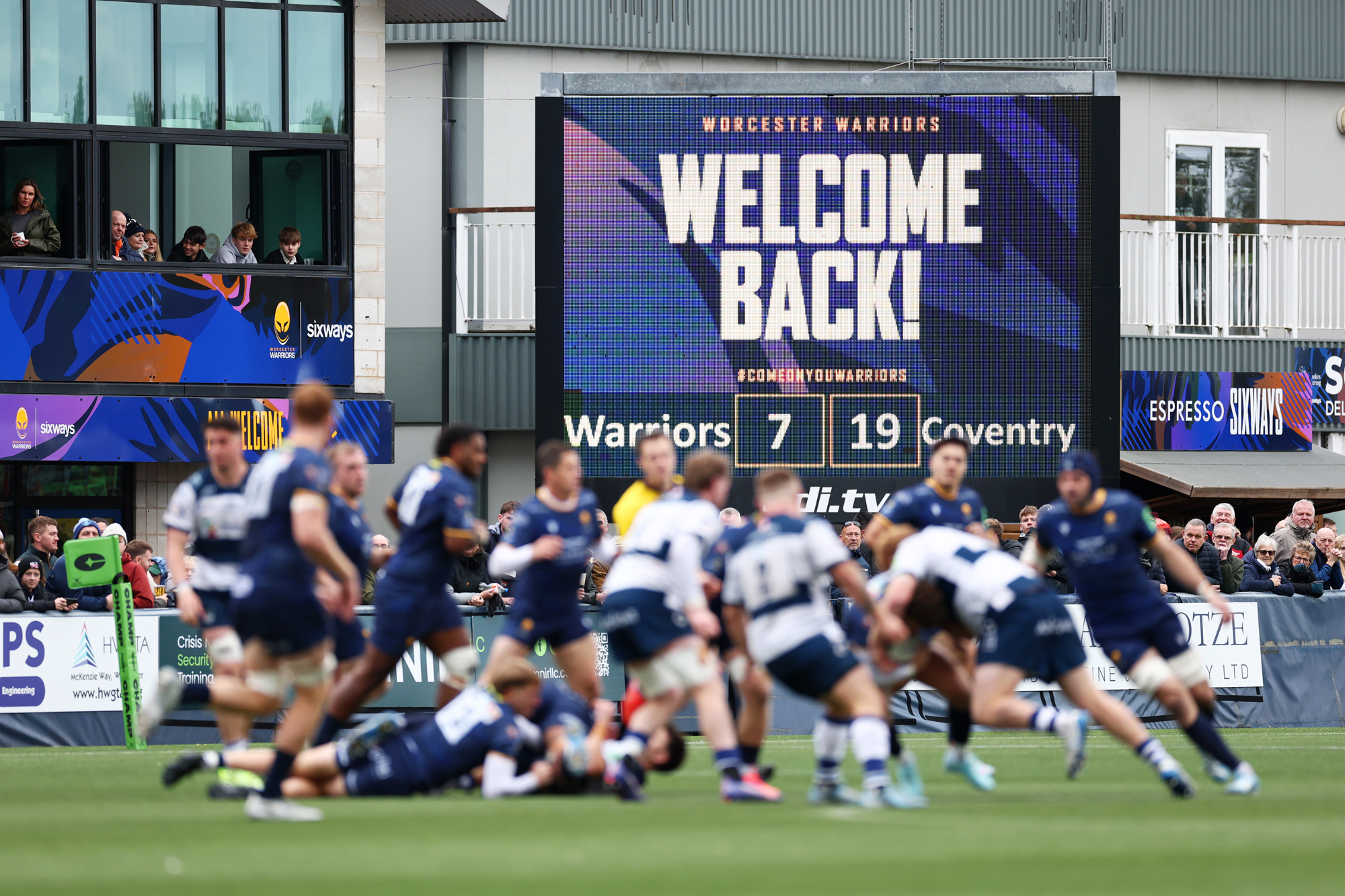
Worcester Warriors were the unexpected winners of the 2025-26 Champ, having returned to the league after going into administration in 2022 (Dan Istitene/Getty Images)
Together apart
From the perspective of the PREM, chief executive Simon Massie-Taylor says: “In truth, when we kicked off the PGP (Professional Game Partnership) process, we were really pushing for an answer for the Champ in some form. There were certain personnel that made it quite challenging to form a sort of partnership there.
“But I think with the folks that are involved at the moment – and give a lot of credit to Simon Gillham, who’s really pulled that Champ group together – they’ve been given an identity of purpose, a strategy. They’re much more aligned.”
What about the Champ clubs themselves? Not quite as Kumbaya as the others. “We said we don’t sign up to this statement because it suggests that we’ve agreed to everything. We haven’t. The question of whether it matters whether we agree or not, of course, that’s another thing,” a source tells us.
Bow adds: “It’s been a very long-term plan, hasn’t it, by the RFU board, the chief executive, to move the Premiership, if you like, as far out of reach from the collective game, really since [RFU chief executive] Bill Sweeney came in. And I felt that that meeting, that vote, was the final piece of the jigsaw.”
Investing in the future
Whichever way you dress it up, for now the Champ is cut adrift from the PREM. Perhaps the more interesting question is what can the Champ now become?
Forget the promotion frustrations and funding cuts. By securing a broadcaster (Clubber TV) and a recently announced title sponsor (contract caterer Elior) – as well as using a model with an intriguing six-team play-off system – it feels like the Champ has momentum. Especially in the wake of the reborn Worcester’s surprise victory over Ealing in the play-off semi-finals – before they subsequently went on to lift the trophy.
It is a league, as noted by Gillham and Massie-Taylor, which seems ripe for investment, unhindered by the same debts as PREM clubs.
Gillham cites the impact of American investors on English football in recent years and the brand potential of clubs such as Cambridge “for high-tech firms”, or Cornish Pirates and Coventry.

Cornish Pirates are club with significant brand potential (Harry Trump/Getty Images)
Gillham explains: “If you were a new investor into rugby, actually there’s probably much more potential and upside in investing into a Champ club, which may have a chance of coming up with your extra money. Rather than investing in a current PREM club, where all you’re going to do is fill the debt holes because all the clubs are losing money. And the clubs in the Champ are not.”
Massie-Taylor suggests that the Champ should definitely consider implementing a salary cap. That would help to reel in Ealing a little. Also, the opportunity for the Champ clubs in 2028-29 to give any prospective franchises hoping to make it into the PREM a bloody nose on their way up will be delicious.
New blood
Where will budding franchises be based? Birmingham? Norfolk? The South Coast?
McGeechan, naturally, leans towards Yorkshire but stresses the importance of having well-structured pathways to feed into those franchises regardless of location.
“I was brought up in the biggest county in England, with one of the biggest rugby populations. I wouldn’t have played rugby without a school doing it, and then people directing me towards clubs and everything else. And I think, in some ways, those pathways for players like me are not as obvious in some parts of the country. Would I come through now in a Yorkshire set-up the way I came through? I’m not sure I would.
“We should have more direct links with clubs and different levels of clubs that are all part of a wider structure that gives you an open pathway. If it’s going to be franchises, then you have to have those fundamental things in place. And that, then, could hugely strengthen the overall structure around the country.”
Finally, as noted by Bow, the Champ now has an important role to play. It is the highest level in England which any club in the national ladder can aspire to reach through promotion and relegation, with clubs fighting hard to come up from National One.
“We, as the Champ, have spent far too long worrying about what’s happening to the top 10 teams in England,” adds Bow.
The Champ will never have the cash reserves of the Pro D2 in France, and the anger at the door being bolted shut to the PREM is understandable. But for the first time in forever, it feels like it has potential to be a success all on its own. And that is interesting.
Download the digital edition of Rugby World straight to your tablet or subscribe to the print edition to get the magazine delivered to your door.
Disclaimer : This story is auto aggregated by a computer programme and has not been created or edited by DOWNTHENEWS. Publisher: rugbyworld.com