Criminal investigators in the UK say they have uncovered a “truly international network” of organised drug-facilitated sexual assault in which victims are sedated before being raped and sexually assaulted.
The National Crime Agency [NCA] has said online networks, “many as yet unidentified by law enforcement”, were allowing offenders to arrange to rape and abuse victims or arrange for sexual assaults to be filmed.
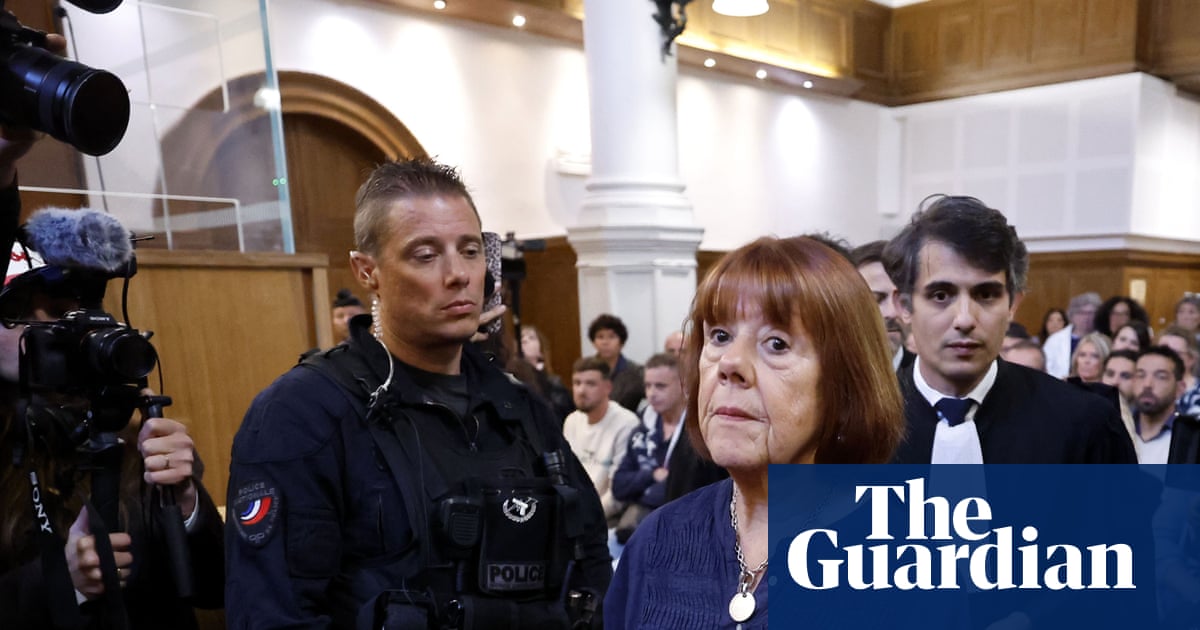
In many cases, these crimes were being perpetrated by those who “utilise the existence of committed, trusting and often long-term relationships to perpetrate and facilitate offending”, the agency said, giving the example of the high-profile Gisèle Pelicot case in France.
Since it began investigating an online forum in October last year, the NCA has identified more than 270 individuals linked to that forum and its successors.
Nigel Leary, the NCA’s deputy director, said it had disseminated more than 210 “intelligence packages” relating to suspects and potential victims to law enforcement partners in the UK and overseas, with more than 90% of those being sent abroad.
Leary said: “We believe we have uncovered a truly international network with group members identified in dozens of countries spanning every continent.” He said domestically the intelligence packages had resulted in at least 14 separate investigations, with eight victim-survivors safeguarded.
He said online platforms were “enabling and supporting direct offending”.
“We’ve seen users actively engaging with other like-minded individuals discussing in graphic detail how they want to drug their victims to commit the most heinous sexual abuse,” Leary said.
“Discussions include inviting other people to take part in the sexual assaults, seeking advice on the best drugs or sedatives to use and how to administer them, asking for specific abuse to be conducted and filmed, and also coordinating offending, arranging to rape and abuse victims, sharing methodologies and developing tactics to avoid detection.
“In many of the cases we’ve seen so far, individuals have become victims of sexual assault crimes while sedated,” he said, adding that people may not even be aware it had happened.
Leary said the scale of what investigating officers had seen so far was “deeply concerning”, and that this was “no longer isolated behaviour, but increasingly organised”.
“Intelligence indicates there have been, and are other groups, many as yet unidentified by law enforcement, still involved in this type of offending,” he said, adding that cases were “almost certainly under-detected and under-reported”.
Gisèle Pelicot’s ex-husband, Dominique Pelicot, was jailed for 20 years for drugging and raping her, as well as allowing dozens of other men to rape her while she was unconscious, in abuse that lasted nearly a decade.
Fifty men were found guilty of rape or sexual offences after a three-and-a-half-month trial in Avignon, which ended in December 2024.
In a separate operation, Europol said on Thursday it had worked with law enforcement agencies from seven countries to identify 156 victims and perpetrators in “an unprecedented operation targeting drug-facilitated sexual assaults”.
Helen Millichap, the director of the National Centre for Violence Against Women and Girls and Public Protection, said “organised drug-facilitated sexual assault represents a serious and evolving threat”.
She said the offending was “rooted in domestic abuse, controlling and coercive behaviour and sexual offending”, and while these crimes were “certainly not new”, she said “the evolving profile reveals how the online and connected nature of the abuse is occurring, the dimensions are changing and therefore so must our response”.
She said that many people affected might not know they had been a victim, until they were contacted by the police or saw digital evidence. “We recognise how confusing and distressing that could be, particularly where the person responsible is somebody known and trusted,” she said.
Urging anyone who suspects they may have been a victim to come forward, she said: “If something doesn’t feel right, you do not need proof or a clear memory to seek help.”
Siobhan Blake, the rape and serious sexual offences lead for the Crown Prosecution Service (CPS), said what had been uncovered was “some of the most abhorrent offending that I’ve seen in my 25 years as a prosecutor, involving the most gross abuse of trust of victim survivors by those who should have been the very first to care and support them”.
She said the CPS was “already dealing with a small number of cases of this nature and are working closely with policing partners to understand the evidence, build cases and bring perpetrators to justice”.
“Technology has changed the scale of this abuse, creating new avenues for exploitation,” she said, but it had also made it easy for the body to track and prosecute it.
“We are using every tool at our disposal to stay ahead of the evolving nature of this type of sexual offending,” Blake said, “and build the strongest cases to take to court.”
Disclaimer : This story is auto aggregated by a computer programme and has not been created or edited by DOWNTHENEWS. Publisher: theguardian.com