
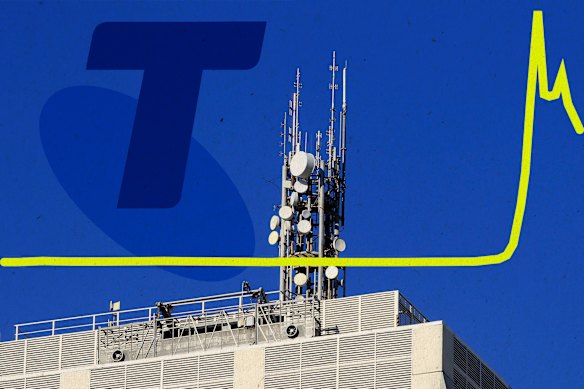

A network fault on Wednesday stopped trains in two states, pushed thousands of phones into SOS mode and left some Telstra customers unable to reach Triple Zero. In Australia, that is what a single company’s bad morning looks like.
Networks everywhere break, that’s a fact of modern life. But Australians are becoming frustrated with repeated mass outages, and it’s time to start asking why, when an Australian network breaks, so much of the country appears to break with it.
Some of the answers are obvious. Australia’s telco industry is concentrated in the hands of just three companies: Telstra, Optus and TPG, which runs Vodafone. Dozens of smaller brands rent space on them. So when Telstra faltered on Wednesday it took Boost, Belong, ALDImobile and others with it, and one fault reached millions of people at once. Telstra alone carries about 24.9 million retail mobile services, and there is no fourth network standing by to catch the overflow. That structure is efficient, but fragile.
Then there is what those networks hold up. Wednesday’s fault stopped Victoria’s entire V/Line regional train fleet and delayed regional and intercity trains across New South Wales, because the trains depend on the network to reach their control centres. It echoed November 2023, when an Optus routing failure knocked out more than 10 million services, froze EFTPOS terminals nationwide and halted Melbourne’s trains for an hour. When the same infrastructure carries calls, payments, transport and emergency lines, a single break is felt everywhere. In many countries, telecommunications networks are highly decentralised – not so in Australia.
These outages have exhausted public patience. In September last year, an Optus firewall upgrade left hundreds of people unable to call Triple Zero, an incident that was tied to multiple fatalities. The regulator had already fined Optus more than $12 million over the 2023 outage; the 2025 failure showed that fines were never going to be enough. A review that followed – the Bean review – made 18 recommendations, all accepted by the government, and prompted new laws for a dedicated Triple Zero custodian.
So are Australia’s telecommunication networks genuinely worse than everywhere else? Yes and no. Networks in the United States and Europe fail regularly too. The difference is resilience, or lack thereof. Our networks are wide but brittle, built so leanly that a single core fault or a botched upgrade can cascade across the country instead of staying local. We’ve seen it time and time again, and it’s a story I’ve written more than any other across my career as a technology reporter.
To their credit, regulators have begun stepping in, though their work is not yet being felt. This year the Australian Communications and Media Authority moved to scrap the industry’s self-written consumer code and replace it with enforceable rules. Since June 30, telcos must publish usability-based coverage maps and public registers of outages, a change that prompted Telstra to shrink its own coverage claims.
But there are still some real gaps that shouldn’t be acceptable in 2026. Only Triple Zero calls are required to fall back to another carrier when a network goes down, and on Wednesday even that appeared to falter. For all the new transparency, Australia still has no enforceable reliability standard, and no minimum uptime of the kind that governs power and water. The networks run on voluntary commitments. ACCAN, the communications consumer peak body, put the obvious question on Wednesday: how much longer before networks this essential are held to a hard standard?
Wednesday’s outage will be fixed and, in time, explained. But the structure that made it hurt so much will still be there.
The Business Briefing newsletter delivers major stories, exclusive coverage and expert opinion. Sign up to get it every weekday morning.
 David Swan is the technology editor for The Age and The Sydney Morning Herald. He was previously technology editor for The Australian newspaper.Connect via X or email.
From our partners
Disclaimer : This story is auto aggregated by a computer programme and has not been created or edited by DOWNTHENEWS. Publisher: www.smh.com.au




